
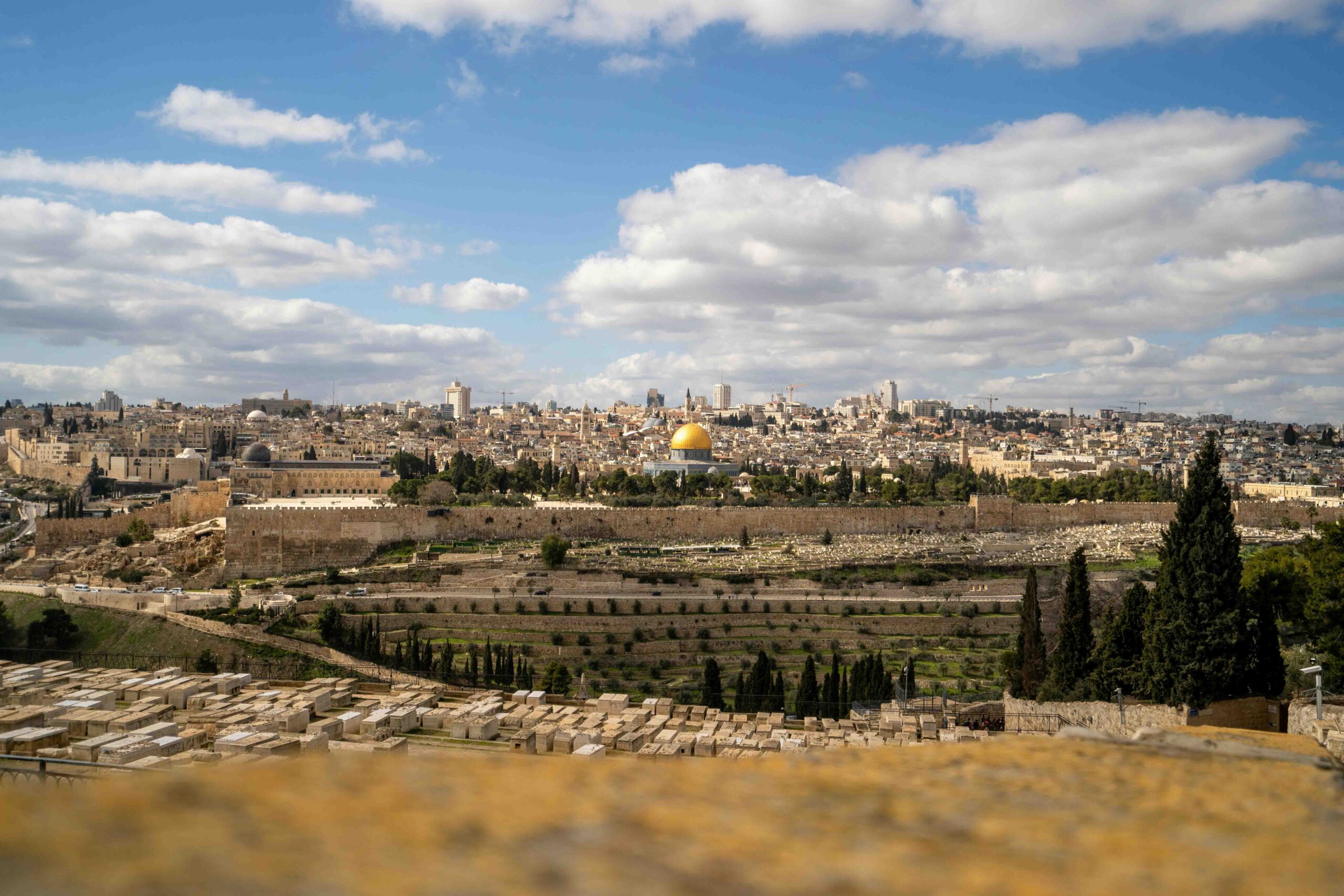
Hosted by ARCH Member, Roberto Mazza, Jerusalem Unplugged is the only podcast dedicated exclusively to Jerusalem, its rich history, and its diverse people.
Through in-depth conversations with scholars, activists, politicians, artists, journalists, religious figures, and community members, the podcast explores the complex layers of one of the world’s most significant cities. Our conversations are designed to be intellectually challenging, moving beyond surface narratives to examine the nuanced realities of Jerusalem’s past and present. Each episode provides substantive material for serious discussion, encouraging listeners to engage with the city’s multifaceted stories from historical, political, cultural, and social perspectives. From archaeological discoveries and urban development to religious practices and daily life, Jerusalem Unplugged uncovers the Jerusalem you may never have heard of—offering fresh insights into a city where ancient history and contemporary life intersect in extraordinary ways.
About Roberto Mazza
Roberto Mazza is currently a Visiting Scholar at the Buffett Institute for Global Affairs, Northwestern University. He was previously a visiting professor at Northwestern and a Lecturer at the University of Limerick.
Dr. Mazza has written two books focusing on Jerusalem during the First World War period: Jerusalem: From the Ottomans to the British(2009) and Jerusalem in World War I: The Palestine Diary of a European Diplomat (2011). His scholarly output also encompasses numerous articles and book chapters exploring themes of urban history and the history of violence in the region.
Roberto is Executive Editor of the Jerusalem Quarterly. He hosts the popular “Jerusalem Unplugged Podcast”, which explores various aspects of Jerusalem’s rich history and contemporary issues and is a regular host for the New Books Network. He is a board member of “Filistin Araştırmaları Dergisi Yayın Kurulu [Bulletin of Palestine Studies].”
Originally hosted on Acast. See acast.com/privacy for more information.
Uncertain Empire with Elizabeth Imber
Oct 16, 2025
Following the British conquest of Ottoman Palestine, Jews across the British Empire—from Jerusalem to Johannesburg, London to Calcutta—found themselves at the heart of global Jewish political discourse. As these intellectuals, politicians, activists, and communal elites navigated shifting political landscapes, some envisioned Palestine as a British dominion, leveraging imperial power for Jewish state-building, while others fostered ties with anticolonial movements, contemplating independent national aspirations.
Learn More
Uncertain Empire considers this intricate interplay between British imperialism, Zionism, and anticolonial movements from the 1917 British conquest of Palestine to the establishment of the state of Israel in 1948.My guest highlights diverse and sometimes conflicting visions of Jewish political futures, offering detailed case studies of key figures including Chaim Arlosoroff, Moshe Shertok, Helen Bentwich, Rachel Ezra, and Hermann Kallenbach. She explores a “politics of uncertainty” in which Jews engaged with both imperial stability and the rise of anticolonial mobilization, when many were likewise forced to reconsider Palestine as a viable refuge and political solution.
Fiction and Jerusalem with Michael Kinnamon and Philip Graubart
Oct 02, 2025
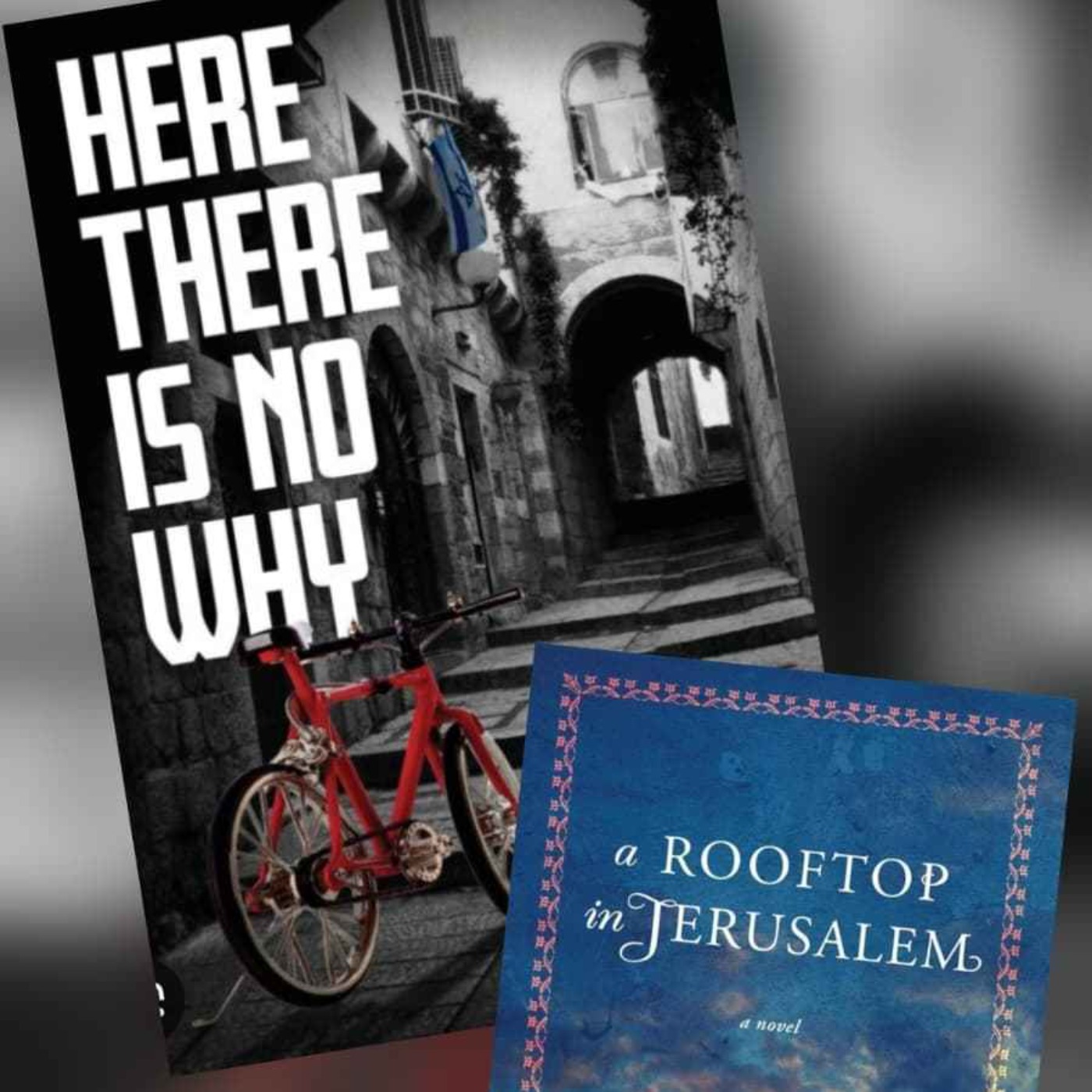
Today I had the pleasure to interview two wonderful writers, Michael Kinnamon and Philip Graubart. Michael is the author of A Rooftop in Jerusalem: When Daniel Jacobs decides to spend his junior year abroad in Israel, he never dreams he’ll fall in love with both Jerusalem’s Old City and an Israeli woman, Shoshana. It’s the year religion becomes a part of his identity, from the heights of a simple rooftop.
Learn More
A year he encounters the tragic complexity of the Israeli-Palestinian struggle. A year that begins a four-decade-long love affair, as complicated and heartbreaking as the political conflict with which it’s intertwined. As Daniel moves through life-through marriage and divorce, career and travel-he returns periodically to Jerusalem, where his heart faithfully remains.Philip is the author of Here There is No Why: Did Chaim Lerner, acclaimed Israeli author and Holocaust survivor, kill himself in 1983, thirty-eight years after surviving Auschwitz? If so, was it traumatic memories finally catching up to him? Or despair over Holocaust denialism? Or ordinary, difficult health issues-an aching hip, a damaged knee? Or simply a deadly episode of depression?Enjoy the conversation.Or was it murder?In 2005, Judah Loeb, Lerner’s former student and now a struggling American journalist and single father, travels to Jerusalem to investigate Lerner’s death. He drags along his fifteen-year-old daughter, Hannah, and they team up with Charlie, Judah’s former Hebrew University roommate, now a Jerusalem homicide detective. Their investigation takes them through the darker corners of the Israeli psyche, where they uncover secrets that threaten to destroy Lerner’s reputation and alter Jewish history. While probing the mysteries of Israel’s past, they encounter personal betrayal, heartbreak, and the fragile possibilities of forgiveness and redemption.
Orthodox Choreographies with Georgios Tsourous
Sep 25, 2025
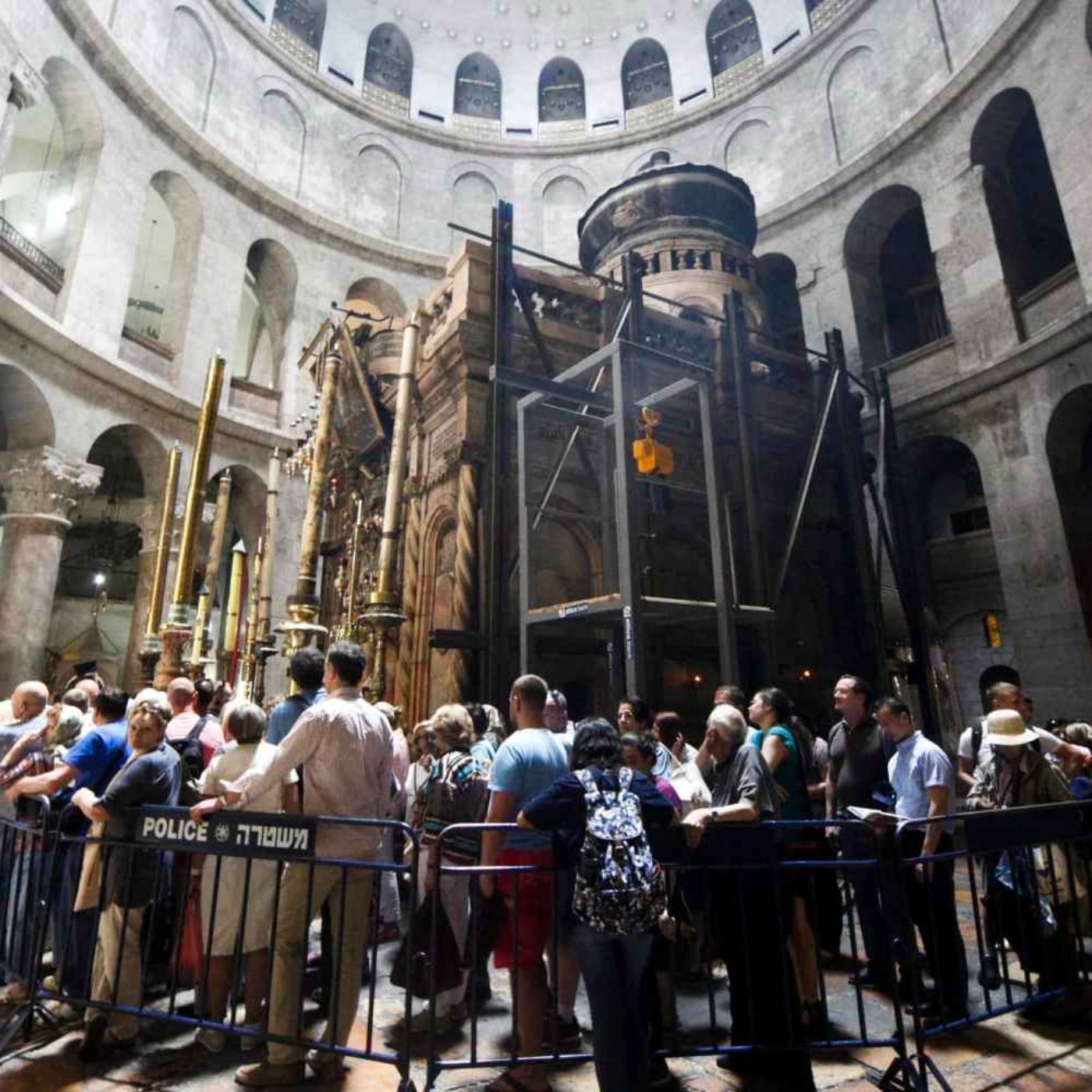
With George we discuss his latest book that offers a comprehensive anthropological study of lived Christianity in Jerusalem’s Old City, with a special focus on the Church of the Holy Sepulchre or the Church of the Anastasis. Based on in-depth ethnographic fieldwork, the study explores the experiences of the Rum Orthodox community, examining their internal dynamics and relationships with other Christian groups.
Learn More
Within the Church of the Anastasis, complex interplays emerge, as fragile legal agreements intermingle with ethnic and theological considerations, resulting in a complex reality of shared spaces and coexistence. A materialist lens is employed to study these dynamics, suggesting that the material aspects of religious practices play a crucial role in shaping borders and influencing perceptions of similarities and differences across them. Outside the Church’s confines, in the Old City of Jerusalem, lay Christians, especially the local Palestinian Orthodox, engage in ‘border-crossing practices’, which often deviate from the Orthodox Church’s approved practice. These practices reflect the flexible strategies local Christians adopt in their everyday lives in Israel, challenging established norms and boundaries. By capturing these dynamics, the book provides valuable insights into shared sacred spaces and offers a significant contribution to debates in the anthropology of Christianity and its material culture.
Find me at the Jaffa Gate with Micaela Sahhar
Sep 04, 2025
I had the pleasure to engage in a very interesting conversation with Micaela Sahhar while we were sitting at the opposite end of the world. What does the daughter of a Nakba survivor inherit? It is not property or tangible heirlooms, nor the streets and neighbourhoods of a father’s childhood and the deep roots of family who have lived in one place, Jerusalem, for generation upon generation.
Learn More
Fixing her gaze on moments, places and objects – from the streets of Bethlehem to the Palestinian neighbourhoods of the New Jerusalem – Micaela Sahhar assembles a story of Palestinian diaspora. Find Me at the Jaffa Gate is a book about the gaps and blank spaces that cannot be easily recounted, but which insists on the vibrant reality of chance, fragments and memory to reclaim a place called home.
The Birthplace of Jesus Is in Palestine: A Memoir with Toine van Teeffelen
Aug 28, 2025
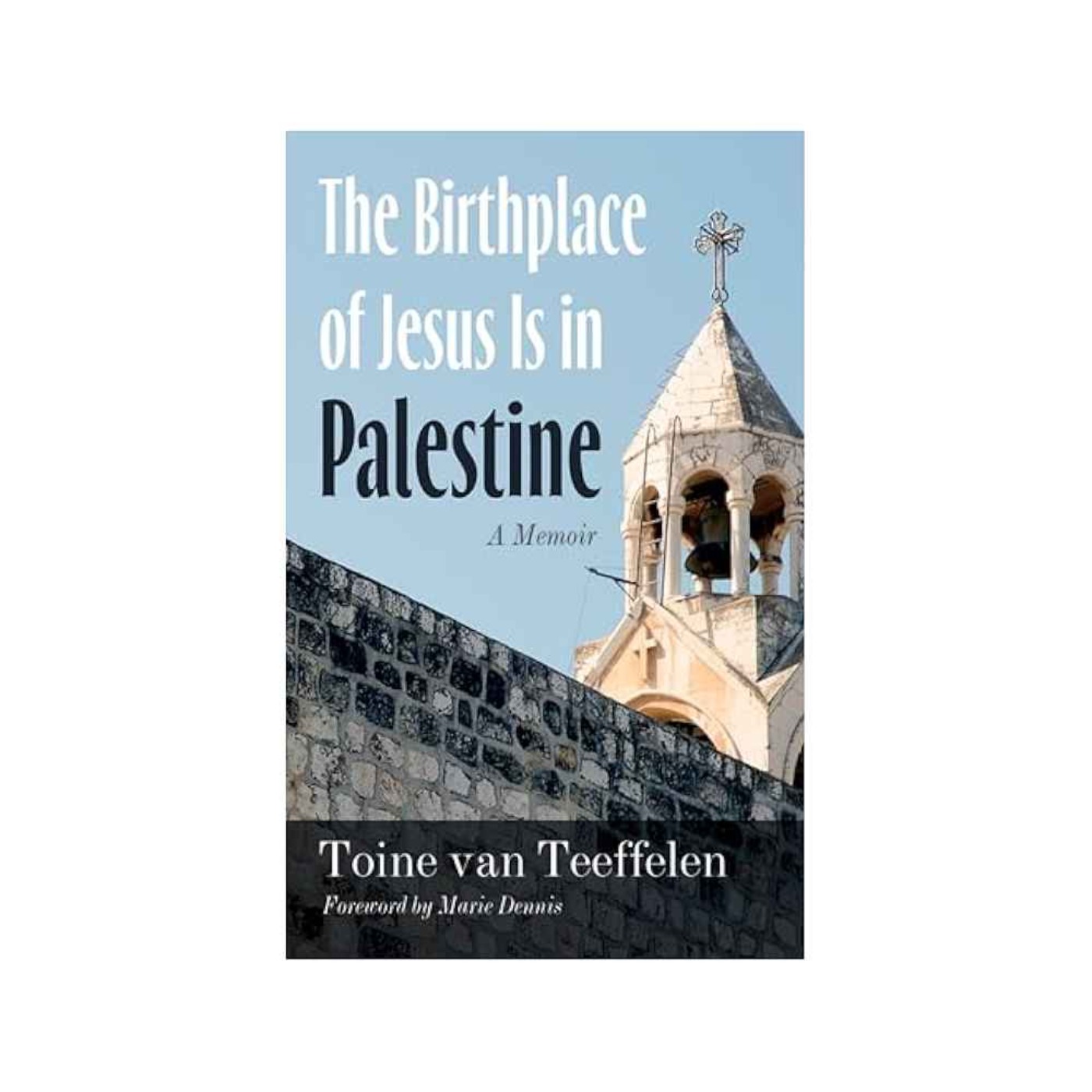
Here we are, the first episode after the long break. The first interview is with Toine van Teeffelen, a Dutch anthropologist and a Bethlehem resident. The Birthplace of Jesus Is in Palestine is a narrative of a Christian family in Bethlehem in the West Bank. Based on diary entries and interviews from 2000 to 2023, the Dutch author–an anthropologist and peace activist–chronicles the spontaneous reactions of his Palestinian children and wife navigating the challenges posed by curfews and checkpoints.
Learn More
Problems of Palestinian school life are shown from the perspective of teachers and students. Against the background of Israeli occupation and settlement building, the intricacies of Palestinian culture in its daily rhythms and domestic spaces come to life. Throughout the pages, the key Palestinian concept of sumud, or steadfastness, is explored. The memoir details acts of creative nonviolent resistance, individual protests, affirmations of cultural identity, and inspiring examples of Muslim-Christian community. The book also reveals unexpected connections between Palestinian culture in the Bethlehem area and broader Christian values and traditions. An afterword reflects upon implications of Israel’s war in Gaza.
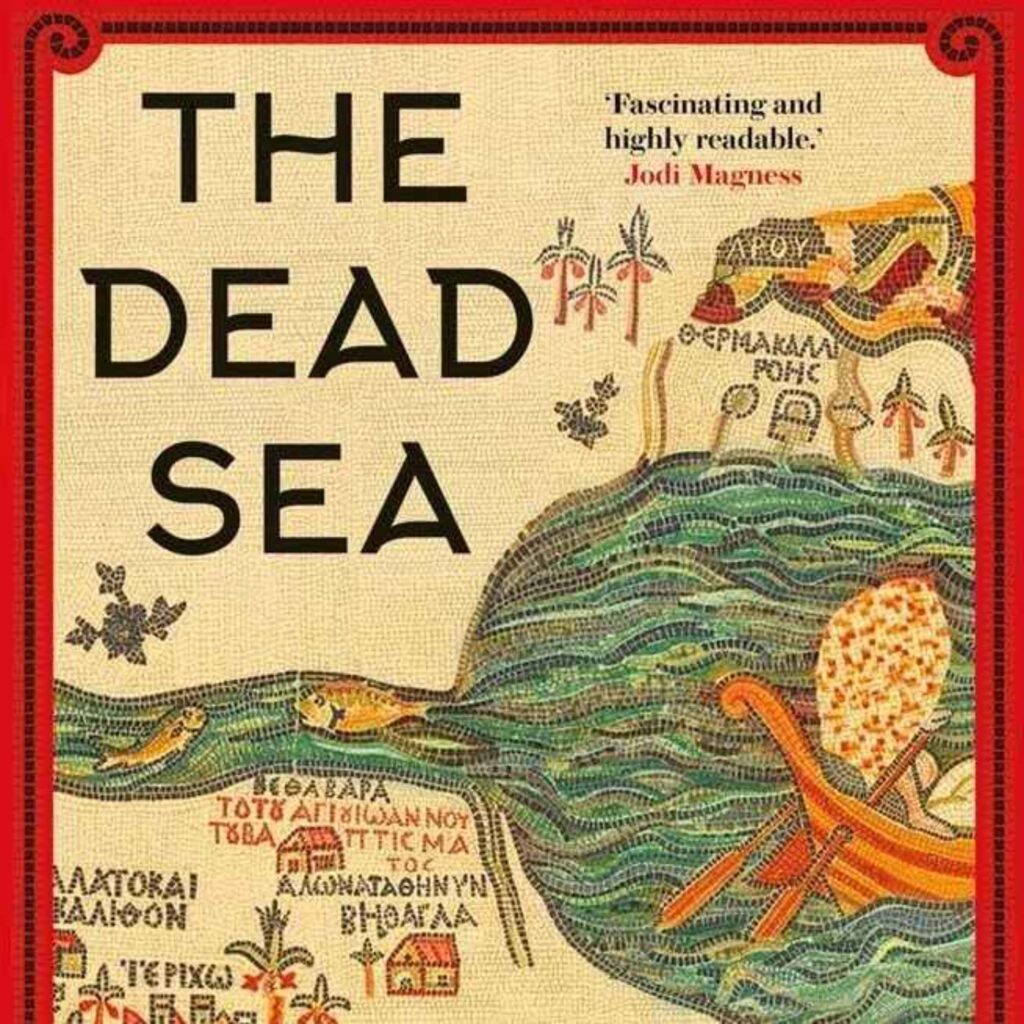
The Dead Sea 10,000 Years of History with Nir Arielli
Aug 08, 2025
The Dead Sea is a place of many contradictions. Hot springs around the lake are famed for their healing properties, though its own waters are deadly to most lifeforms—even so, civilizations have built ancient cities and hilltop fortresses around its shores for centuries. The protagonists in its story are not only Jews and Arabs, but also Greeks, Nabataeans, Romans, Crusaders and Mamluks.
Learn More
Today it has become a tourist hotspot, but its drying basin is increasingly under threat. In this panoramic account, Nir Arielli explores the history of the Dead Sea from the first Neolithic settlements to the present day. Moving through the ages, Arielli reveals the religious, economic, military, and scientific importance of the lake, which has been both a source of great wealth and a site of war. *The Dead Sea *weaves together a tapestry of the lake’s human stories—and amidst environmental degradation and renewed conflict, makes a powerful case for why it should be saved. Originally published on 04/03/2025.
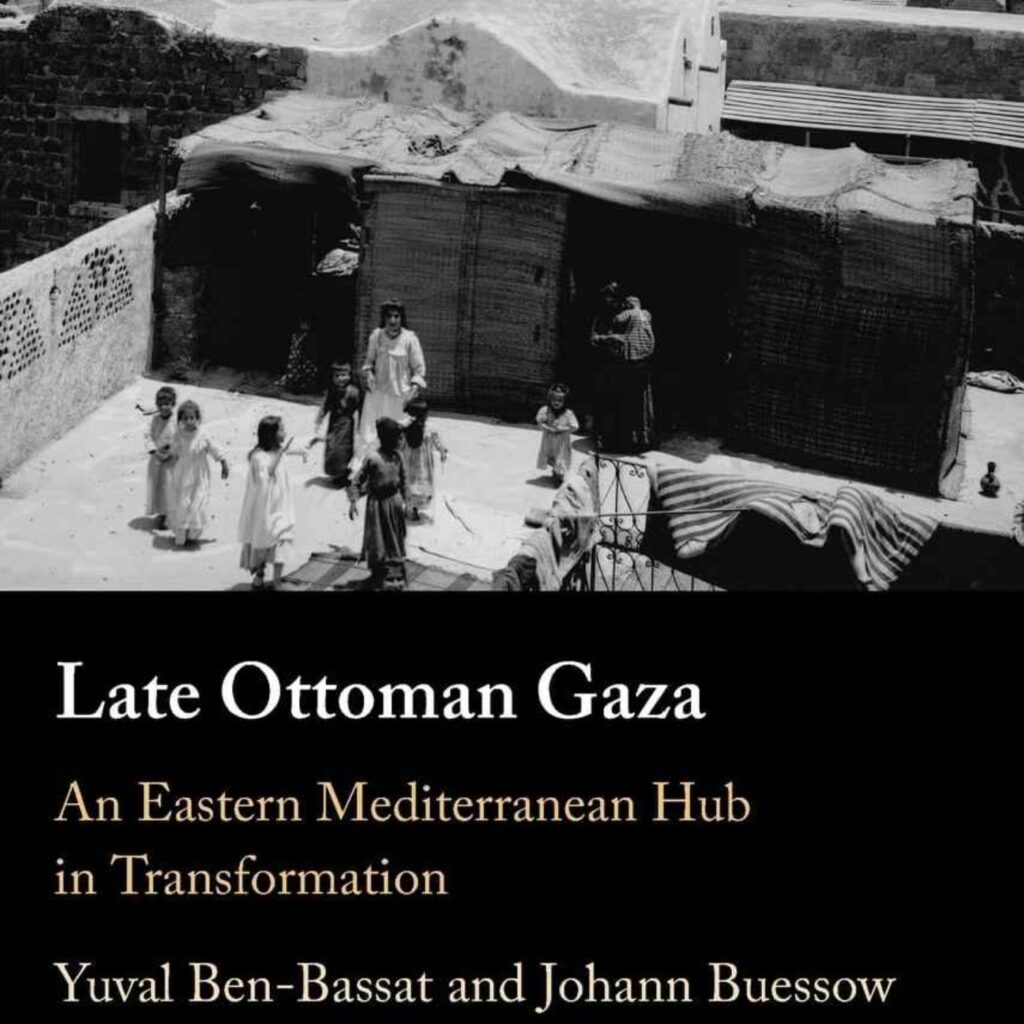
Late Ottoman Gaza with Yuval Ben Bassat
Aug 08, 2025
Until recently, Gaza attracted little attention in historical scholarship. This book innovates by examining late Ottoman Gaza’s diverse society, its built environment, and its political dynamics. The introduction sets the stage to better understand the vital contexts impacting the role and status of Gaza as compared to other cities in the Eastern Mediterranean, provides analyses and new resources for the study of late Ottoman Gaza, and presents state-of-the-art methodology in urban history as applied to Gaza. Enjoy the interview with Yuval Ben Bassat. Originally published on 03/20/2025.
Gaza with Mkhaimar Abusada
Aug 08, 2025
My guest in this episode is Dr Mkhaimar Abusada, He received his PhD from the University of Missouri-Columbia in 1996 and is an associate professor at Al-Azhar University of Gaza and the former chair of the university’s political science department. He has authored one book, and many academic articles in local and internationally recognized academic journals. He has also written for Project Syndicate, the Carnegie Endowment for International Peace, and Washington Institute for Near East Policy. We talked about his experience leaving Gaza at the beginning of the war and then we delved into international and Palestinian politics. Originally published on 02/27/2025.
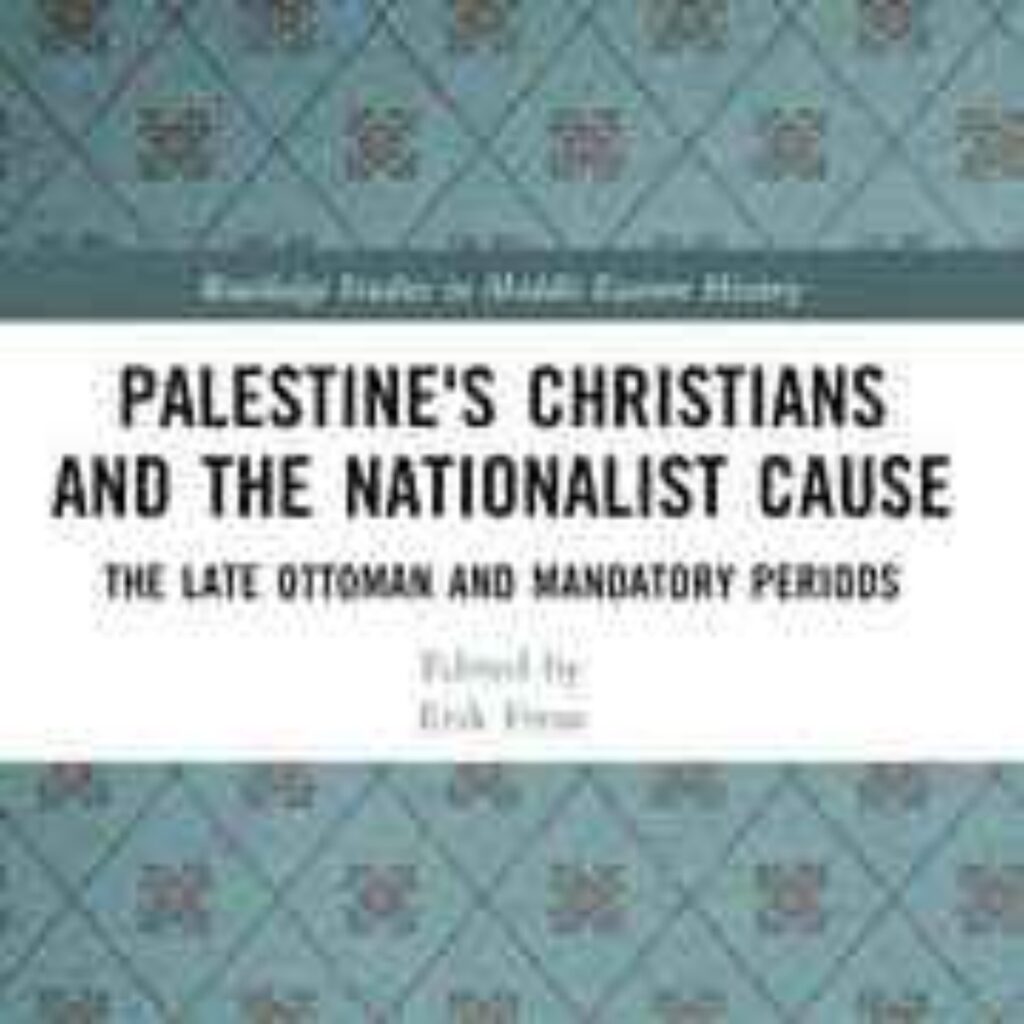
Palestine’s Christians and the Nationalist Cause with Erik Freas
Aug 08, 2025
In this episode I have interviewed Erik Freas that recently has edited a volume published by Routledge looking at Palestinian Christians and the nationalist cause through the late Ottoman and Mandatory periods. This book provides an historical overview of Palestine’s Christian communities and their role in the Palestinian nationalist movement during the late Ottoman and British mandatory periods.
Learn More
More than being a history of Palestine’s Christian Arabs, the book focuses on Palestine’s Christians during the formative period of Palestinian Arab national identity, attentive to the broader topic of the relationship between nationalism and religion–in this case, between Arab identity and Islam. Whereas until recently historians have tended to assume that national and religious identities are distinct and mostly mutually exclusive things, more recent scholarship has addressed the fact that often there exists considerable overlap between the two, though it should be noted, often in ways that are not by any means inherently exclusive of those not belonging to the majority faith, as is the case here. Originally published on 02/13/2025.
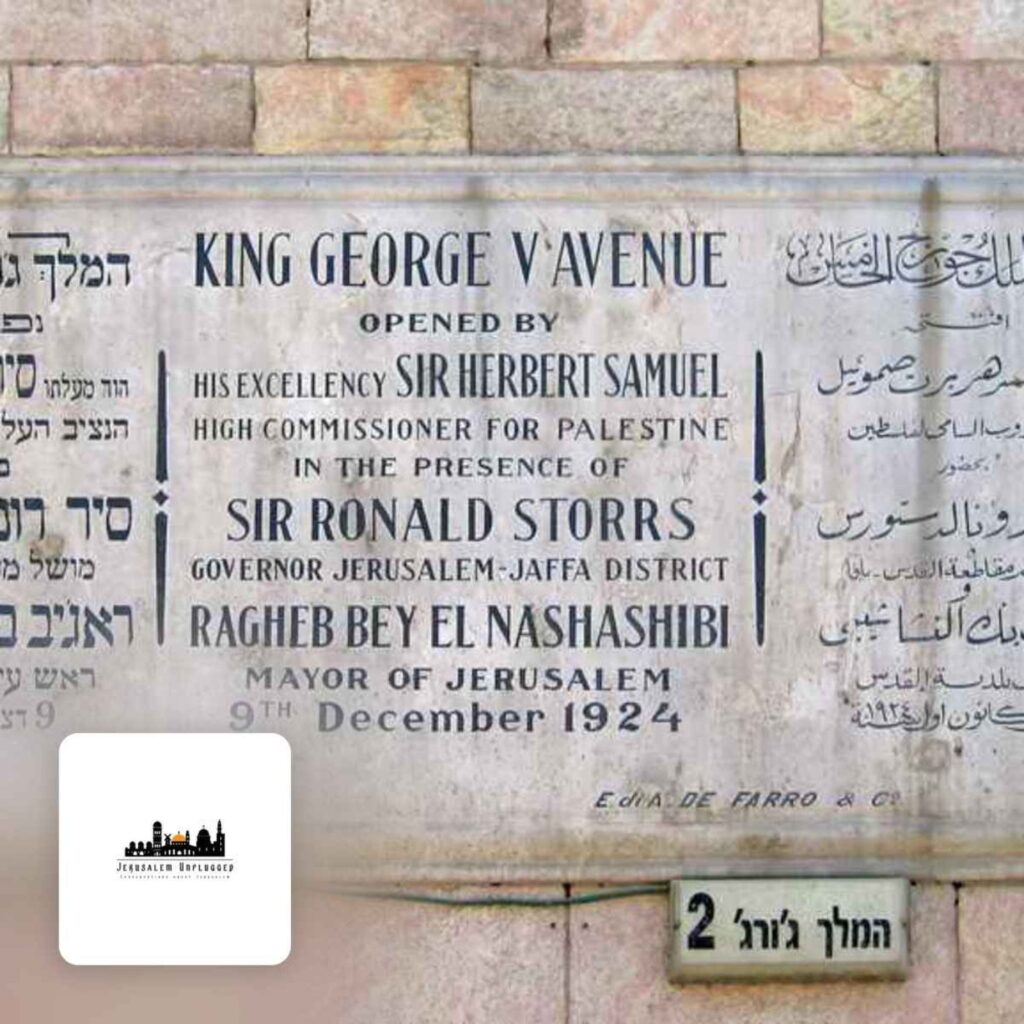
Ronald Storrs, the man and Jerusalem with Christopher Burnham
Aug 08, 2025
Today I had the pleasure to talk to Christopher Burhnham who recently published Sir Ronald Storrs Personality and Policy in Mandate Palestine, 1917-1926 with Routledge. While some may say that we already know enough on Storrs, the reality is that his legacy in Jerusalem is not only fully understood and neglected, but given the lengthy rulership, we still have to uncover more. It builds upon Edward Said’s work on the Orientalist ‘determining imprint’ by arguing that Storrs took a deeply personal approach to governing the city; one determined by his upbringing, his education in the English private school system and his service as a British official in Colonial Egypt.
Learn More
Burnham recognises the influence of these experiences on Storrs’ perceptions of and attitudes towards Jerusalem, identifying how these formative years manifested themselves on the city and in the Governor’s interactions with Jerusalemites of all backgrounds and religious beliefs. It also highlights the restrictions placed on Storrs’ approach by his British superiors, Palestinians and the Zionist movement, alongside the limitations imposed by his own attitudes and worldview. Placing Storrs’ personality at the centre of discussion on early Mandate Jerusalem exposes a nuanced and complex picture of how personality and politics collided to influence its everyday life and built environment.Originally published on 01/30/2025.
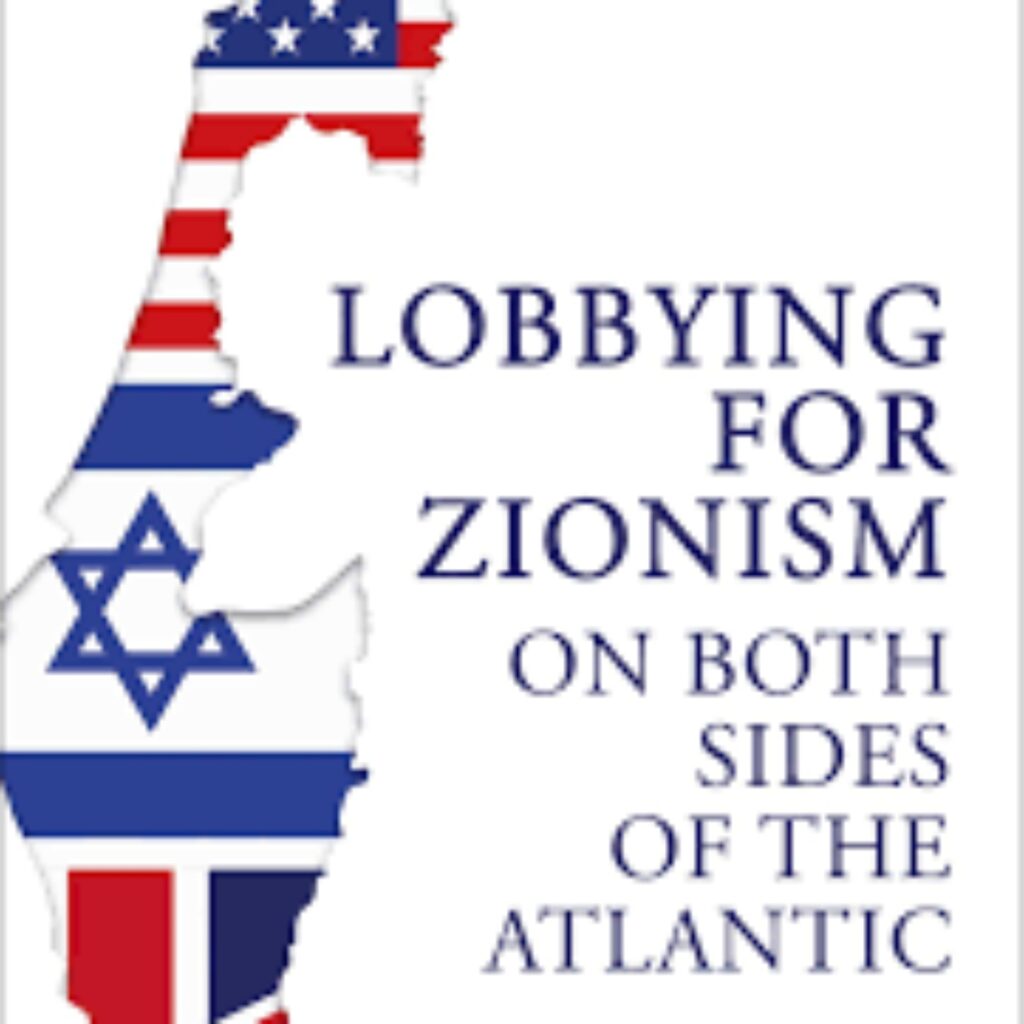
Christian Zionism and the Israel Lobby A Conversation with Awad Halabi and Ilan Pappe
Aug 07, 2025
Today it’s with great pleasure that I recast and interview that took place on October 2024 between Hawad Halabi and Ilan Pappe, both friends and guests of Jerusalem Unplugged. Ilan Pappe discussed his latest publication Lobbying for Zionism on Both Sides of the Atlantic.A special thanks goes to the Friends of Sabeel North American as they allowed me to republish the interview and also the Palestinian Christian Alliance for Peace.The full conversation, with more comments and questions from the audience can be found on Youtube. Originally published on 01/16/2025.
Israel and Turkey with Howard Eissenstat
Aug 07, 2025
In this first episode of the new year, I had the opportunity and pleasure to talk to Howard Eissenstat who currently is is an Laurentian Associate Professor of Middle East history and History Department Chair at St. Lawrence University and non-resident scholar at the Middle East Institute in Washington. With Howard we first looked at the legacy of President Carter in the Middle East and from there we unpacked the long and complex relations between Israel and Turkey. Lastly, as we are approaching the transition from the Biden to the Trump administrations we tried to understand what this means for Turkey. Originally published 01/02/2025.
Palestinian Politics with Dana El Kurd
Aug 07, 2025
There is so much talking about Israel, the war on Gaza, Lebanon and now Syria, but what about Palestinian politics? In this episode I talked to Dana El Kurd a Palestinian political scientist with a deep knowledge and understanding of Palestinian politics. We started our conversation discussing her book published in 2020 Polarized and Demobilized: Legacies of Authoritarianism in Palestine, from there we move to talk about the incoming Trump administration, the role of Saudi Arabia but more importantly how politics is experienced and imagined in Palestine. Originally published on 12/19/2024.
Peace Now with Mauricio Lapchik
Aug 07, 2025
In the first episode of season 6 I have interviewed Maurcio Lapchik, the Director of External Relations at Peace Now (Shalom Akshav), the largest and longest-standing Israeli movement advocating for peace through public pressure. While we briefly introduced Peace Now to those who don’t know yet this organization, we then discussed the current standing of the peace camp in Israel. While the picture is rather grim, Mauricio keeps hoping for the best. Originally published on 12/05/2024.
Daybreak in Gaza with Mahmoud Muna and Matthew Teller
Aug 07, 2025
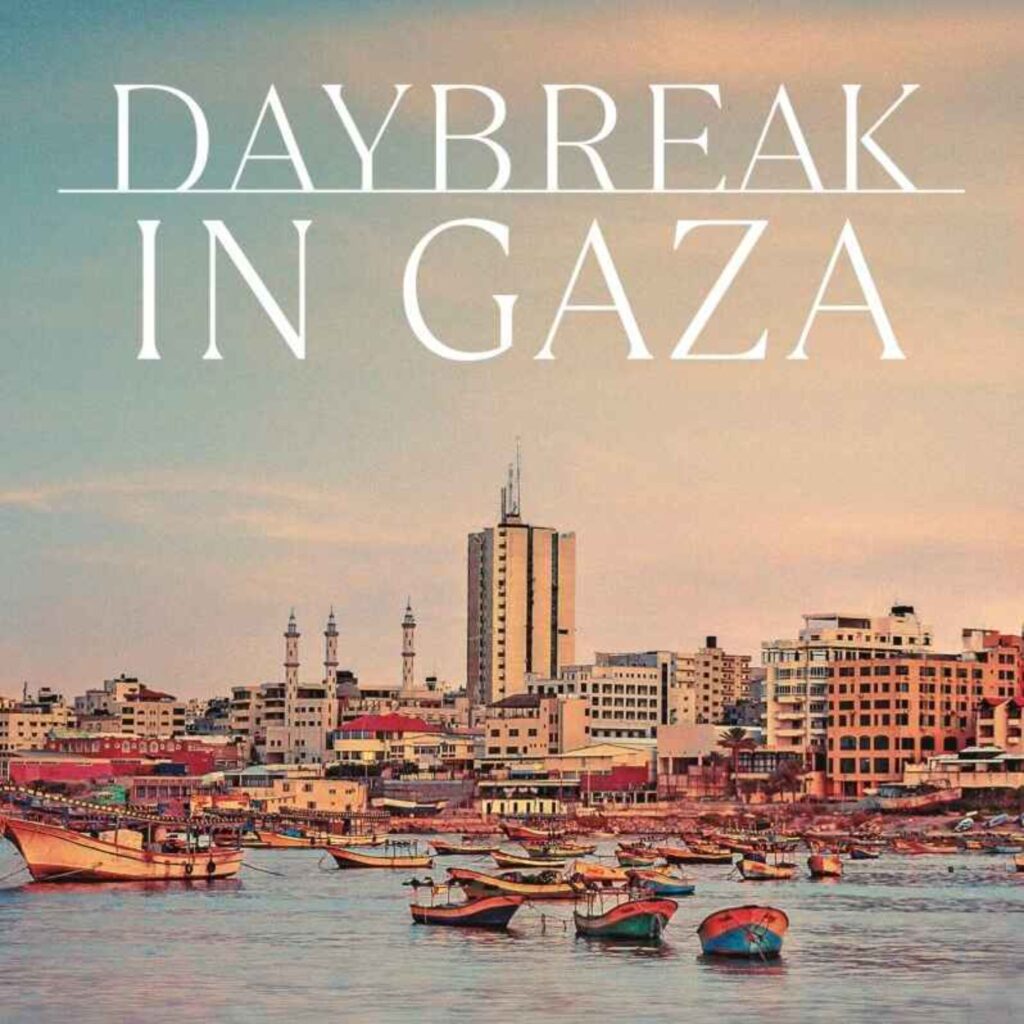
This is Gaza – a place of humanity and creativity, rich in culture and industry. A place now utterly devastated, its entire population displaced by a seemingly endless onslaught, its heritage destroyed. Daybreak in Gaza is a record of an extraordinary place and people, and of a culture preserved by the people themselves. Vignettes of artists, acrobats, doctors, students, shopkeepers and teachers offer stories of love, life, loss and survival. They display the wealth of Gaza’s cultural landscape and the breadth of its history.Daybreak in Gaza humanises the people dismissed as statistics. It stands as a mark of resistance to the destruction and as a testament to the people of Gaza. Originally published on 10/05/2024.
American Jews and the Movement for Justice in Palestine with Oren Kroll-Zeldin
Aug 07, 2025
In this season 5 finale episode I had the pleasure to interview Oren Kroll-Zeldin, the author of Unsettled: American Jews and the Movement for Justice in Palestine. Unsettled digs into the experiences of young Jewish Americans who engage with the Palestine solidarity movement and challenge the staunch pro-Israel stance of mainstream Jewish American institutions. The book explores how these activists address Israeli government policies of occupation and apartheid, and seek to transform American Jewish institutional support for Israel.
Learn More
Oren identifies three key social movement strategies employed by these activists: targeting mainstream Jewish American institutions, participating in co-resistance efforts in Palestine/Israel, and engaging in Boycott, Divestment, and Sanctions (BDS) campaigns. He argues that these young people perceive their commitment to ending the occupation and Israeli apartheid as a Jewish value, deeply rooted in the changing dynamics of Jewish life in the twenty-first century. By associating social justice activism with Jewish traditions and values, these activists establish a connection between their Jewishness and their pursuit of justice for Palestinians.In a time of internal Jewish tensions and uncertainty about “&”peace prospects between Palestine and Israel, the book provides hope that the efforts of these young Jews in the United States are pushing the political pendulum in a new direction, potentially leading to a more balanced and nuanced conversation. Originally published on 08/31/2024.
Stranger in My Own Land with Fida Jiryis
Aug 07, 2025
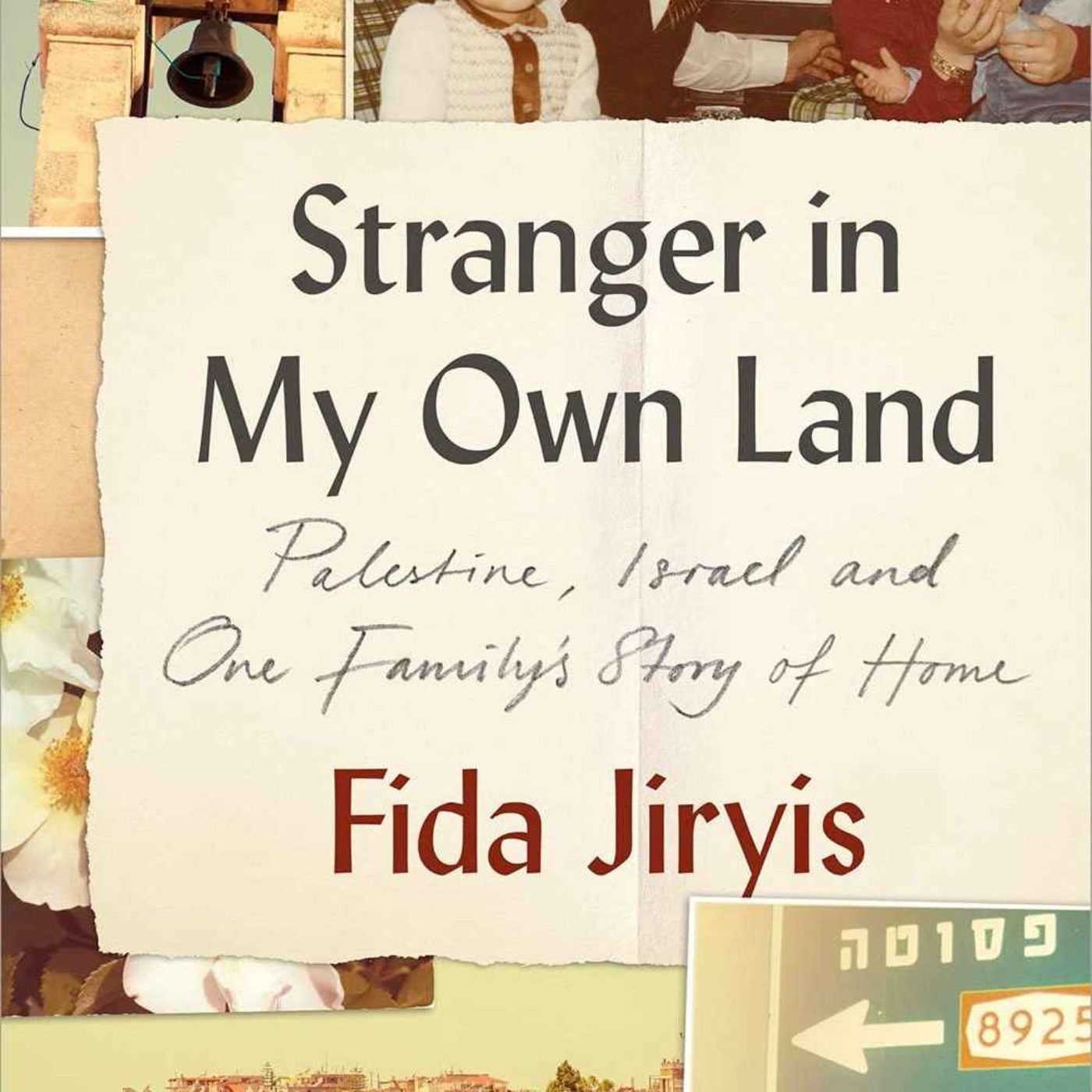
In this very moving and heartwarming interview I had the opportunity to discuss with Fida Jiyris her work, a beautifully written memoir that tells the story of her and her family journey, which is also the story of Palestine, from the Nakba to the present—a seventy-five-year tale of conflict, exodus, occupation, return and search for belonging, seen through the eyes of one writer and her family. Fida reveals how her father, Sabri, a PLO leader and advisor to Yasser Arafat, chose exile in 1970 because of his work.
Learn More
Her own childhood in Beirut was shaped by regional tensions, the Lebanese Civil War and the 1982 Israeli invasion, which led to her mother’s death. Thirteen years later, the family made an unexpected return to Fassouta, their village of origin in the Galilee. But Fida, twenty-two years old and full of love for her country, had no idea what she was getting into.Stranger in My Own Land chronicles a desperate, at times surreal, search for a homeland between the Galilee, the West Bank and the diaspora, asking difficult questions about what the right of return would mean for the millions of Palestinians waiting to come ‘home’. Originally published on 07/18/2024.
Dwelling on The Past: Memory and Dispossession with Yair Agmon
Aug 07, 2025
What is cultural memory? How do settlers use it in East Jerusalem to dispossess Palestinians? In this episode I interview film maker and scholar Yair Agmon. Known for short movies like Once Upon a School (2023), Like a Beating Heart (2022) and Our Heroes (2016), Yair is now working on his PhD at UCLA ‘Dwelling on The Past: Memory, Discard, and Dispossession at The City of David National Park,” which explores how settlers in East Jerusalem use memory to give purpose and meaning to a territorial project in Palestinian East Jerusalem’.We discussed his work, the question of memory and how the City of David has become more than an archeological site. Originally published on 07/04/2024.
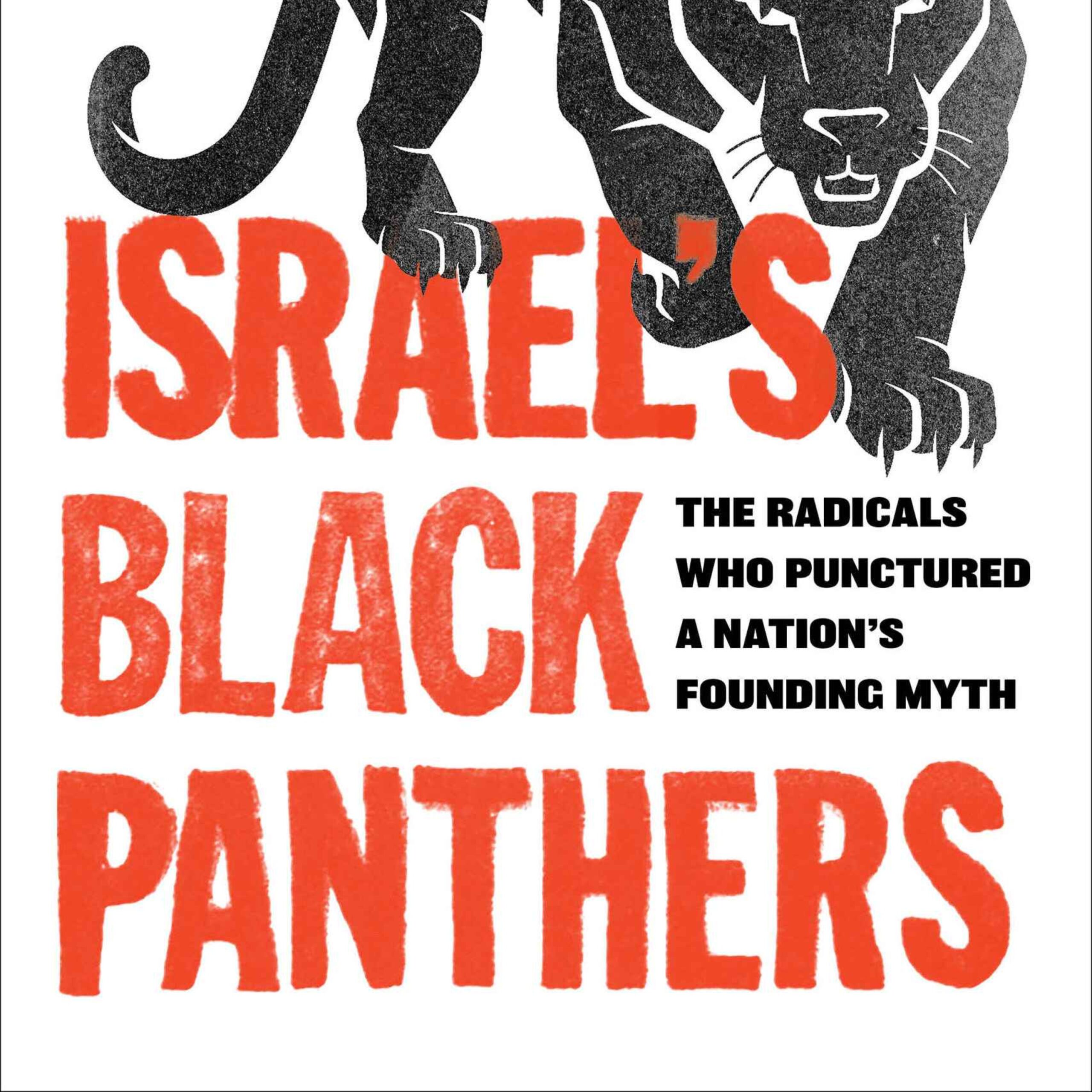
Israel’s Black Panthers with Asaf Elia-Shalev
Aug 07, 2025
Today the guest of Jerusalem Unplugged is Asaf Elia/Shalev the author of *Israel’s Black Panthers* that tells the story of the young and impoverished Moroccan Israeli Jews who challenged their country’s political status quo and rebelled against the ethnic hierarchy of Israeli life in the 1970s. Inspired by the American group of the same name, the Black Panthers mounted protests and a yearslong political campaign for the rights of Mizrahim, or Jews of Middle Eastern ancestry. They managed to rattle the country’s establishment and change the course of Israel’s history through the mass mobilization of a Jewish underclass. Most of the leaders of the Black Panthers were located in Musrara, a previously Palestinian inhabited neighborhood of Jerusalem that in 1948, due its proximity with the Green Line became a sort of no man’s land taken over by poor Mizrahi jews who had nowhere else to go. Originally published on 06/06/2024.

Give Peace a Chance with John Lyndon and ALLMEP
Aug 07, 2025
For the series dedicated to current events, today we have the privilege of speaking with John Lynden, executive director of ALLMEP – the Alliance for Middle East Peace. ALLMEP is an impressive coalition, bringing together over 160 organizations and hundreds of thousands of Palestinians and Israelis. Their mission is to build cooperation, justice, equality, a shared society, mutual understanding, and ultimately lasting peace between their communities.In times of crisis, ALLMEP works to add stability. They foster cooperation initiatives that increase impact on the ground. And they cultivate an environment more conducive to peace over the long term through their tireless efforts. Originally published on 05/16/2024.
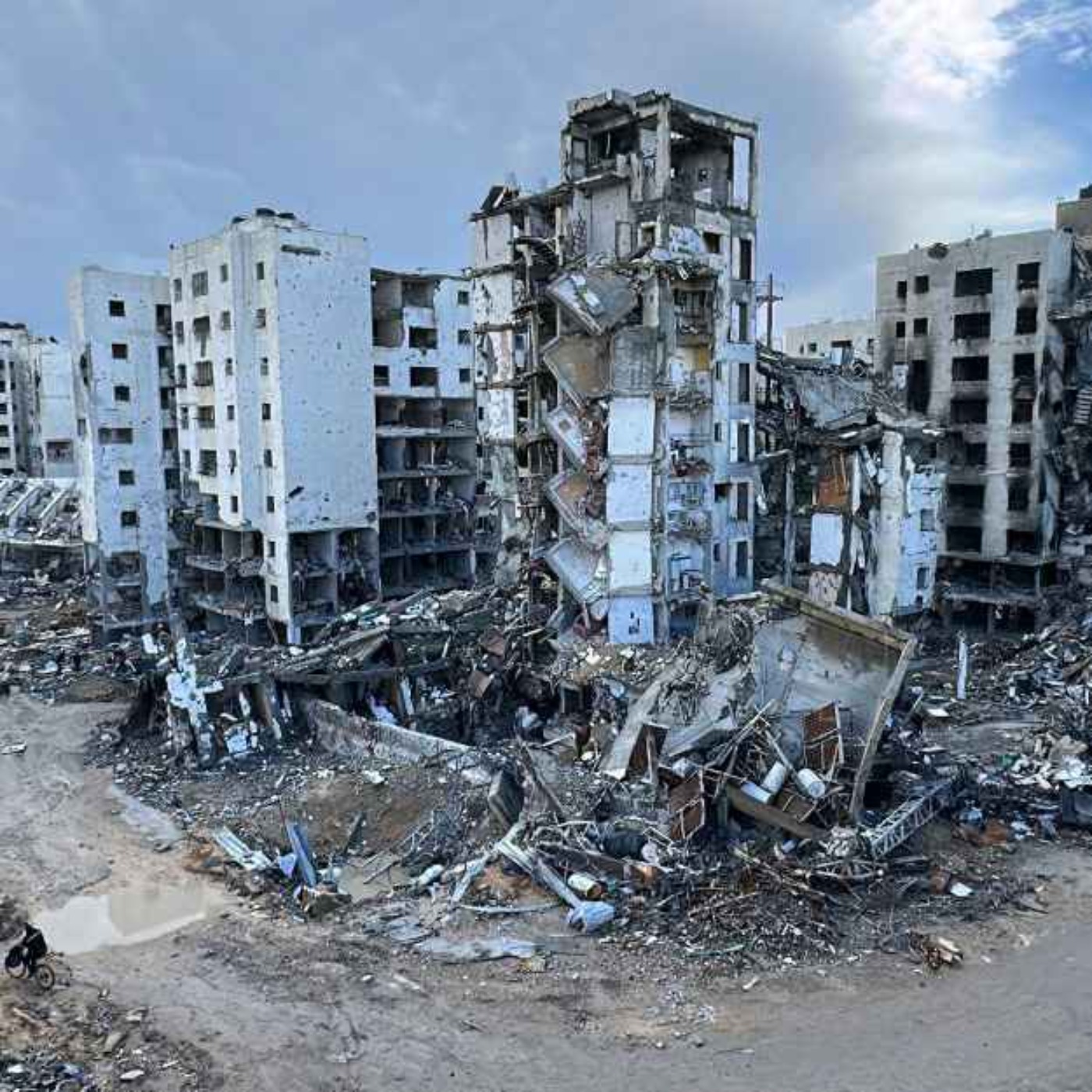
The pulse of Israeli politics and society with Gilad Halpern
Aug 07, 2025
Welcome to the first episode exploring the current war on Gaza. In today’s episode with Gilad Halpern we’ll be taking an in-depth look at the current situation within Israel itself – examining the state of Israeli society and the complex political dynamics at play.Israel remains a deeply divided nation, with sharp social and ideological rifts running through its population. From the secular vs. religious divide, to the longstanding left-right political schisms, Israeli society is characterized by a plurality of viewpoints and identities.
Learn More
On the political front, Israel’s government is currently led by one of the most right-wing coalitions in the country’s history, igniting concerns over the trajectory of the Israeli-Palestinian conflict, minority rights, and the preservation of democratic norms. We’ll analyze the key players, policy positions, and controversies surrounding the current administration. As we navigate this complex landscape, it’s important to remember that this is just one part of a larger, multi-faceted issue. In upcoming episodes, we’ll turn our focus to Palestinian society from the voices and perspectives of those living under Israeli occupation. We’ll also examine the stances and roles of the so-called “”international community”” of nations in relation to this conflict. Originally published on 05/07/2024.
Zionism: from the Mandate to the present with Arie Dubnov
Aug 06, 2025
Welcome back for part two of our comprehensive exploration of Zionism on Jerusalem Unplugged. In our previous episode, Arie Dubnov provided invaluable insights tracing the diverse ideological currents and forces that shaped the Zionist movement from its origins through the tumultuous events surrounding Israeli statehood in 1948.Today, we continue this illuminating discussion as Professor Dubnov analyzes the roles played by the pre-state paramilitary organizations like the Haganah, Irgun, and Lehi.
Learn More
Their histories and divergent ideological leanings foreshadowed the fissures that emerged within the Zionist movement after 1948. From there, Professor Dubnov will guide us through the critical periods of the late 1940s following independence and the transformative 1967 Six-Day War. His nuanced perspectives shed light on how Zionist thought and praxis continuously evolved in response to changing regional realities.Finally, we’ll bring the conversation into the present as Professor Dubnov examines the multifaceted manifestations and ongoing debates surrounding Zionism’s place in contemporary Israeli society and the world at large.Drawing from his extensive scholarship, including his current work on the interwar ties between Zionist and British imperial thinkers, this second part promises to be a masterclass on the rich histories and reverberations of one of modern history’s most influential nationalist ideologies. Originally published on 04/18/2024.
Zionism(s): the early period with Arie Dubnov
Aug 06, 2025
In this first installment of a special two-part series, Jerusalem Unplugged takes a deep dive into the origins and development of Zionism leading up to the establishment of Israel in 1948. I am joined by Professor Arie Dubnov, an expert on the histories of this influential nationalist ideology. Over the course of this thorough yet riveting episode, Professor Dubnov provides profound insights into the complex ideological currents, key figures, and pivotal moments that shaped the Zionist movement from its early beginnings through the tumultuous events surrounding Israeli statehood and Nakba. His analysis sheds light on the layered histories that gave rise to one of the most impactful nationalist movements of the modern era.
Learn More
This first part lays the essential groundwork for understanding Zionist thought and praxis. But the journey is far from over. In the forthcoming second episode, Professor Dubnov will pick up the thread in 1948, tracing how Zionism evolved and manifested in different forms over subsequent decades up to the present.Preparing listeners for a thought-provoking exploration, this two-part series promises to provide an illuminating episode on the multifaceted ideas, events, and ongoing impact of Zionisms. Stay tuned for part two of this comprehensive analysis. Originally published on 04/12/202.
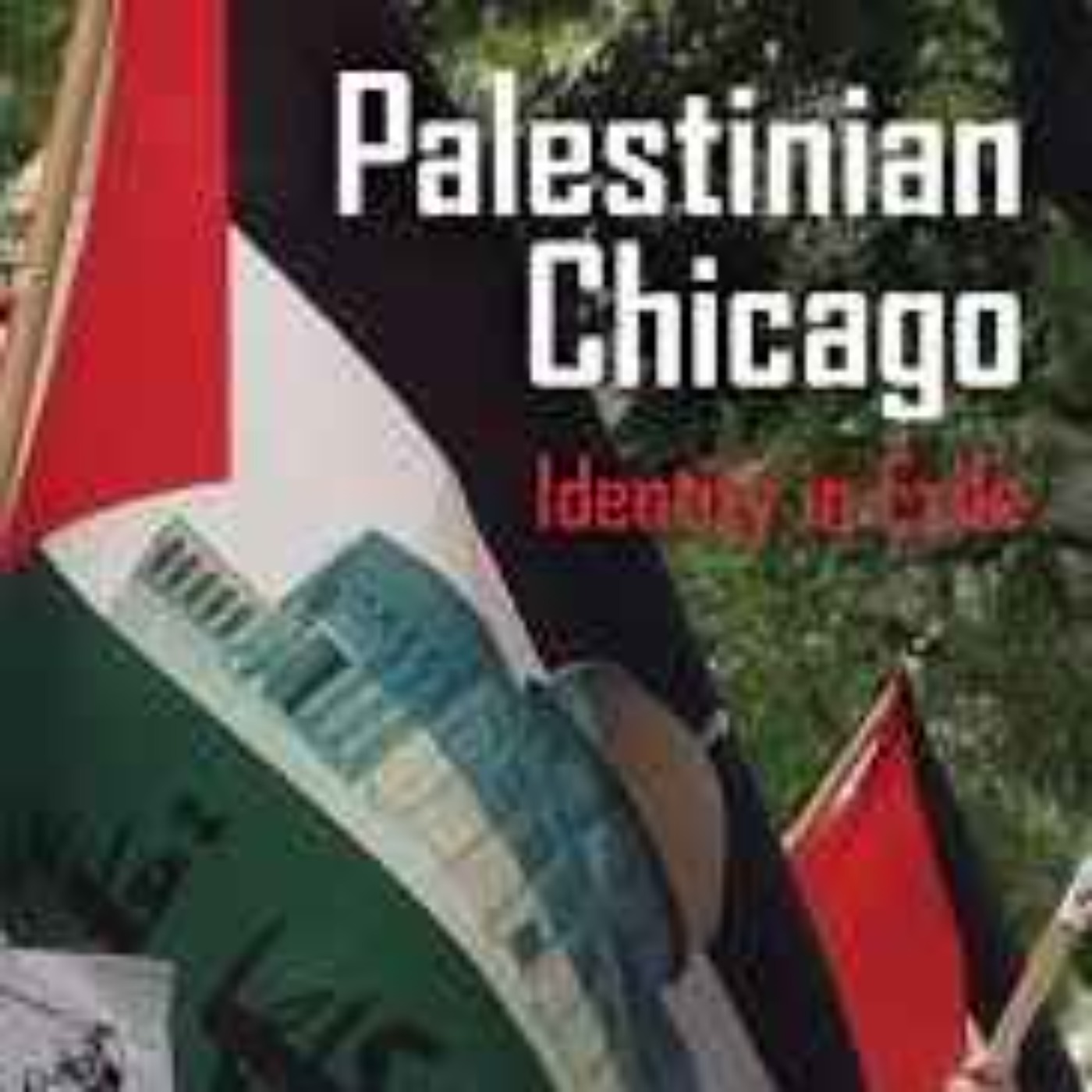
Palestinian Chicago with Loren Lybarger
Aug 06, 2025
For this episode I had the pleasure to interview Loren Lybarger, a long time resident of Palestine who devoted a few years studying the Palestinian community of Chicago which is home to one of the largest, most politically active Palestinian immigrant communities in the United States. For decades, secular nationalism held sway as the dominant political ideology, but since the 1990s its structures have weakened and Islamic institutions have gained strength. Drawing on extensive fieldwork and interview data, *Palestinian Chicago* charts the origins of these changes and the multiple effects they have had on identity across religious, political, class, gender, and generational lines. The perspectives that emerge through this rich ethnography challenge prevailing understandings of secularity and religion, offering critical insight into current debates about immigration and national belonging. Originally published on 04/02/2024.
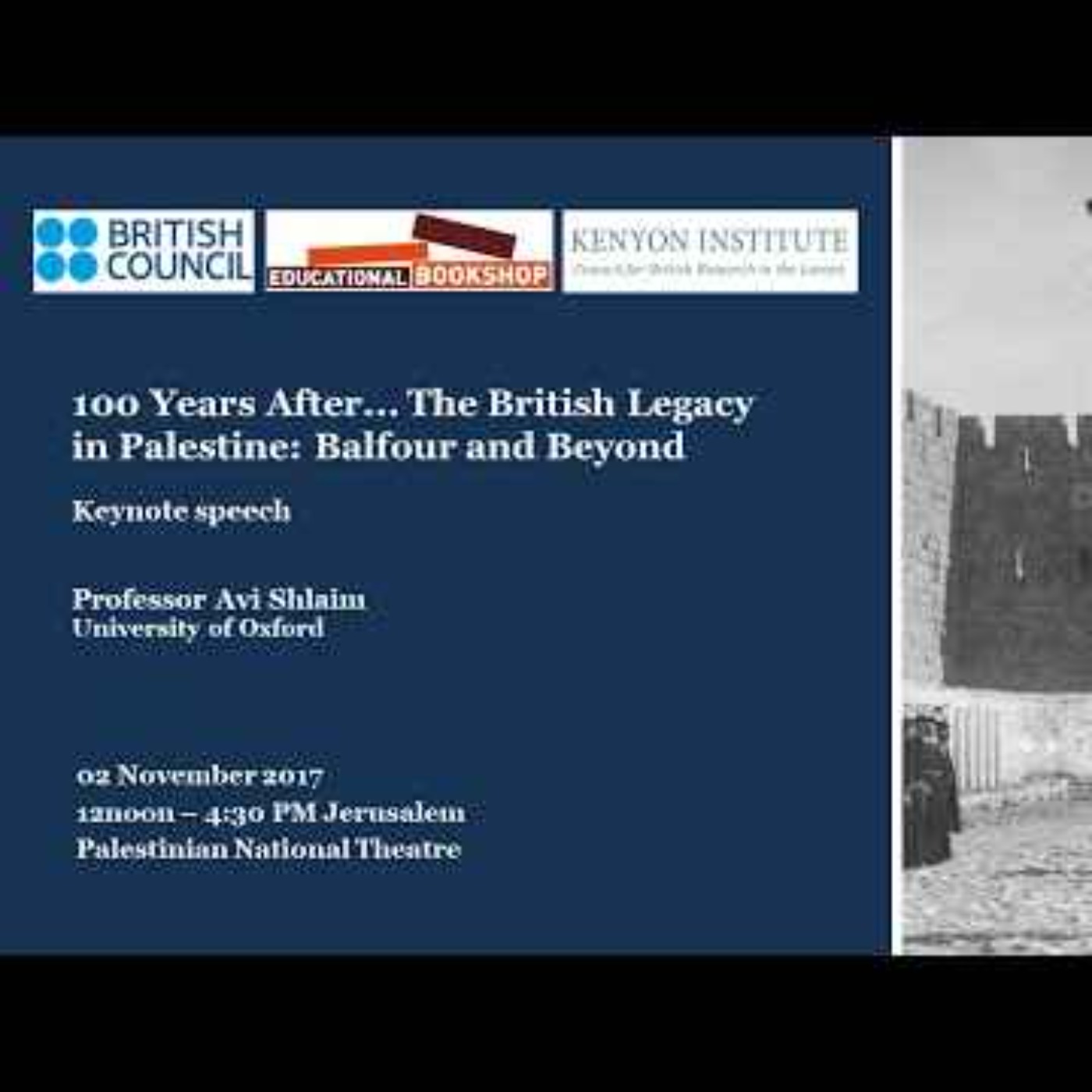
The Balfour Declaration: Part 2 with Avi Shlaim and Salim Tamari
Aug 06, 2025
In this second episode dedicated to the Balfour Declaration I have republished the presentations made by Professor Avi Shlaim and Salim Tamari at: ‘The British Legacy in Palestine: Balfour and Beyond’ conference held at the Palestinian National Theatre on 2 November 2017. This was a joint event from the Kenyon Institute and the Educational Bookshop, and supported by the British Council Palestine. Originally published on 02/28/2024.
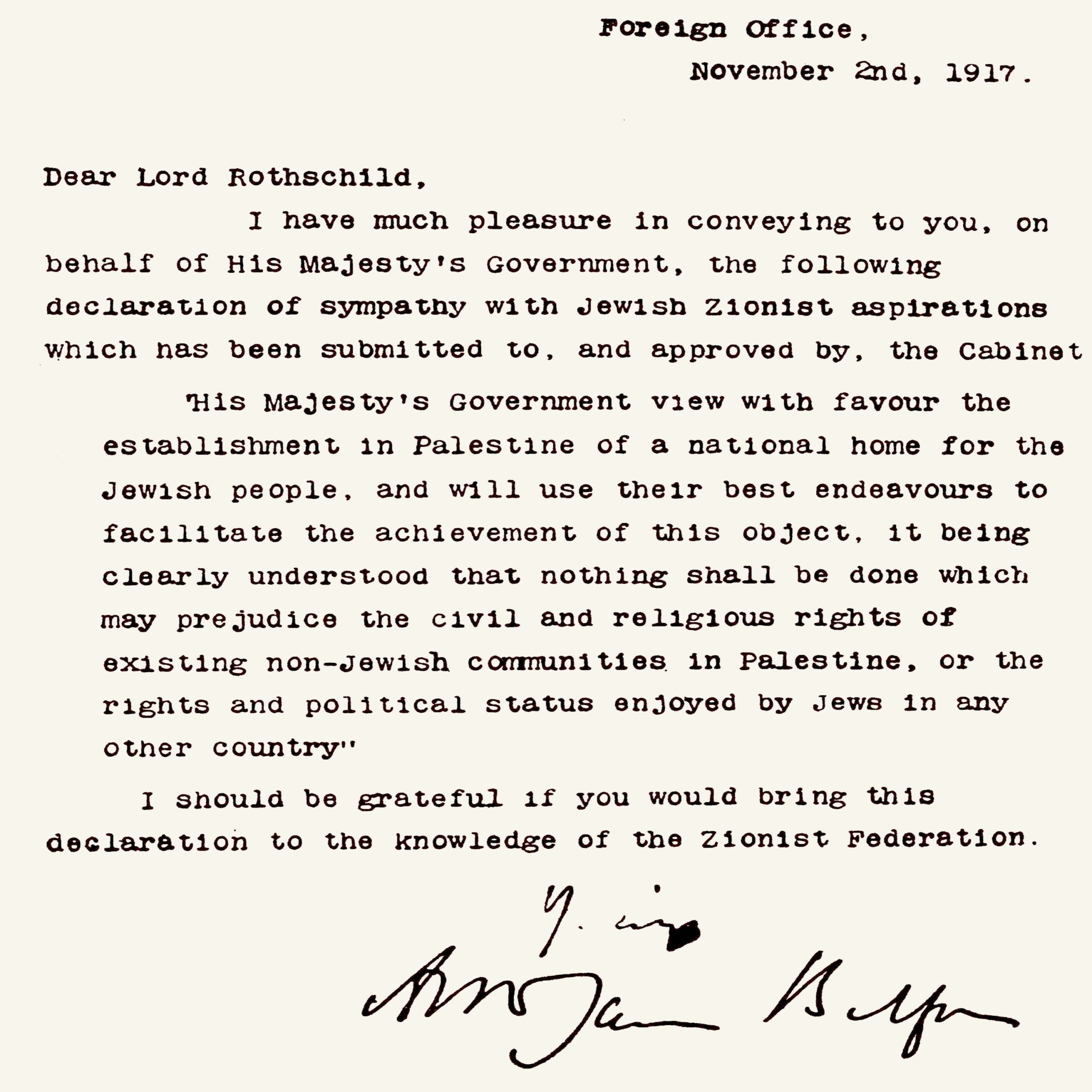
The Balfour Declaration: Part 1
Aug 06, 2025
Cherished and hated by many, the Balfour Declaration is certainly considered one of the most controversial documents in recent history. In this first episode of a series dedicated to this document, I will discuss the origins of the Declaration and offer several explanations in the attempt to understand why the British promised a Jewish National Home for the Jewish people in Palestine, when in fact the British were just crossing the Suez Canal in their efforts to defeat the Ottoman Empire.
Learn More
Bibliography suggested: Lorenzo Kamel, Imperial Perceptions of Palestine (IB Tauris, 2020)Gabriel Polley, Palestine in the Victorian Age (IB Tauris, 2022)Lawrence Davidson, ‘The past as prelude: Zionism and the Betrayal of American Democratic Principles, 1917-1948’ (2002)Jehuda Reinharz, ‘Zionism in the USA on the eve of the Balfour Declaration’ (1988)James Renton, The Zionist Masquerade (Palgrave, 2004)James Renton, ‘Flawed Foundations: the Balfour Declaration and the Palestine Mandate’ (2016)Jonathan Schneer, The Balfour Declaration: the Origins of the Arab-Israeli Conflict (2010)Avi Shlaim, ‘The Balfour Declaration and its Consequences’ (2005)Leonard Stein, The Balfour Declaration (1961). Originally published on 02/09/2024.
Country of Words with Refqa Abu-Remaileh
Aug 06, 2025
*Country of Words* taps into the power of Palestinian literature to defy conventional linear, chronological, and artificial national frames of representation. Despite the fact that an unprecedented number of the world’s population live as refugees, exiles, or stateless people, the logic of the nation-state continues to loom large over literary studies. Delving into the decentralized and deterritorialized history of Palestinian literature, the story of an entire nation-in-exile living through repetitive cycles of occupation and in multiple diasporas can facilitate an understanding of extranational forms of literary production. Ultimately, *Country of Words* seeks to offer new perspectives and approaches that simultaneously include and transcend national literary frames. https://countryofwords.org/. Originally published on 028/03/2024.
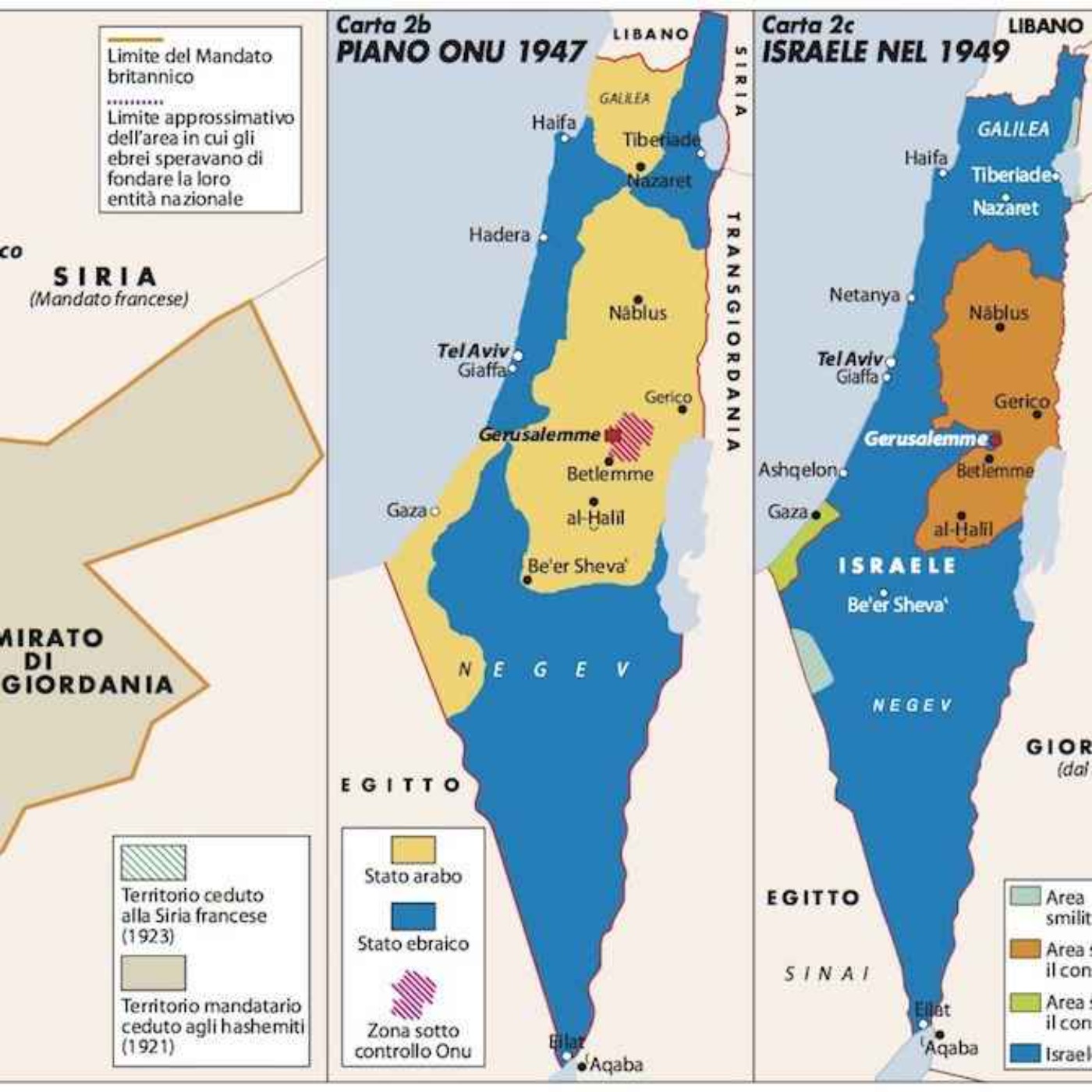
Palestina – Israele Dal sionismo delle origini al 1948: eventi, documenti, interpretazioni
Aug 06, 2025
Episodio in Italiano)In questa puntata di Jerusalem Unplugged ho il piacere di pubblicare il mio intervento insieme a quello di Maria Chiara Rioli e Arturo Marzano come relatori del seminario Palestina – Israele Dal sionismo delle origini al 1948: eventi, documenti, interpretazioni che ha avuto luogo all’universita’ di Bologna Dipartimento di Storia, il 22 Gennaio 2024 organizzato da Caterina Bori con la collaborazione di Francesca Biancani e Cigdem Oguz. Originally published on 01/25/2024.
Our Palestine Question with Geoffrey Levin
Aug 06, 2025
American Jews began debating Palestinian rights issues even before Israel’s founding in 1948. Geoffrey Levin recovers the voices of American Jews who, in the early decades of Israel’s existence, called for an honest reckoning with the moral and political plight of Palestinians. These now‑forgotten voices, which include an aid‑worker‑turned‑academic with Palestinian Sephardic roots, a former Yiddish journalist, anti‑Zionist Reform rabbis, and young left‑wing Zionist activists, felt drawn to support Palestinian rights by their understanding of Jewish history, identity, and ethics.
Learn More
They sometimes worked with mainstream American Jewish leaders who feared that ignoring Palestinian rights could foster antisemitism, leading them to press Israeli officials for reform. But Israeli diplomats viewed any American Jewish interest in Palestinian affairs with deep suspicion, provoking a series of quiet confrontations that ultimately kept Palestinian rights off the American Jewish agenda up to the present era. Originally published on 01/13/2024.
Aspects of History: Israel Palestine
Aug 06, 2025
This is an edited recast of the podcast I recorded with Oliver Webb-Carter, founder of Aspects of History home – Aspects of History. After the horrific attacks of 7th October our editor discussed the long running Israel Palestine conflict with historian and author Roberto Mazza. Covering the growing Zionist movement in the early 20th century, to the Balfour Declaration through to the British Mandate for Palestine, the 1948 war and the Six Day War in 1967 Roberto discusses how we got to where we are today and whether there is any prospect for peace.This is the link of the original podcast: Aspects of History – Israel Palestine with Roberto Mazza | RSS.com. Originally published on 12/07/2023.
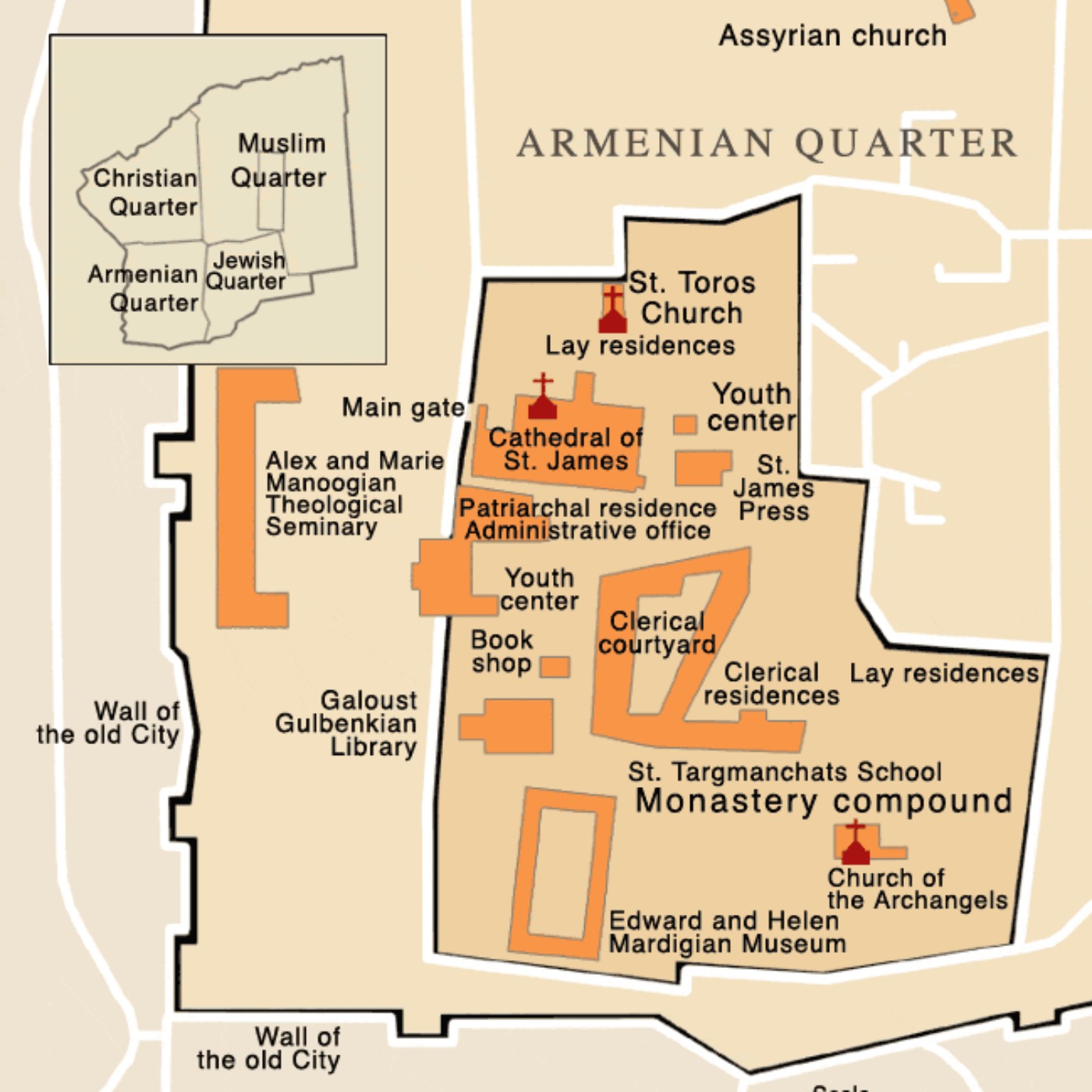
The Armenian Quarter of Jerusalem under threat with Bedross Der Matossian
Aug 06, 2025
In the Old City of Jerusalem, 80 kilometres from the war in Gaza, another religious conflict is taking place. An Australian property developer, aided by a group of armed Jewish settlers, has attempted to occupy a prized piece of land in the Armenian Christian quarter. Even though a deal to build a hotel was overturned, Armenian families are threatened with eviction from homes their community has held for centuries. Bedross tells us everything we need to know about the Armenians in Jerusalem and their struggle against armed settlers. Originally published on 11/22/2023.

Settler Colonialism with Arnon Degani
Aug 06, 2025
What is settler colonialism? How does this concept relate to Israel and Palestine? What about other countries? These are all great questions which I discussed in this episode with Arnon Degani. Arnon is currently a Fellow at Molad – Center for the Renewal of Israeli Democracy, specializing in the history of Zionism, Palestinian nationalism, and the Israeli-Palestinian conflict.
Learn More
He recently released the Hebrew podcast series “”Hesket Oslo,”” examining the Oslo Accords, and is currently working on the English adaptation, “”Still Processing.”” His doctoral research focused on the integration of Palestinian Arabs into Israeli society from 1948 to 1967, as revealed through daily encounters with Israeli officials, and his upcoming manuscript titled ‘Our Arabs”” explores this topic in depth. He is contributor to the scholarly and intellectual debate on if and how the settler-colonialism comparative framework benefits the study of Israel and Palestine. We hope you will enjoy this conversation. Originally published on 11/16/2023.
Israel, Palestine, and Turkey in the post Oct 7th Reality: A historical look toward the Future with Louis Fishman
Aug 06, 2025
I’m thrilled to bring you a thought-provoking talk by my good friend and friend of the podcast Louis Fishman. Our conversation today delves deep into the complex dynamics of the Middle East, focusing on “Israel, Palestine, Turkey in the post-Oct. 7th reality: A Historical Look Toward the Future.” The talk was given at Northwestern University of Nov. 8.
Learn More
There’s a twist to today’s presentation. After the talk, I conducted a Q&A session with Professor Fishman, and although the questions were intriguing, a technical hiccup rendered the audience questions inaudible. However, fear not! We’ve preserved Professor Fishman’s answers for your listening pleasure, ensuring you don’t miss out on his invaluable wisdom.So, stay tuned for a journey through history and geopolitics as we explore the past, present, and future of Israel, Palestine, and Turkey in the ever-shifting post-Oct. 7th reality. Originally published on 11/09/2023.
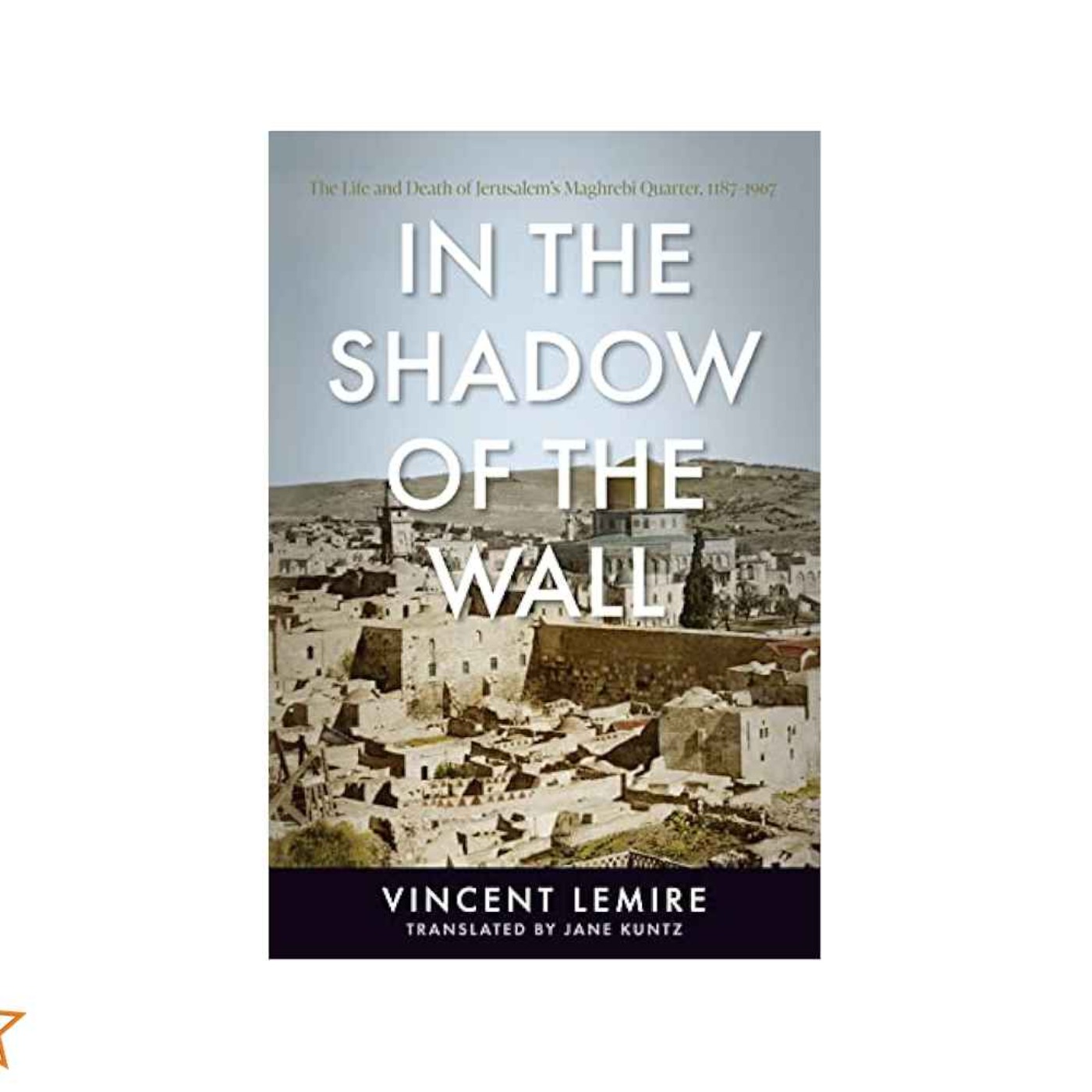
The Life and Death of the Mughrabi Quarter 1187-1967 with Vincent Lemire
Aug 06, 2025
As the war keeps raging in Palestine, thousands have been killed, thousands are living under threat of immediate death, hundreds of hostages are still held somewhere in Gaza, the West Bank is on the brink of exploding, Islamophobia and anti-Semitism are on the rise, polarized views leave no room for dialogue, I choose to publish an interview I recorded some time ago and I was hoping to upload later in the year.
Learn More
I choose not to look the other way, but to keep giving the listeners crumbs of the history of Palestine and all the people that live there. With my good friend Vincent Lemire we discussed his latest book which presents the history of the Mughrabi Quarter, the one you can no longer see as it was demolished right after the conquest of the Old City by Israeli troops in 1967. In this fascinating discussion we talk about the history of the quarter, its destruction and its ‘resurrection’ through contemporary archaeology. Originally published on 11/01/2023.
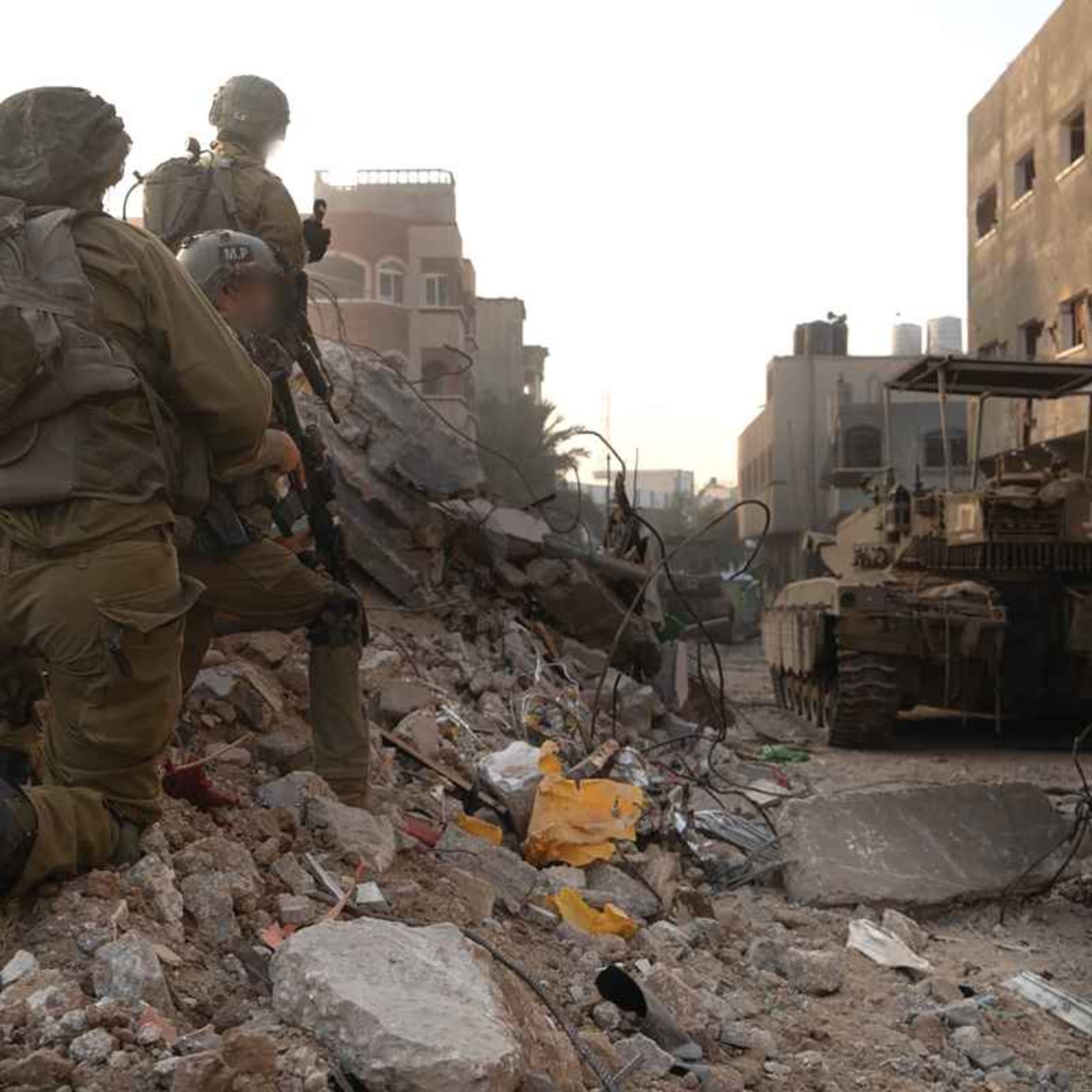
Ripercorrendo le Pagine del Conflitto Israele-Palestina: Contesto Storico e Attualità
Aug 06, 2025
Dopo tante richieste personali, ho pensato di organizzare un webinar non-accadmeico dedicato alla questione israelo-palestinese e ad Hamas, un’occasione unica per esplorare il contesto storico che ha plasmato gli eventi contemporanei che hanno portato all’attacco del 7 Ottobre e la conseguente risposta di Israele.
Learn More
Durante questa sessione di 50 minuti, approfondiremo le origini del conflitto, i cambiamenti politici e sociali avvenuti nel corso degli anni e il ruolo chiave svolto da Hamas. Sono ansioso di condividere questa esperienza di apprendimento con voi e di esplorare insieme il contesto storico di questa complessa questione che in tanti modi diversi riguarda anche me e la mia famiglia direttamente. Originally published on 10/27/2023.
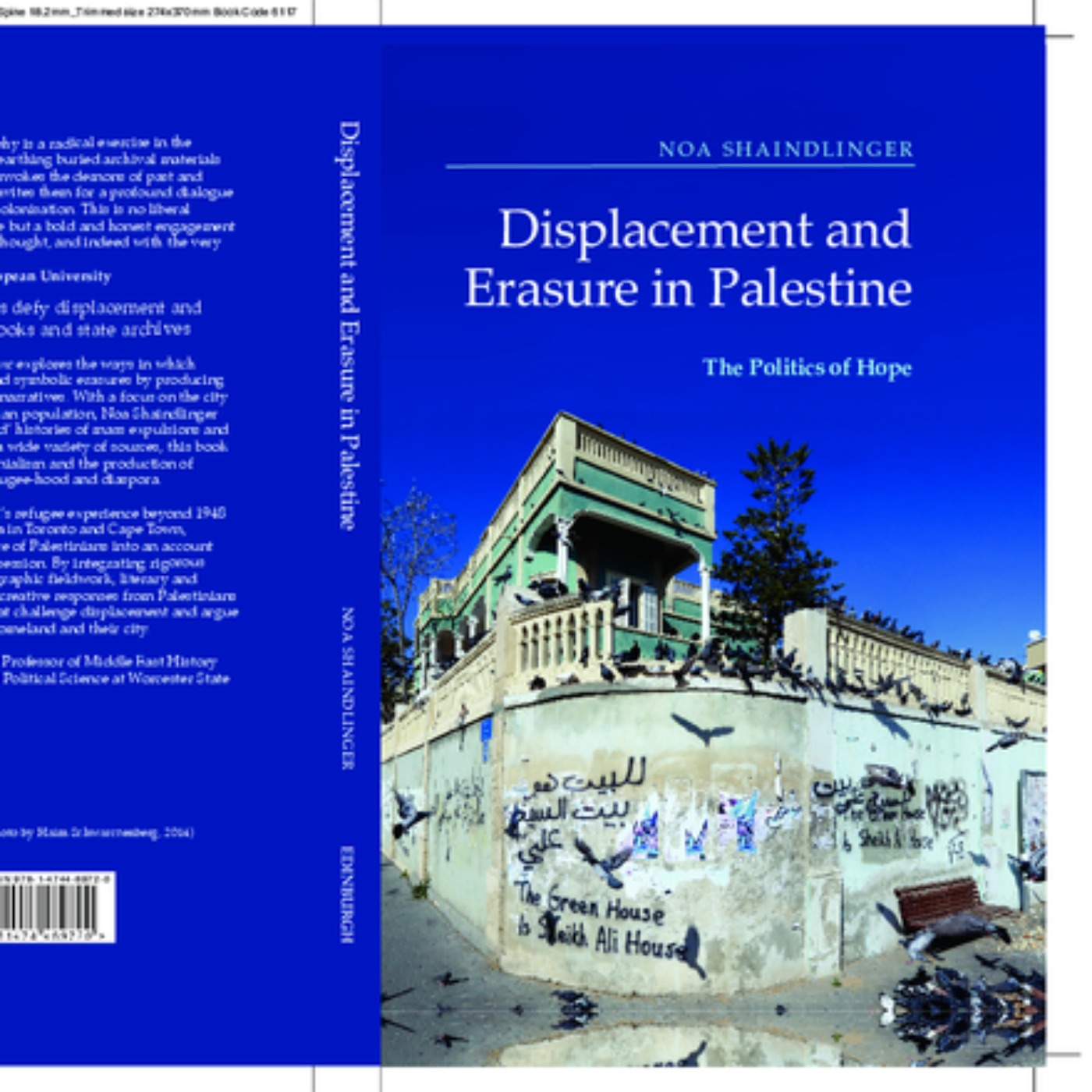
Displacement and Erasure in Palestine: the Politics of Hope with Noa Shaindlinger
Aug 06, 2025
We open season 5 without any celebration. The current war on Gaza, the brutal killings of civilians perpetrated by Hamas and the equally brutal response by the State of Israel carpet-bombing Gaza indiscriminately and essentially pushing Palestinians towards a second Nakba could not be a good time to celebrate 100 episodes of Jerusalem Unplugged. In this new release I talked to Noa Shaindlinger, author of an amazing book about post-Nakba Jaffa. She explores the ways in which Palestinians negotiate physical and symbolic erasures by producing their own archives and historical narratives.
Learn More
With a focus on the city of Jaffa and its displaced Palestinian population, Noa argues that the Israeli state ‘buried’ histories of mass expulsions and spatial appropriations. Based on a wide-variety of sources, this book brings together archival, literary, ethnographic and oral research to engage with ideas of settler colonialism and the production of history, violence and memory, refugee-hood and diaspora. Before all of this we exchanged view about current events, a possibility for Jerusalem Unplugged to clarify its position. Originally published on 10/18/2023.
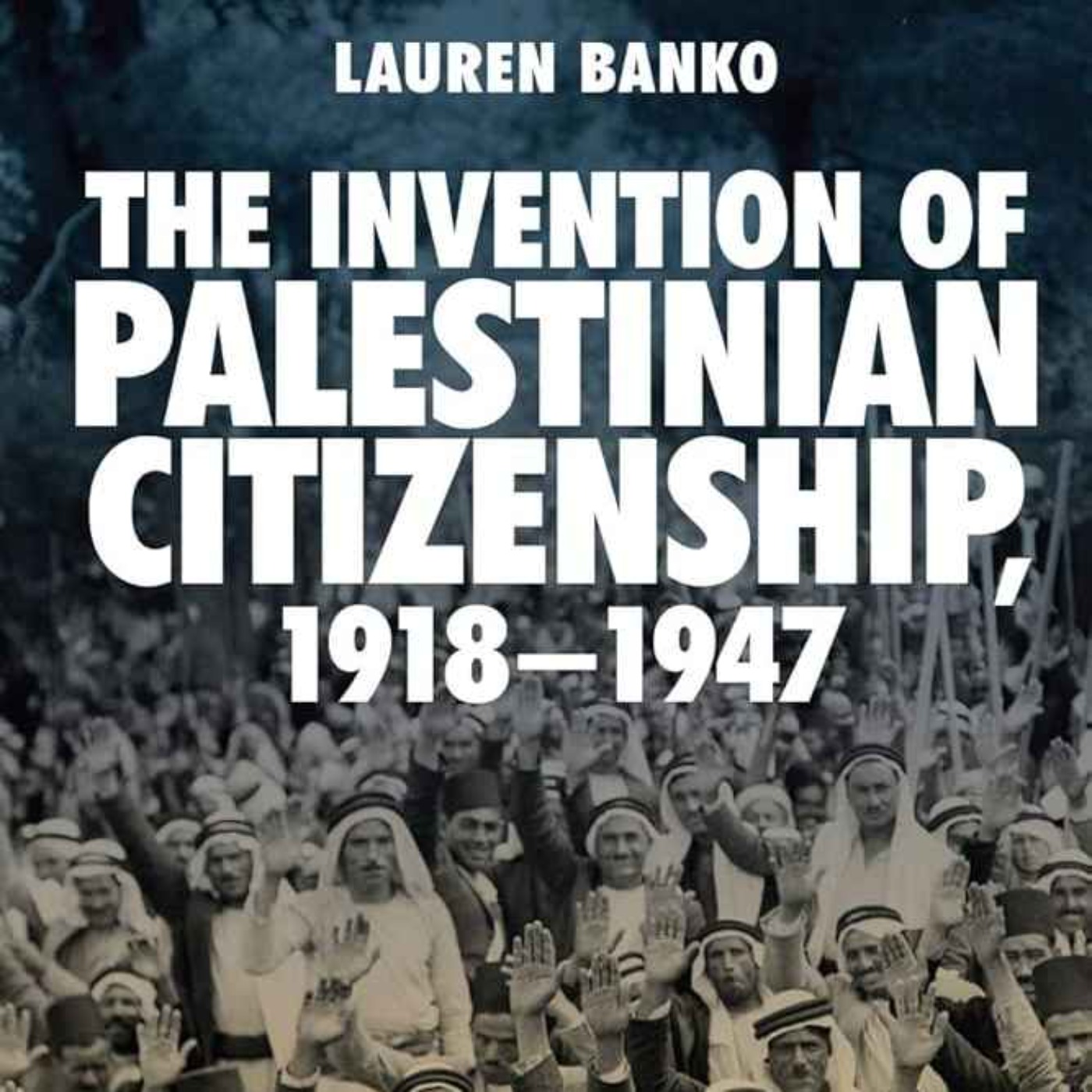
Palestinian Citizenship and licit and Illicit Mobility along the Borders of Palestine, 1920-1950 with Lauren Banko
Aug 06, 2025
In this fast moving conversation with Lauren Banko we discussed her first book ‘The Invention of Palestinian Citizenship 1918-1947’ and the question of Palestinian citizenship as a product of colonial rule, but also adopted by local Palestinians. We also discussed hew new projects like ‘Medical Deportees: narrations and pathographies of health at the borders of Great Britain, Egypt, and Palestine, 1919-1949’.
Learn More
This three year project offers new approaches to the history of 20th century medico-legal borders and puts (im)(e)migrants’ voices at its centre. These migrants include the forcibly displaced, refugees, and labour migrants from across Asia and Africa who attempted to enter Great Britain by sea, and Palestine and Egypt overland. The second project is a monograph about licit and illicit Mobility along the Borders of Palestine between 1920 and 1950. Lastly I asked Lauren a reflection on the 30 years since the Oslo accords. Originally published on 09/13/2023.
The Merits of Jerusalem with Fadi Ragheb
Aug 06, 2025
The Holy Land was the destination for many Muslim pilgrims during the late medieval and early modern period. In addition to worshipping on Jerusalem’s Haram al-Sharif, Muslim pilgrims in the Holy Land also visited important Christian holy sites, such as the Mount of Olives, the Tomb of Mary, and the Church of the Holy Sepulcher. With fada’il al-Quds (“Merits of Jerusalem”) pilgrimage texts serving as their guide, Muslims visited these places and joined Christian worshippers in contemplating the sacred.
Learn More
Fada’il al-Quds texts informed Muslim pilgrims of the blessings (fada’il) of Christian holy sites by citing Islamic traditions, such as Qur’anic verses, hadith literature, and Companions’ sayings (athar), to sanctify each Christian site and to command Muslims to perform certain Islamic prayers there. While fada’il al-Quds texts extolled Christian holy sites, they simultaneously debated whether Muslims were permitted to enter churches in the Holy Land. Despite the debate on the legality of Muslim pilgrimage to churches and protestations against the practice by some conservative *‘ulama’*, the fada’il al-Quds corpus, along withtravelogue literature,reveals that Muslims increasingly visited churches, shared sacred spaces, and even participated in Christian ceremonies into the Ottoman period. Fadi in this interview and his work provides a broad historical sketch of Islamic pilgrimage to Christian holy sites and demonstrates that Muslims in the Holy Land shared sacred spaces with Christians in Jerusalem for centuries before the onset of the modern era. Originally published on 08/09/2023.
Ronald Storrs 1918-1926 a Forgotten Legacy: Part II – the Pro-Jerusalem Society
Aug 05, 2025
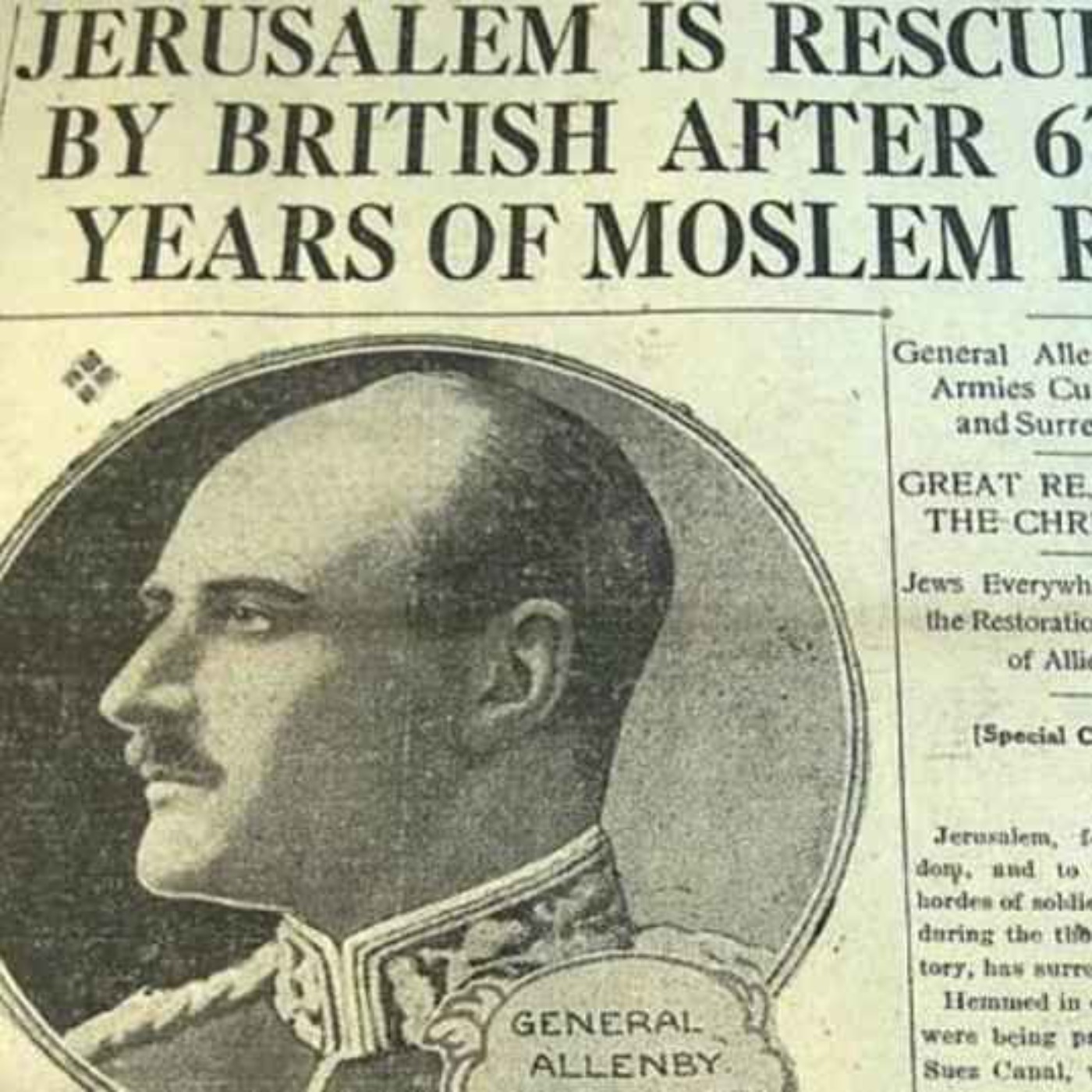
On September 6, 1918, twelve individuals met at the residence of the military governor of Jerusalem.1 The room was filled with tension as the governor was trying to win the confidence of those who were still skeptical and suspicious of British rule. A few months earlier, in December 1917, General Allenby had led the British troops into Jerusalem, ending Ottoman rule in the city and paving the way for greater British success in the region. As Jerusalem was now under British rule, General Allenby appointed Colonel Ronald Storrs as governor of the city.
Learn More
This appointment proved crucial for the development of the city in the interwar period. In the early days of British rule, Storrs was immediately involved with the delivery of supplies for the city and, in a fashion that would characterize his governorship, he placed the distribution of food and medicine in the hands of the municipality, under the supervision of the representatives of all religious communities. In this episode I discuss the establishment of the Pro-Jerusalem Society in 1918, its composition, and its aims. In presenting the society’s activities, I will focus on a particular decision first proposed by the society and later adopted by the Town Planning Commission: the adoption of Jerusalem – white – stone as the only visible building material allowed. This decision changed the way the city would look and develop. Originally published on 07/12/2023.
Ronald Storrs 1918-1926 a Forgotten Legacy: Part I
Aug 05, 2025
This is the first episode of a short series dedicated to the British Military rule of Jerusalem between 1917 and 1920 introducing the almost forgotten figure of Ronald Storrs. Following the conquest of the city, the British established military rule which lasted until 1 July 1920. From the perspective of the local population the government of the city had passed from Ottoman rule to that of a new foreign power. However, the British were not only European Christian rulers: they had also shown their support for Jewish immigration and settlement in Palestine by issuing the Balfour Declaration.
Learn More
Although the civil administration of the city after 1920 has been studied extensively, the military administration has been reviewed as a transitional period. Indeed, military rule forced the renegotiation of several aspects of Jerusalem: politics, urban geography, language and the economy, amongst other things, were all reshaped according to the requirements and values of the new rulers. The military establishment was generally reluctant to engage with the complexities of high politics, so how did their rule affect the city of Jerusalem? To answer this question, attention should be paid to one of the key characters of the British administration: the military governor Ronald Storrs. Military rule did not create a complex structure of government in Jerusalem, but was based upon a high concentration of power in the hands of Storrs. As military governor Storrs ruled the city almost undisturbed between 1917 and 1920, de facto reshaping the city according to his sense of aesthetics and his own values.BibliographyR. Mazza. From the Ottomans to the British (IB Tauris, 2011)R. Mazza ‘“The Preservation and Safeguarding of the Amenities of the Holy “&”City without Favour or Prejudice to Race or Creed”: The Pro-Jerusalem Society and Ronald Storrs, 1917–1926’. Originally published on 06/18/2023.
“Dwelling on the Green Line” with Gabriel Schwake
Aug 05, 2025
In this episode I discussed with Gabriel Schwake his latest book Dwelling on the Green Line, looking at the question of Israeli settlements built around the Green Line separating Israel and Palestine. Concealed within the walls of settlements along the Green-Line, the border between Israel and the occupied West-Bank, is a complex history of territoriality, privatisation and multifaceted class dynamics.
Learn More
Since the late 1970s, the state aimed to expand the heavily populated coastal area eastwards into the occupied Palestinian territories, granting favoured groups of individuals, developers and entrepreneurs the ability to influence the formation of built space as a means to continuously develop and settle national frontiers. As these settlements developed, they became a physical manifestation of the relationship between the political interest to control space and the ability to form it. Telling a socio-political and economic story from an architectural and urban history perspective, Gabriel Schwake tells us how this production of space can be seen not only as a cultural phenomenon, but also as one that is deeply entangled with geopolitical agendas. Lastly we discussed the red roofs, today associated with the settlements in the West Bank, but with a longer and unexpected history. Originally published on 06/14/2023.
Sacred Cuisine with Izzeldin Bukhari
Aug 05, 2025
Izzeldin Abdul Aziz Bukhari is the self-taught chef and founder of SacredCuisine; a culmination of Izzeldin’s life experiences that are deeply embedded in his Sufi roots. It embodies everything he values and aspires to instill. Originating from Bukhara – Uzbekistan, his family migrated to the Old City of Jerusalem in 1616 AD to teach Sufism. As a young adult he moved to the United States and discovered his passion for cooking when, missing Palestinian cuisine, he experimented with recreating his favorite Palestinian dishes.
Learn More
It was then that he discovered cooking as a form of meditation, through which he could lose himself and connect to the world around him. This experience was transformative, allowing him to mindfully contemplate the world around him and inspiring his vision for SacredCuisine. He began to notice where his ingredients came from, how they were grown, and what impact the dual processes of their production and consumption had on the ecosystem. Upon returning to Palestine, he decided to take Palestinian food, which is traditionally mostly plant-based, back to its roots of simplicity, versatility, and inclusiveness. https://sacred-cuisine.com/
Originally published on 05/31/2023.
The Nabi Musa Festival: Part III
Aug 05, 2025
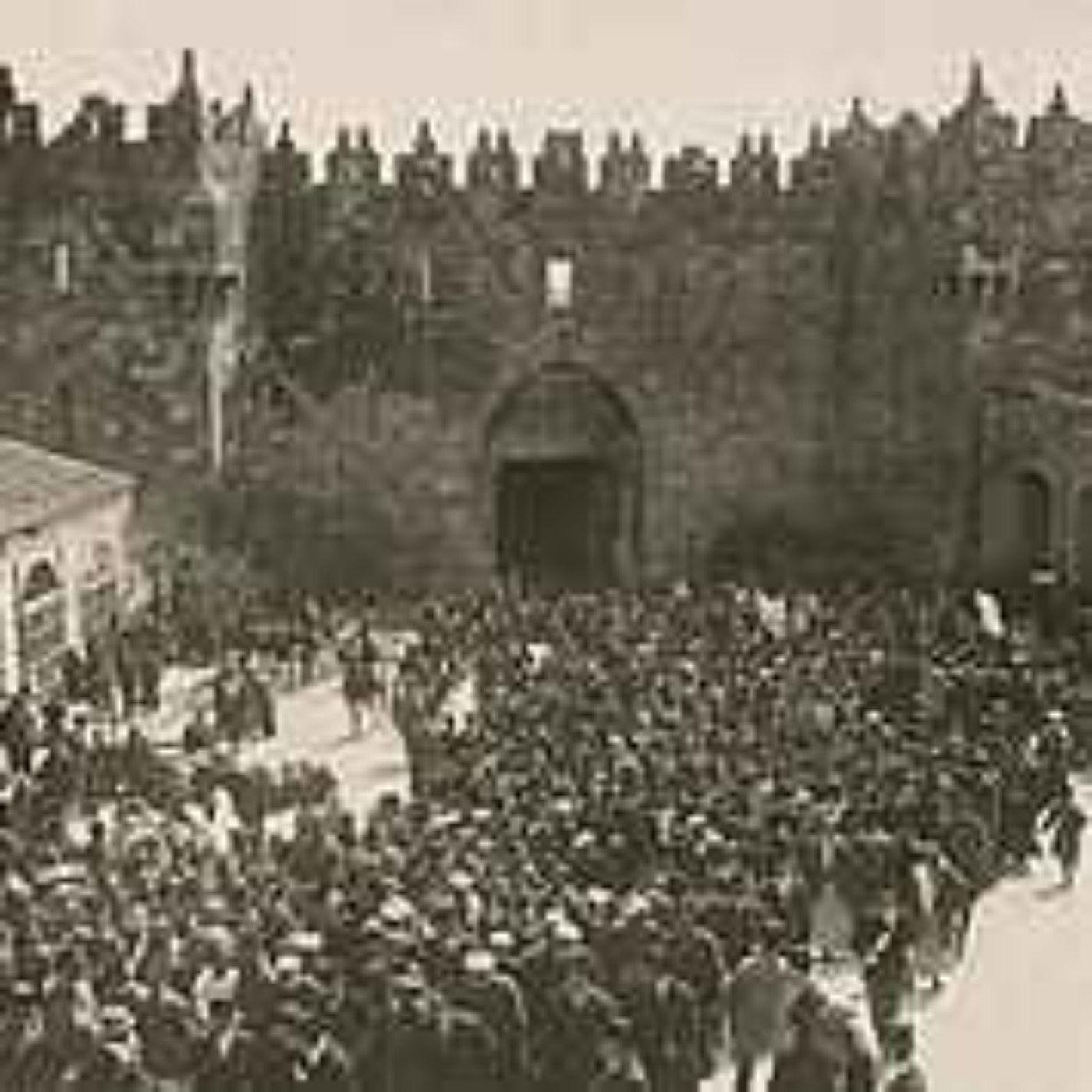
Led by General Allenby, British troops entered Jerusalem in December 1917, ending Ottoman rule and opening a new and crucial era in the history of Jerusalem and Palestine. The history of Jerusalem has traditionally been depicted as the quintessential history of conflict and strife, of ethnic and communal tensions and of incompatible national narratives and visions. The transition from Ottoman to British rule marked a dramatic and radical change in the history of the city, often described as the beginning of a period of great transformation.
Learn More
Looking at the riots that took place in the city in April 1920, this episode will explore the emergence of structured urban violence in Jerusalem and the ways it superseded communal violence. The context is provided by the political framework set by the British with the Balfour Declaration, the largescale arrival of Zionists in Palestine and the reshaping of the urban fabric of Jerusalem.BibliographyMazza, Roberto (2013). *Jerusalem: From the Ottomans to the British*. Mazza, Roberto (2015) Transforming the Holy City From Communal Clashes to Urban Violence, the Nebi Musa Riots in 1920.Halabi, Awad (2023), *Palestinian Rituals of Identity. The Prophet Moses Festival in Jerusalem, 1850-1948*(Short video on the riots including original footage). Originally published 05/24/2023.
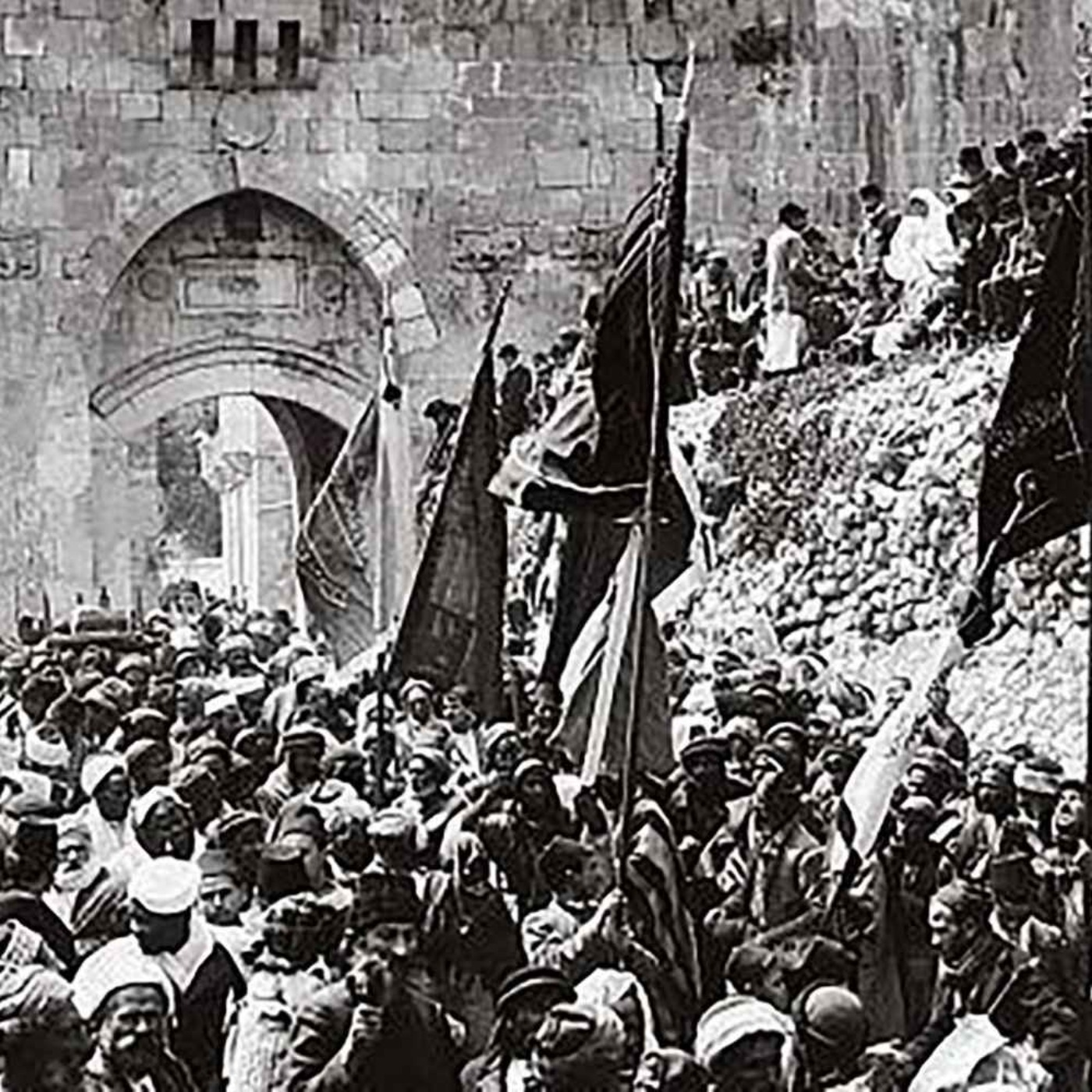
The Nebi Musa Festival: Part II
Aug 05, 2025
Following the first conversation with Awad Halabi (episode 49) as we discussed his work on the Nabi Musa festival, we are glad to celebrate and discuss in more details his latest book Palestinian Rituals of Identity. In this second part dedicated to the Nabi Musa Festival we will focus on the origins of the festival, its development with a particular focus on the late Ottoman era until the Nakba of 1948, discussing how the British understood and partly transformed the Festival.
Learn More
Awad discussed not just the celebrations but the participants and the rituals associated with the festival itself. In conclusion with Awad we looked at the contemporary and the possibilities for the festival to become once again a unifying factors for Palestinians in and around Jerusalem.In 1920 the Nabi Musa festival was transformed into the stage of large riots that occurred in Jerusalem: the so-called Nabi Musa Riots will be the focus of the next episode of Jerusalem Unplugged leading to the conclusion of this short series dedicated to the Nabi Musa Festival. Originally publishe don 05/10/2023.
From the Iron Age to the age of Covid with Chandler Collins
Aug 05, 2025
Chandler is a Ph.D. candidate at Bar Ilan University in Ramat Gan, Israel. He holds two M.A. degrees in the fields of Semitic languages, Hebrew Bible, and archaeology from Trinity International University in Deerfield, IL. He is a faculty member and the former Dean of Administration at Jerusalem University College. He is also a member of ARCH Jerusalem, an NGO devoted to preserving at-risk cultural heritage in Jerusalem.
Learn More
With Chandler we discussed his work as archaeologist focusing on the Iron Age period, we also discussed questions related various digging and structures of that historical period. Since Chandler was stuck in Jerusalem during Covid, it was very interesting to hear a different view of how to use that time for some new discoveries. Chandler is the author of Approaching Jerusalem which aims to be a trove of accessible writing about ancient and living Jerusalem, including its geographical setting, early exploration, archaeological excavations, architecture, history, people, and more. This newsletter is both an extension of the modern quest to uncover ancient Jerusalem and a self-reflection of how the drive to study Jerusalem has influenced the city we experience today. Originally published 05/03/2023.

Words and names with Fadi Boukaram – @cedrusk
Aug 05, 2025
In this Ramadan/Passover/Easter episode I sat down with Fadi Boukaram – aka @cedrusk – and spent some time talking about words and names that changed throughout time and travelled unimaginable distances. I recommend all listeners of Jerusalem Unplugged to subscribe to @cedrusk on whatever social media you are on as you will enjoy and learn lots of interesting and entertaining stuff. Fadi told me the story of a few words that originated in the Middle East, travelled long distances and went back completely changed and not many would have remembered the origin of those words. We also talked about the various names of Jerusalem, particularly those used in Arabic, but we couldn’t stay away from food and indeed Knafeh! Enjoy this conversation and remember to follow @cedrusk Originally published on 04/05/2023.
The Lives and Deaths of Jubrail Dabdoub with Jacob Norris
Aug 05, 2025
In this episode I discussed with Jacob Norris his latest book, born after he heard about the canonization of two Palestinian nuns, who amongst the various miracles also brought back to life Jubrail Dabdoub.This is the fantastical, yet real, story of the merchants of Bethlehem, the young men who traveled to every corner of the globe in the nineteenth century. These men set off on the backs of donkeys with suitcases full of crosses and rosaries, to return via steamship with suitcases stuffed with French francs, Philippine pesos, or Salvadoran colones.
Learn More
They returned with news of mysterious lands and strange inventions—clocks, trains, and other devices that both befuddled and bewitched the Bethlehemites. With newfound wealth, these merchants built shimmering pink mansions that transformed Bethlehem from a rural village into Palestine’s wealthiest and most cosmopolitan town. At the center of these extraordinary occurrences lived Jubrail Dabdoub.The Lives and Deaths of Jubrail Dabdoub tells the story of Jubrail’s encounters, offering a version of Palestinian history rarely acknowledged. From his childhood in rural Bethlehem to later voyages across Europe, East Asia, and the Americas, Jubrail’s story culminates in a recorded miracle: in 1909, he was brought back from the dead. To tell such a tale is to delve into the realms of the fantastic and improbable. Through the story of Jubrail’s life, Jacob Norris explores the porous lines between history and fiction, the normal and the paranormal, the everyday and the extraordinary. Originally published on 03/29/2023.
Teaching Jerusalem (Solo Episode)
Aug 05, 2025
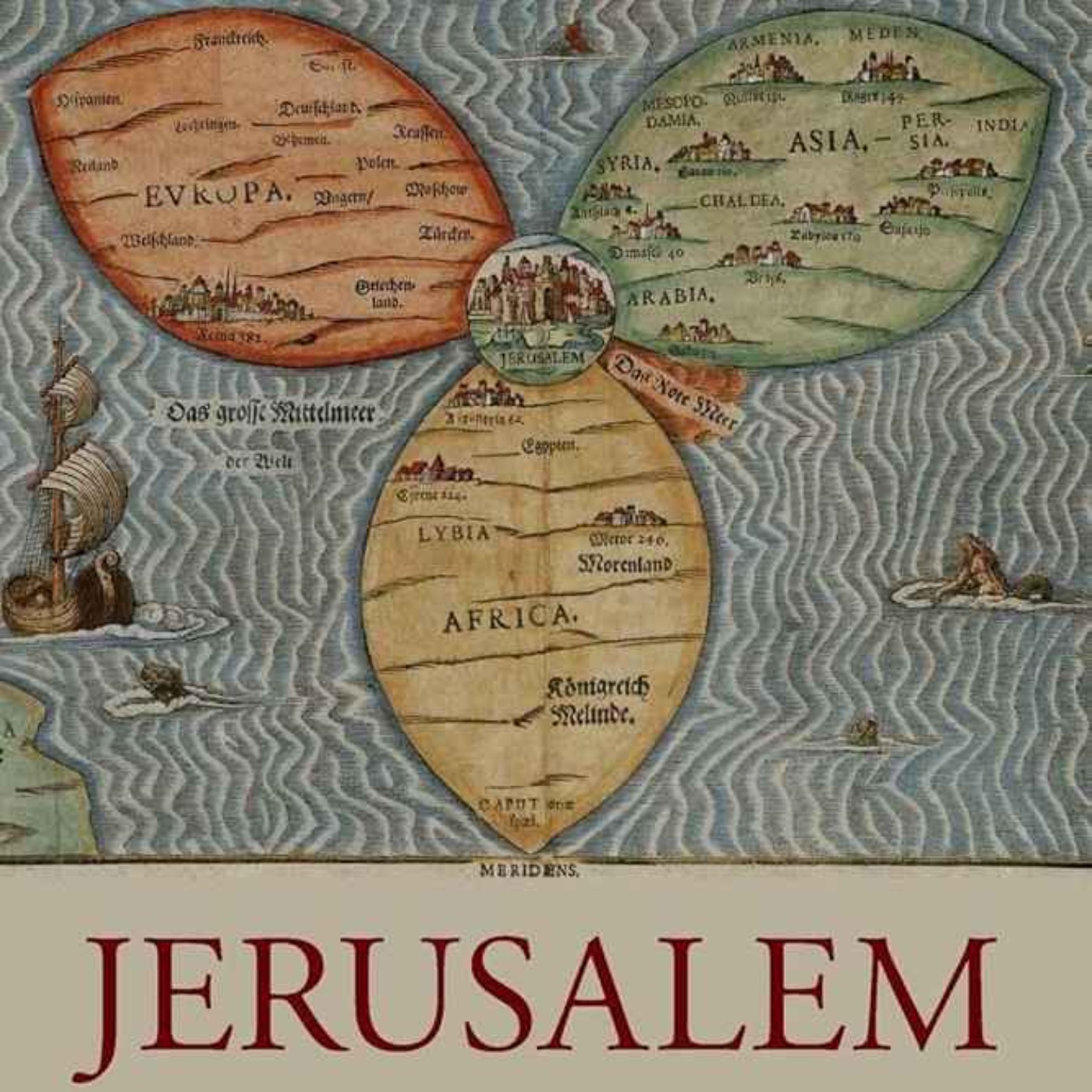
In this solo episode I am discussing the question of teaching Jerusalem. While the bookshelves of countless libraries around the world host at least a book on Jerusalem, a superficial browsing of classes taught about the city’s history reveals a different picture. Writing and publishing material about Jerusalem is as easy as it gets, but to teach about it, it is a completely different story.
Learn More
Given the long history of the city, the possibility to discuss many historical periods, ethnic and religious groups, politics, diplomacy, religion, eschatology, cuisine, art and even medicine, it is quite puzzling that not many scholars have offered in the past and are offering in the present courses making Jerusalem their centre. Is it a pedagogical question? How to structure a course on such a monumental history? Or is it a political issue: the fear of delving into a divisive and complex topic? Whatever the answer, the problem is that lack of teaching equals to great ignorance about the city, its history and its people, but more importantly it fuels the perpetuation of old stereotypes and the creation of new ones. Originally published on 03/22/2023.
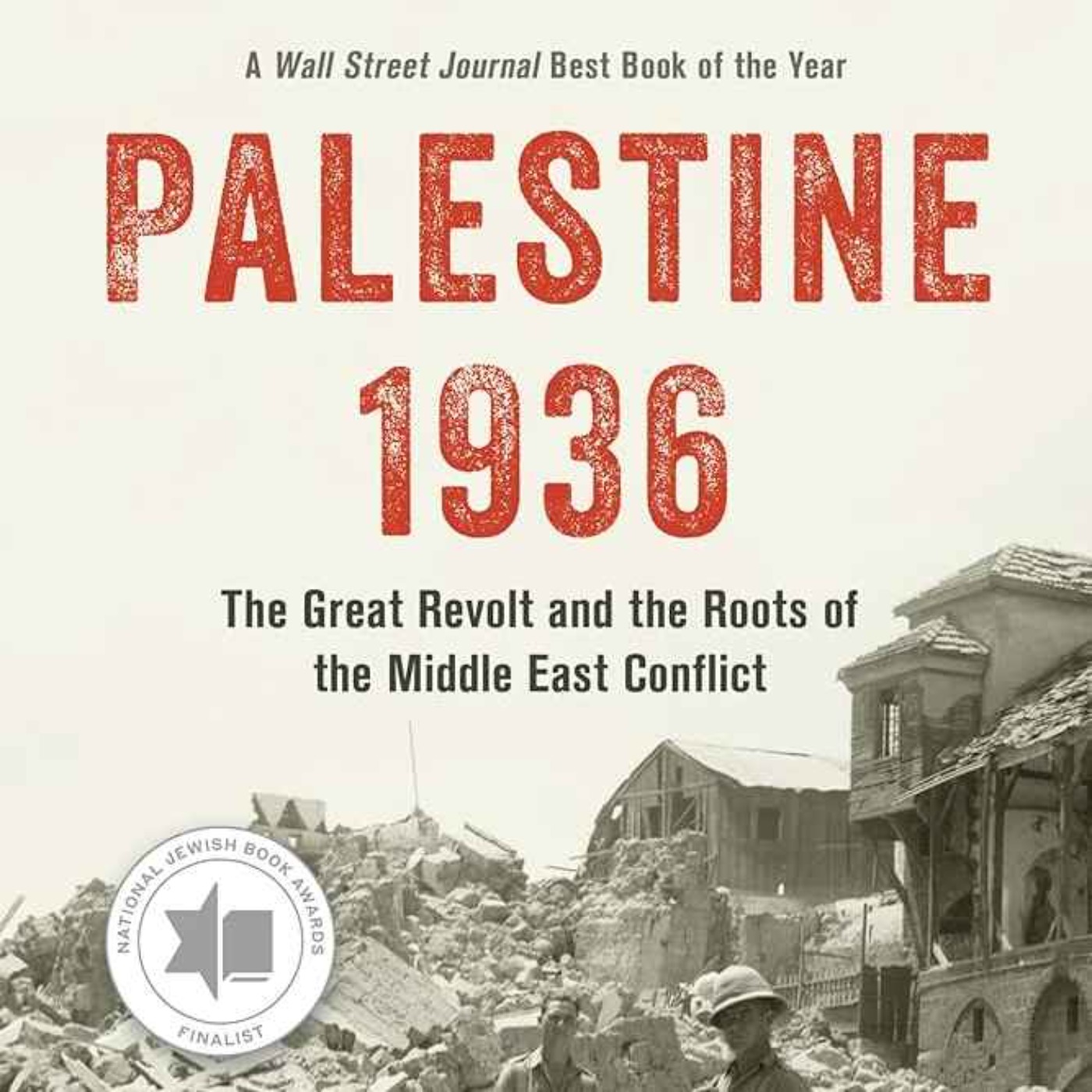
Palestine 1936 with Oren Kessler
Aug 05, 2025
The 1936–1939 revolt was the crucible in which Palestinian identity coalesced, uniting rival families, city and country, rich and poor in a single struggle for independence. British forces’ aggressive counterinsurgency took care of the rest, finally quashing the uprising on the eve of World War II. In this episode I engage in an interesting conversation with Oren Kessler, author of Palestine 1936. Kessler argues that today, eight decades on, the revolt’s legacy endures.
Learn More
Hamas’s armed wing and rockets carry the name of the fighter-preacher whose death sparked the 1936 rebellion. When Israel builds security barriers, sets up checkpoints, or razes homes, it is evoking laws and methods inherited from its British predecessor. And when Washington promotes a “two-state solution,” it is invoking a plan with roots in this same pivotal period. This is an extremely engaging conversation with different point of views which may leave the listeners to wanting to know more. More info here. Originally published on 03/15/2023.
Jerusalem’s Interrupted Futures: Part II
Aug 05, 2025
In this second part dedicated to the presentation and discussion of Jerusalem Quarterly 92 ‘Jerusalem’s Interrupted Futures’ I have asked the authors to provide more details related to their articles and to speculate what would have happened if these unfulfilled projects would have actually been completed. History cannot be changed, however these missed opportunities tell us about the agency of individuals and their choices. You can all articles for free here. Contributors to this episode are: Falestin Naili, Yair Wallach, Michelle Campos and Harris Ford. Originally published on 03/08/2023.
Jerusalem’s Interrupted Futures: Part I
Aug 04, 2025
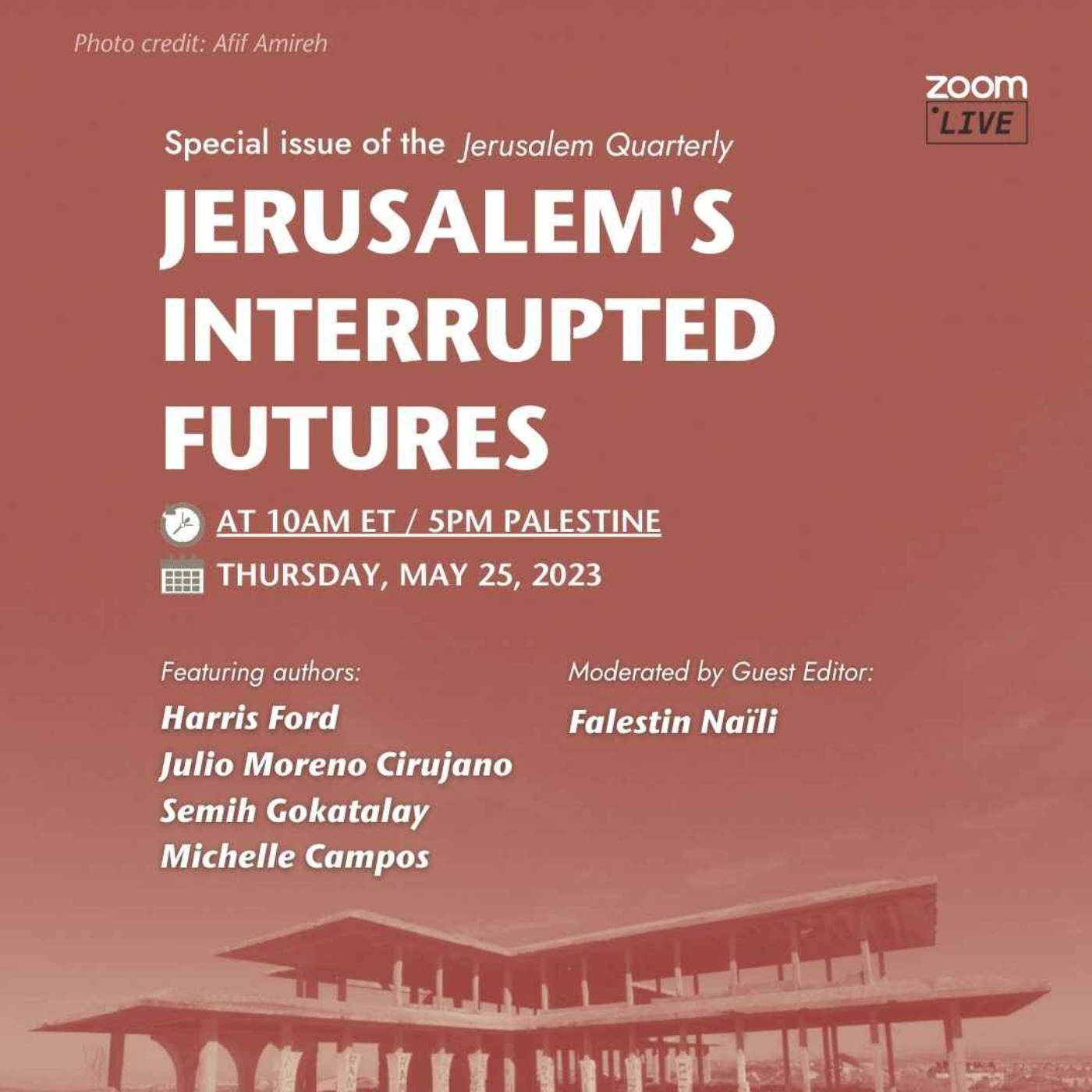
In this first episode dedicated to the publication of Jerusalem Quarterly 92 “”Jerusalem’s Interrupted Futures”” the guest editor Falestin Naili and several authors including Yair Wallach, Michelle Campos, Maria Chiara Rioli, Harris Ford and Semih Gokatalay talk about the unfilled plans for Jerusalem. The authors take hold of threads of unfinished schemes conceived just before or during important moments of rupture: the end of the Ottoman Empire (Campos), the termination of the British Mandate (Wallach and Cirujano; Ford; Gökatalay; and Pappé), the abrupt close of the Jordanian administration of Jerusalem (Lemire and Rioli; and Dukhgan and Naïli).
Learn More
The plans and projects discussed were the result of governmental initiatives at various levels. Some plans, such as the British Mandate scheme to build a parliamentary building in the city, point to the vivid contradictions of the colonial political structure. By contrast, it is important to remember that in the case of the Ottoman and the Jordanian administrations of the city, Palestinians were key political actors on the local level, something that was less the case during the Mandate period. You can all articles for free here. Originally published on 03/01/2023.
Palestine Nexus: a conversation with Zachary Foster
Aug 04, 2025
Palestine exists in our minds, says Zachary Foster, not in nature. If Palestine doesn’t exist, why do we identify with it? We identify with Palestine, first, because it has a name. In fact, we only identify with places we’ve named. Unnamed places, such as 22°29′05″N 22.48 to 53°46′19″E 53.77, have no identities based on them. But we don’t identify with every place we’ve named. We need to hear stories about a place if we are going to identify with it, stories about famines and wars, conquests and tribes, history, geography, economy, archeology and millions more topics.
Learn More
The more engaging the stories, the more likely we are to identify with places like Palestine. In our discussion we talked about his controversial PhD thesis and other material published in relation to Palestine during WW1. Lastly, we discussed his trip to Gaza where he collected documents and material now available here. Originally published on 02/22/2023.
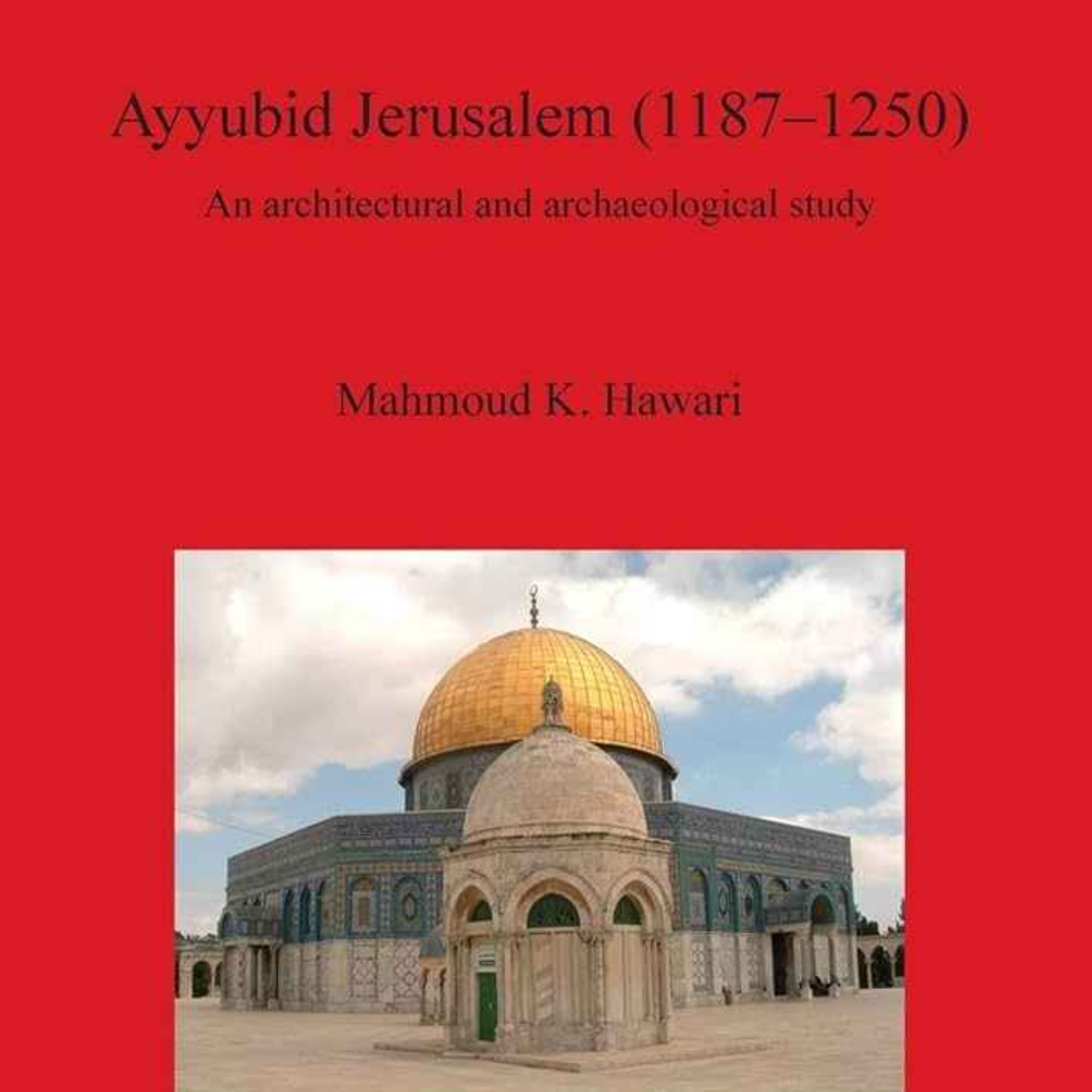
Ayyubid Jerusalem with Mahmoud Hawari
Aug 04, 2025
In this episode I talked to Professor Mahmoud Hawari, a leading scholar in the history of Ayyubid Jerusalem. The conquest of Jerusalem by Saladin in 583/1187, after nearly nine decades of Frankish rule, opened a new era of cultural, socio-economic and architectural changes. The renewed political fervour that followed it gave a fresh impetus to an extensive building activity initiated by the Ayyubids, which signified a renaissance in the style of Islamic architecture.
Learn More
Such style is exemplified in a large variety of monuments which would come to influence the magnificent Medieval Islamic architecture of Jerusalem. After unpacking Ayyubid Jerusalem we also discussed the question of the Citadel and the Tower of David, its archaeological appropriation and transformations. We ended the conversation with a virtual tour of Ayyubid Jerusalem where visitors can still see the visible signs of this almost forgotten dynasty. Originally published on 02/02/2023.
Palestinian Christianity with John Munayer
Aug 04, 2025
John Munayer is a researcher, writer, theologian and interreligious facilitator from Jerusalem. Most of his research focuses on Palestinian Theology, the Palestinian Christian community in the Holy Land and interreligious dialogue. With him we discussed Palestinian Christianity in Palestine, who are the Christians and what are the current theological debates amongst the various denominations.
Learn More
One particular brand of Christianity, dangerous to the indigenous Palestinian Christian population is Christian-Zionism. With John we discussed this particular brand of Christianity, their beliefs and the threats raised. Lastly we discussed the question of interreligious dialogue in Palestine and the upcoming new Palestinian Christianity Journal. Originally published on 01/25/2023.
UNRWA its work and archives with Anne Irfan and Jo Kelcey
Aug 04, 2025
UNRWA has often been described as a quasi-government or even a quasi-state for millions of Palestinian refugees across the Middle East. Active since 1950 it provides services more typically the domain of the modern nation-state, including a large-scale education program, healthcare, municipal services in the camps, and registration procedures.
Learn More
UNRWA is the only organization in the world that has continuously collected and maintained data about Palestinian refugees since the Nakba. Anne Irfan and Jo Kelcey, authors of an upcoming article for the Jerusalem Quarterly talk about UNRWA as an organization but also as an archive, a source for Palestinian history. Originally published on 01/18/2023.
Israeli politics and Jerusalem with Gilad Halpern
Aug 04, 2025
Israeli politics has underwent a visible radicalization pointing to right-wing policies designed to be exclusive rather than inclusive. The political spectrum has been dominated by the Likud party and its leader Benjamin Netanyahu. In this episode I talked to Gilad Halpern with the idea to make sense of current Israeli politics and understand the moves of the newly elected nationalist government. After a general discussion we focused on Jerusalem and how the new cabinet, in particular the religious-nationalist parties and leaders, may try to change the current status quo. Originally published on 01/11/2023.
Transnational Palestine with Nadim Bawalsa
Aug 04, 2025
Almost 40,000 Palestinians relocated to Latin America in the late 19th century, from Bethlehem, Bei Jala and indeed Jerusalem. In this episode Nadim Bawalsa talks about his new book that looks at Palestinian migrants to Mexico and Chile and how they negotiated the changes occurring in Palestine, including the end of Ottoman rule and the beginning of British rule. Since 1925 Palestinians abroad were not allowed to request Palestinian citizenship, essentially stripping away their right of return well before 1948. Originally published on 12/21/2022.
“All things Jerusalem” with Daniel Seidemann
Aug 04, 2025
All things Jerusalem, says his twitter account @DanielSeidemann. Daniel is not just a lawyer specializing in difficult issues related to East Jerusalem, but he has an intimate knowledge of the city, its dynamics and his visitors. Daniel has lived in Jerusalem since he made Aliyah in 1973 and since 1991, he has focused on the geopolitics of contemporary Jerusalem and the Israeli-Palestinian conflict.
Learn More
Along with his colleagues at Terrestrial Jerusalem, an NGO that he founded, Mr. Seidemann is frequently consulted by senior decision-makers and governmental bodies in Israel, Palestine, and in the international community on matters pertaining both to unfolding developments in Jerusalem and to broader issues relating to a permanent status agreement. Originally published on 12/14/2022.
Jerusalem Story with Kate Rouhana
Aug 04, 2025
In this episode I have interviewed Kate Rouhana, Founder and Director of Jerusalem Story. As we unpacked the mission and structure of the website, we also delved into some of the stories told by the contributors of the website. Jerusalem Story aims to tell the story of a unique city through a new lens—that of the city’s large and diverse indigenous Palestinian community. This community has deep historic roots in Jerusalem and holds the strongest attachment to and love for their city.
Learn More
Yet, they have been subjected to unrelenting efforts to erase their presence in, and potential claim to, the city—past, present, and future—in the service of cementing Israel’s imperative of claiming sole sovereignty in perpetuity over a “united Jewish Jerusalem. This effort, targeted through an overriding demographic imperative to maintain a Jewish majority to ensure control over the city, started decades ago and has taken myriad highly destructive forms, continuing to the present day, as is openly acknowledged by Israeli officials and decision-makers, and as the website and many other sources amply document. Originally published on 12/07/2022.
The Bookseller of Jerusalem: Mahmoud Muna
Aug 04, 2025
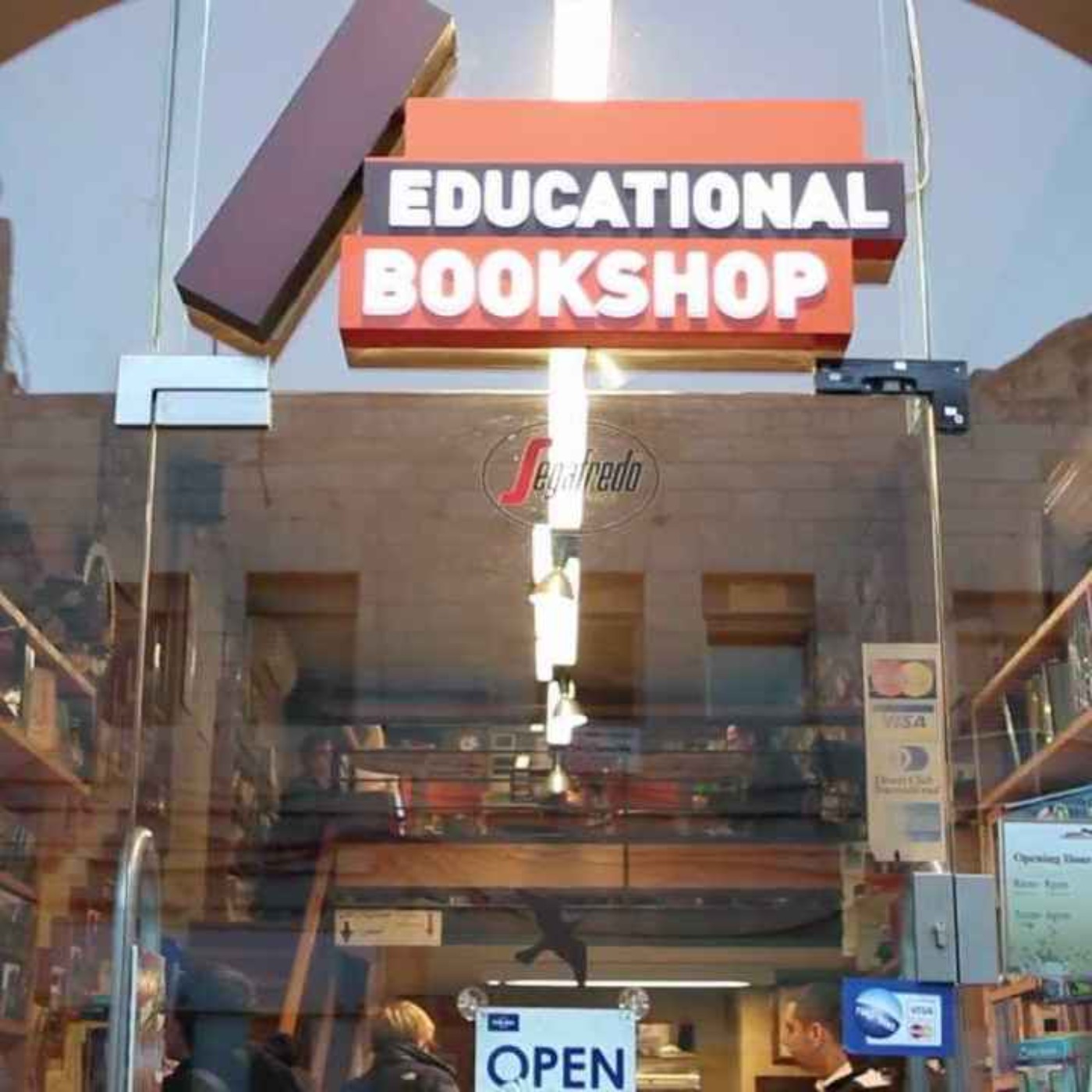
In this episode I had the pleasure to interview one of the most visible figures in East Jerusalem today: Mahmoud Muna. We have talked about why and how his father established the Educational Bookshop and from there we delved into an intimate conversation about Jerusalem, its present and its possible futures. Originally published on 11/30/2022.
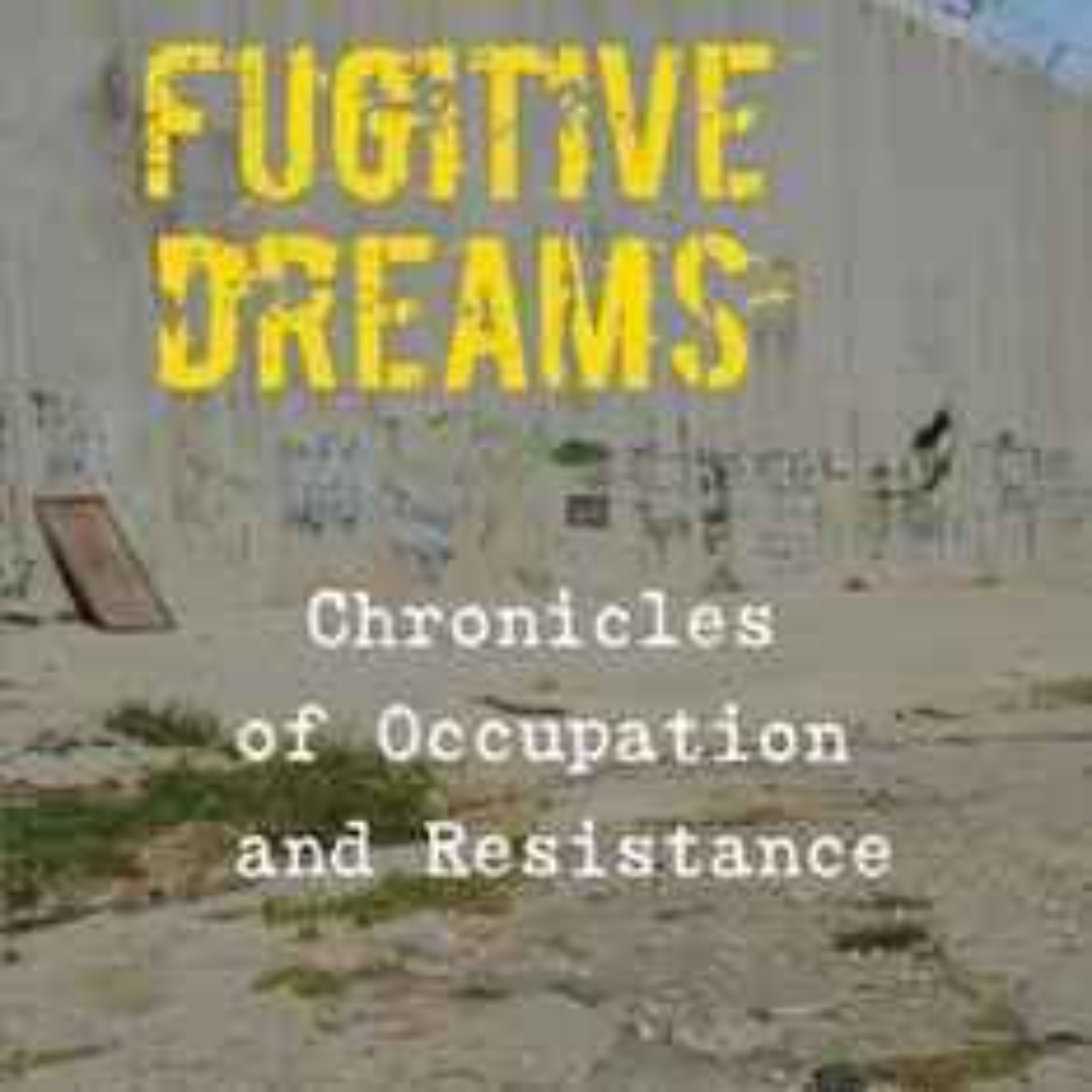
Chronicles of Occupation with Ramsey Hanhan
Aug 03, 2025
Ramsey Hanhan, having come to America from Palestine in his teens, had experienced first-hand both the Israeli occupation of his country, and the immigrant journey of rebuilding life anew. In his former career, he was a physics professor noted for his computer models that describe and predict complexity in nature.
Learn More
Nowadays, you can find him on a jogging trail, deep in the forest, at an airport, or in a coffee shop. For his next titles, he is finishing a romantic novella and a collection of essays. In this episode we talked about his book ‘Fugitive Dreams. Chronicles of Occupation and Resistance’. Fugitive Dreams is a personal documentary depicting the last half-century of the Palestinian experience through the life of Sameer, who finds his way to America from the “wrong” side of the border. Originally published 11/16/2022.
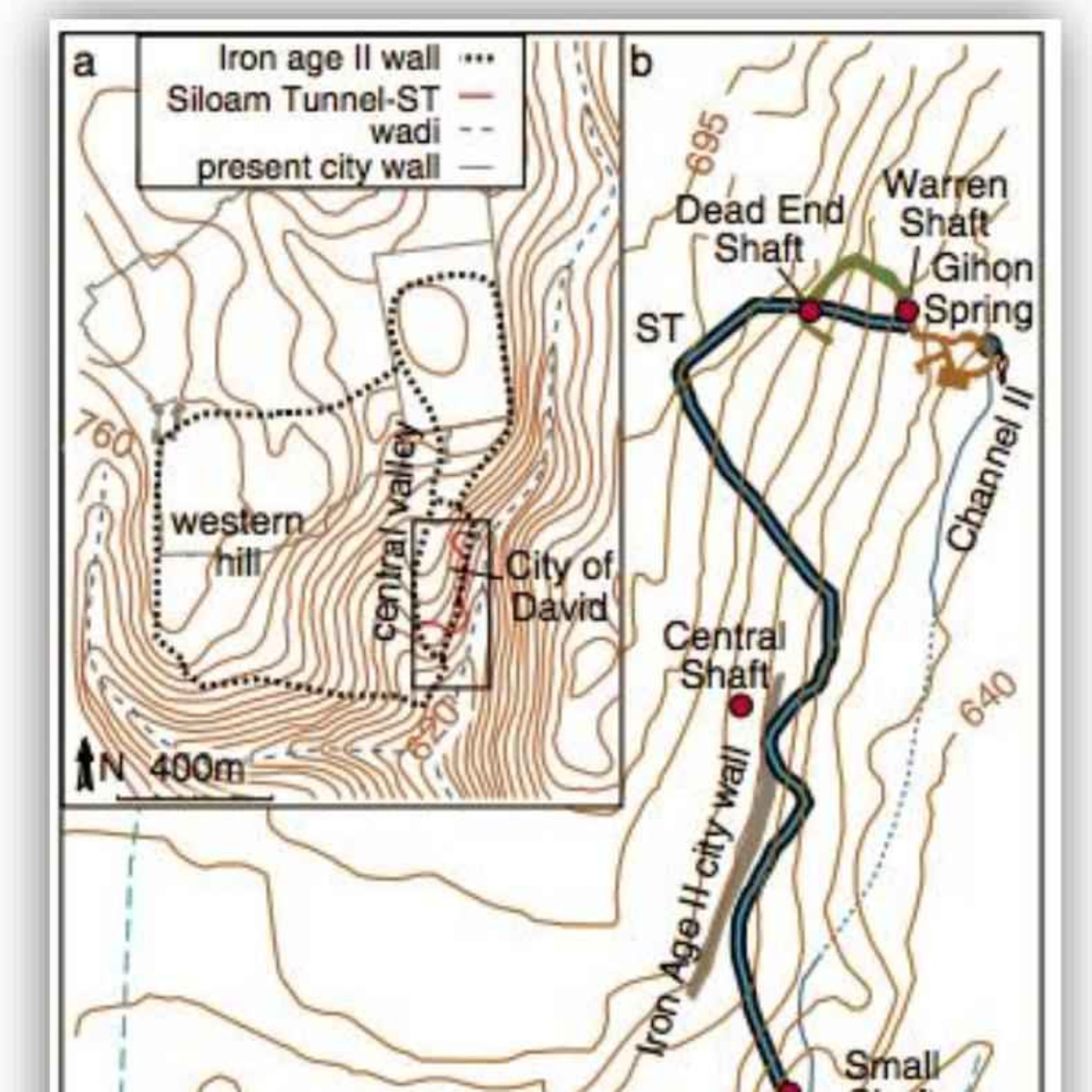
Heritage and archaeology in Silwan and the City of David with Joel Stokes
Aug 02, 2025
Heritage claims are unequivocally tied to the idea of socio-political legitimacy. This applies most poignantly amongst communities bound by a shared ethnic, religious, historical, or indeed national, identity. Joel’s research investigates fluctuations of socio-political legitimacy *vis-à-vis* heritage within cross-cultural, and often contested spaces.
Learn More
More specifically, Joel talked about the case study of the Jewish-Israeli-run City of David archaeological site and tourist centre, and the Palestinian Village of Silwan, both of which are situated in East Jerusalem. We also talked about the more than 150 years history of Palestinian workers and diggers employed by a variety of archaeologists up to the current day with the controversial digging led by Elad which also aims at displacing Palestinians from Silwan. Originally published on 11/09/2022.
The UN and Jerusalem in 1947, the history of a failed plan with Harris Ford
Aug 02, 2025
As the British Mandate in Palestine ended in mid-May 1948, responsibility for the territory shifted to the newly-formed United Nations. With tensions between Zionist settler Jews and Indigenous Arab Palestinians at an apex, the international organization sought to engender peace by implementing an internationalization of the Holy City of Jerusalem and its environs.
Learn More
In this interview, Harris Ford discusses the United Nations’ vision of internationalization and the supranational sovereignty it imagined for itself over Jerusalem, as well as local Palestinian, Jordanian, and Israeli residents within the city. Notwithstanding the creation of a commission, local consultations, international conferences, and two draft statutes, the UN plan to internationalize the area encompassing the Holy City failed by the mid-1950s. As we delved into the plan Harris argues that the plan to internationalize Jerusalem failed because it only pleased the United Nations. His work has been published as a Master Thesis and it is available in the link below; Harris has also published an article in the Jerusalem Quarterly focusing on the past-future, in other words, what could have been, but didn’t happen. Originally published on 11/02/2022.
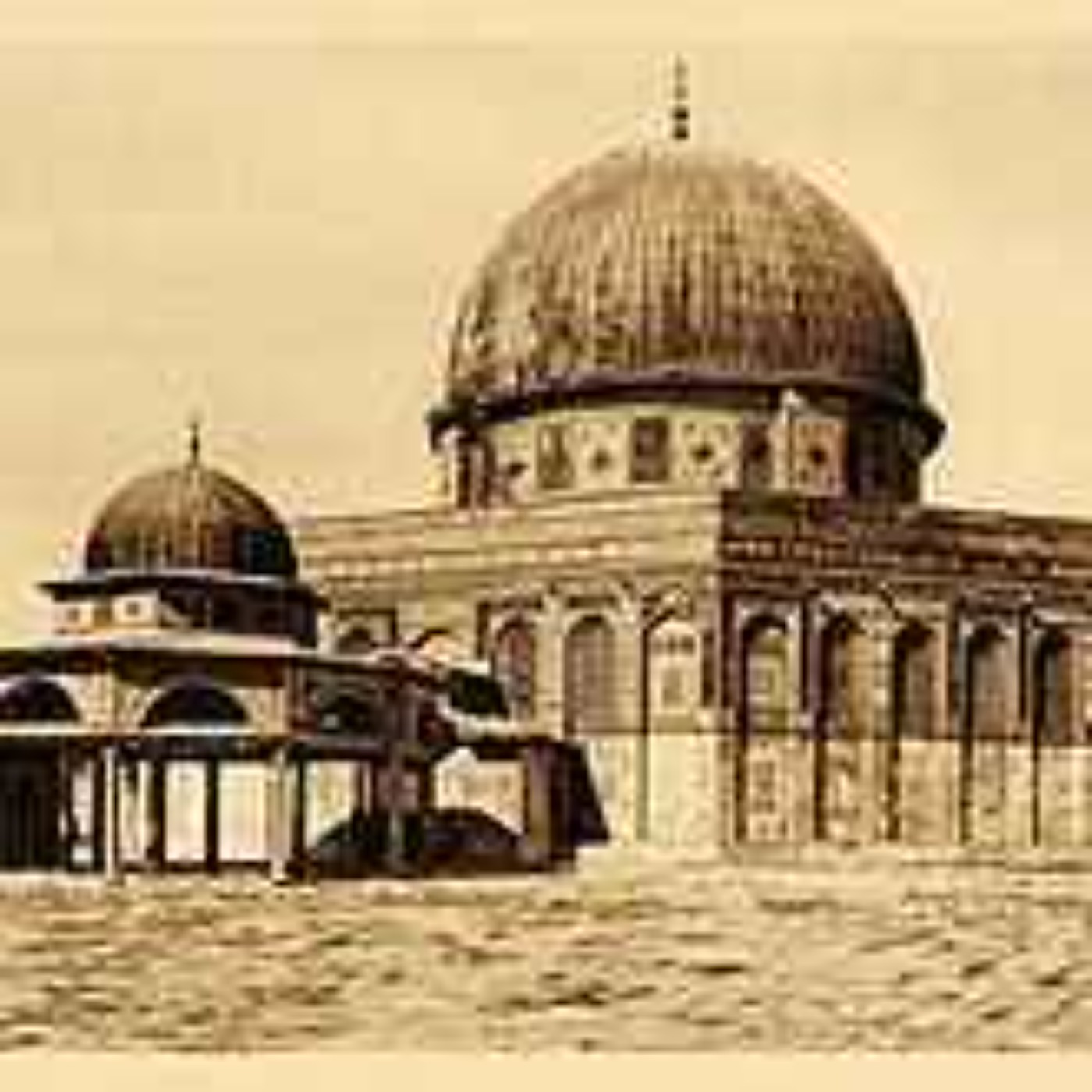
The Dome of the Rock: with Beatrice St. Laurent
Aug 02, 2025
The opening of Season 4 is dedicated to one of the most iconic buildings of Jerusalem: the Dome of the Rock. While the Dome has become a sort of brand defining the image of Jerusalem, there is a lot of confusion about its history and purpose. Built by the Umayyads in the late 7th century, scholars developed different ideas about the Dome and our guest, Beatrice St. Laurent, makes some order and gives us a good sense about the chronology and history of the building and how its significance changed throughout time.
Learn More
Today the Dome and the Haram al-Sharif at large have become a key feature of the Israeli-Palestinian conflict and the target of Israeli-Jewish right wing organizations who seek to regain the area in order to build a new Temple; however after the destruction of the Temple in 70AD by the Romans, the site had become a quarry and while it was known to many that the area was sacred, it did not serve any particular purpose until the arrival of the Arab armies in the 7th Century.Beatrice, in her work and in this episode, has challenged many of the common views and histories of the Dome of the Rock, an excellent way to think about one’s next visit to Jerusalem. Originally published on 10/26/2022.
Jerusalem in World War One: Leah Tannenbaum | Part 5
Aug 01, 2025
The month is ending, but not the more or less naughty comments being made about the projected wedding of Djemal Pasha with a beautiful Jewish lady named Leah Tennenbaum. The news seemed so unlikely to me that I gave it the least importance, but it persists, and there is no one in the city who is not commenting on it.– Consul Conde de Ballobar, Jerusalem, 31 May 1915.
Learn More
In this final episode of Jerusalem in World War One, I will bring to you the stories of Leah Tannenbaum and Abcarius Bey. Leah was know in Jerusalem as a beauty queen but also as the mistress of Cemal Pasha during the war. In this episode I will try to make sense of their stories, what we know and their legacy which is encapsulated in Villa Leah, one of the finest examples of Bauhouse in Jerusalem still today. Originally published on 09/14/2022.
Jerusalem in World War One: Leah Tannenbaum | Part 5
Aug 01, 2025
The month is ending, but not the more or less naughty comments being made about the projected wedding of Djemal Pasha with a beautiful Jewish lady named Leah Tennenbaum. The news seemed so unlikely to me that I gave it the least importance, but it persists, and there is no one in the city who is not commenting on it.– Consul Conde de Ballobar, Jerusalem, 31 May 1915.
Learn More
In this final episode of Jerusalem in World War One, I will bring to you the stories of Leah Tannenbaum and Abcarius Bey. Leah was know in Jerusalem as a beauty queen but also as the mistress of Cemal Pasha during the war. In this episode I will try to make sense of their stories, what we know and their legacy which is encapsulated in Villa Leah, one of the finest examples of Bauhouse in Jerusalem still today. Originally published on 09/14/2022.
Jerusalem, Palestine and Israel with Ilan Pappe
Aug 01, 2025
Season 3 ends with a fantastic guest: Ilan Pappe. In this intimate episode, the most famous Israeli historian talks about his early life and work, the journey to discover the real meaning of Israeli rule over the Palestinians and how he started, through his work, to fight back and offer an alternative historical narrative from the traditional Zionist one.
Learn More
As we discussed his early work on the Husayni family we delved into the politics of Jerusalem and the growing criticism against segregation and apartheid. We also discussed 1948, particularly in relation to the ways in which this historical period is taught in Israeli schools and the perpetuation of myths and stereotypes: a fitting episode for a season finale. Originally published on 09/21/2022.
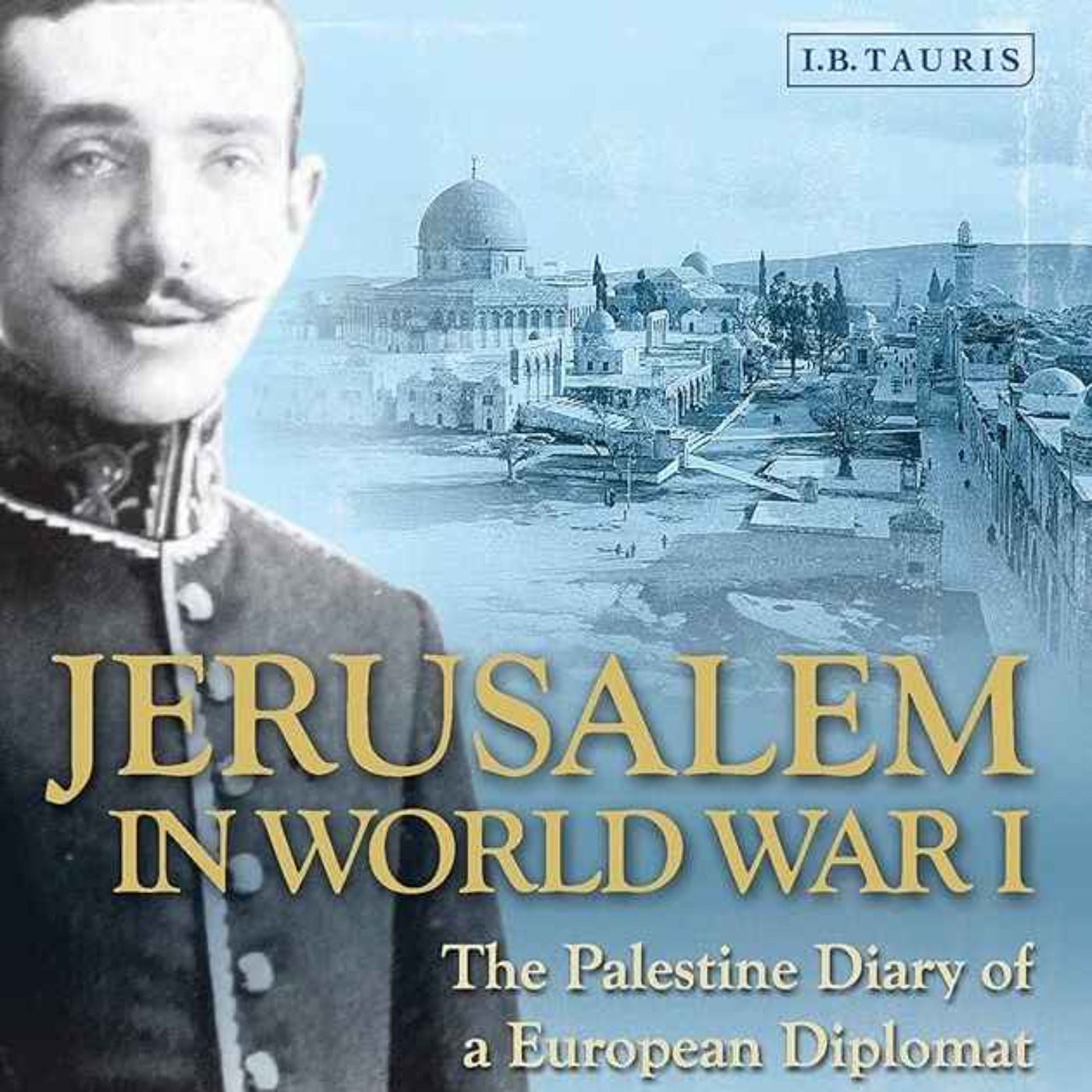
Jerusalem in World War One: Conde de Ballobar | Part 4
Aug 01, 2025
In the summer 1913, a young Spanish diplomat set out for the Holy Land in order to take office as the Spanish consul in Jerusalem. Antonio de la Cierva y Lewita, Count of Ballobar arrived in Jerusalem during an extremely problematic period for the Ottoman Empire: constantly under internal and external threats.
Learn More
Central to Ballobar’s mission in Jerusalem was the protection and support of the Spanish clergy and properties in the region: in particular, of the Custody of the Holy Land that had jurisdiction over the Catholics in Palestine, parts of Egypt, Syria, Lebanon, Cyprus and Rhodes. During his stay in the Holy City Ballobar wrote a diary recording events, feelings, impressions and opinions, proving to be a very attentive observer of war-time Jerusalem. In this episode we will learn about Jerusalem through the entries of Ballobar’s diary, a unique view of the city and Palestine during the war. Originally published on 09/07/2022.
Jerusalem in World War One: Otis Glazebrook and America in Palestine | Part 3
Aug 01, 2025
In this third installment of Jerusalem in World War One, I will explore the role of America in Palestine and of the American Consul Otis Glazebrook. U.S. humanitarian activity in Jerusalem, and Palestine as a whole, from the early nineteenth century onward challenges the traditional view that the United States played a relatively marginal role in the region until the end of World War II. In this episode we will see that American aid, initially understood as a religious duty of individuals, was transformed into an organized form of aid that served as a form of soft power in the region.
Learn More
In this episode I scrutinize the agency of U.S. consul Otis Glazebrook and show the fundamental role he played in this shift. Individual aid was superseded by institutional help and the shift was embodied in the aid and relief sent to the Jews. Eventually U.S. institutional aid during the war paved the way for formal support for Zionism and the notion that only Jews (and especially American Jews, who thought of themselves as agents of innovation) could lead Palestine into modernity. While Glazebrook was arguably not a supporter of political Zionism, his agency led America and Zionism to meet each other and initiate a lasting relationship. Originally published on 07/27/2022.
Why is Beitar Jerusalem the most political football club in the world with Shaul Adar
Aug 01, 2025
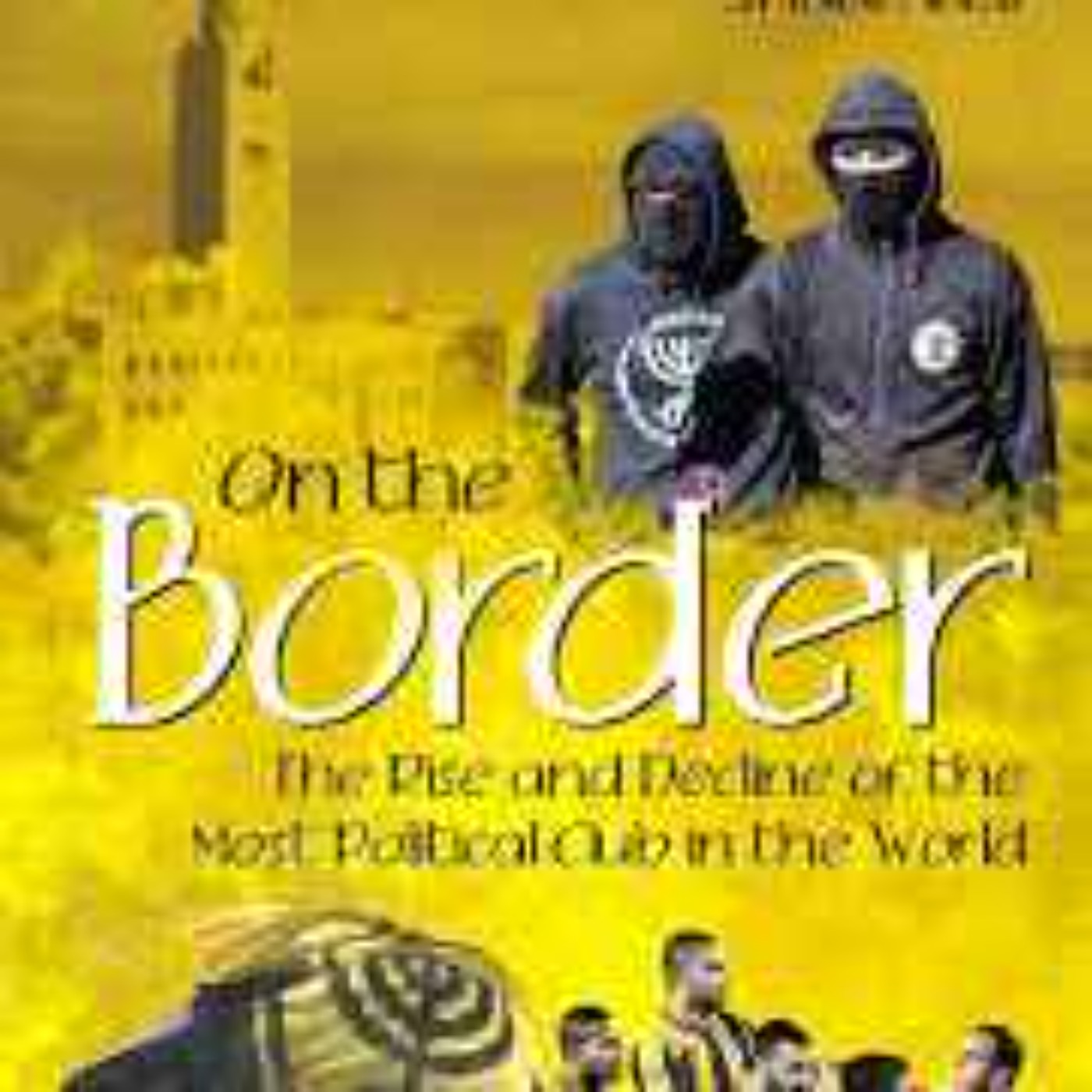
In December 2020, an Israeli football club made worldwide headlines. The news that a UAE royal had bought 50 per cent of Beitar’s shares shook Israel and the football world. Beitar, proclaimed by some of its own fans as ‘the most racist club in the country’, is a club like no other in Israel. While Israeli football as a whole is a space where Israelis of all ethnicities and foreigners can co-exist, Beitar won’t even sign a Muslim player for fear of its own far-right supporters’ group, La Familia. In this episode I talk to Shaul Adar the author of On the Border a the fascinating tale of a club that began as a sports movement of a liberal national Zionism party and became an overt symbol of right-wing views, Mizrahi identity and eventually hardcore racism and nationalism.
Learn More
With the author we explored explored the radicalisation of Beitar and the fight for the soul of the club between the racists and open-minded fans. Founded in 1936, the club took its name from a Zionist organization set up in 1923 by students in the capital of Latvia, Riga, following a visit by Ze’ev Jabotinsky, the Zionist Revisionist and founder of the paramilitary group Irgun. For thirty years, under the British Mandate, impoverished young Mizrahim (Jews from Arab countries) had kicked a ball around Jerusalem’s Musrara neighbourhood with Arab friends. The war of 1948 radically changed that. Subsequent events sharpened the divide, leading to the unrepentant racism of La Familia, Beitar “ultras” who began by making monkey noises at a player from Cameroon and graduated to chants threatening death to Arabs. Employing violence and intimidation, they ensured no Muslim could play for Beitar. Originally published on 07/20/2022.
Jaffa and Jerusalem in 1948 with Itamar Radai
Aug 01, 2025
Between 1947 and 1948 Palestinian Arab and Jewish communities fought over Palestine, a war that clearly encompassed Jerusalem and Jaffa. Jerusalem was the focal point of the war due its centrality and symbolic importance. In this episode Itamar Radai discusses his work on Jerusalem and Jaffa in 1948. Our conversation is one that will certainly elicit controversy and questions, yet this is an important one to have about Jerusalem and Jaffa during a crucial historical period with long term consequences that still determines our understanding of contemporary Jerusalem, Israel and Palestine. Originally published on 07/13/2022.
Jerusalem in World War One: the British Conquest | Part 2
Aug 01, 2025
The British conquest of Jerusalem took place in December 1917. In the second episode dedicated to Jerusalem in World War One, I discuss the value of Jerusalem for the British during the war, how this changed but more importantly once the British began to plan the conquest of Palestine, how policy makers began to invest time and effort in order to prepare for the much awaited conquest of the Holy City. Later in the podcast I discuss the British conquest of the city, the military operation and how the city was surrendered. Lastly, I discuss how Jerusalemites reacted and experienced the first few years of British rule. Originally published on 07/06/2022.
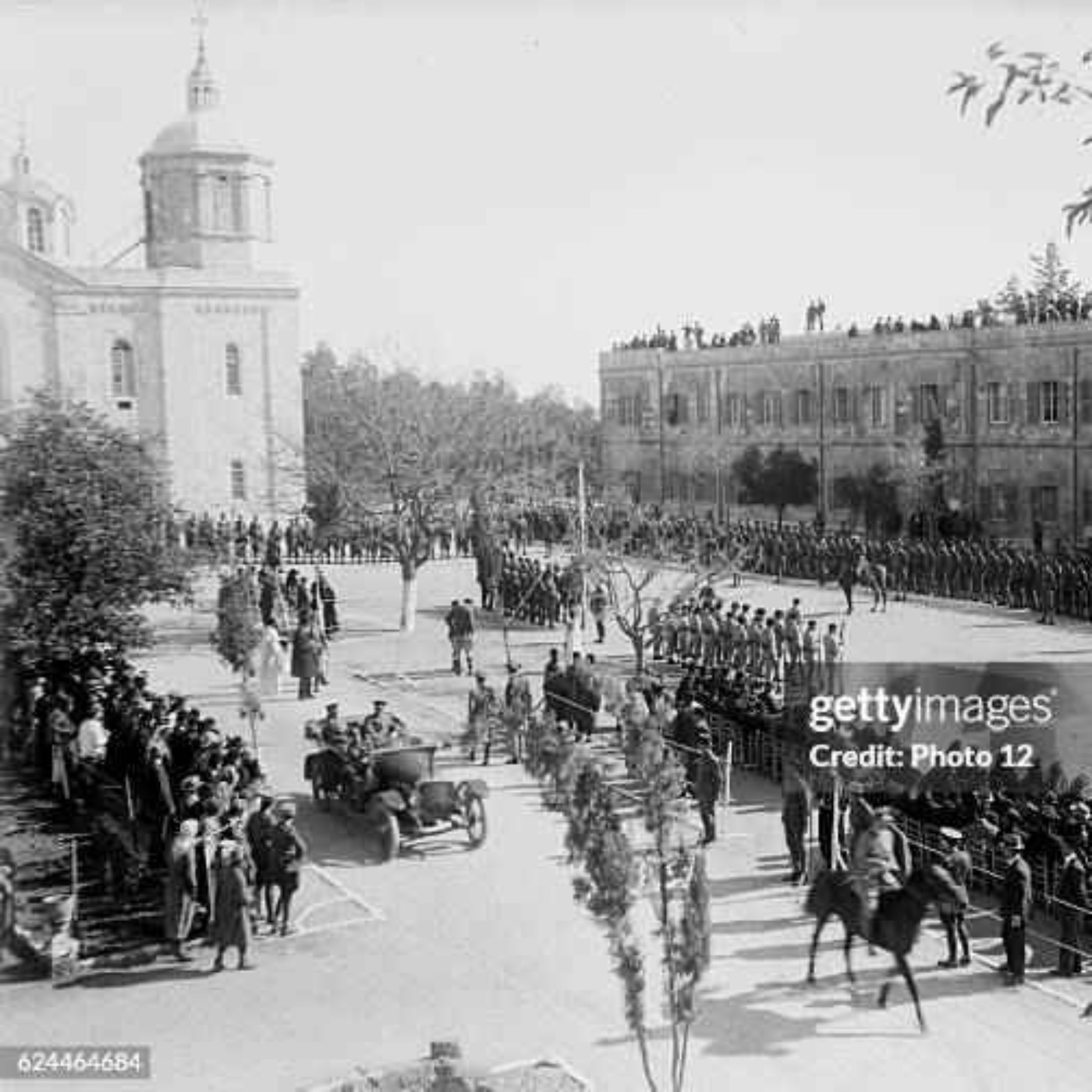
Jerusalem in World War One: the Mobilization | Part 1
Aug 01, 2025
With this episode I started a series divided in 5 episodes discussing Jerusalem during the First World War. In this first installment I discuss the large question of Ottoman mobilization in 1914 and in the second part the mobilization process that started in the summer of the same year. In the last part of the episode I will discuss the general conditions of war-time Jerusalem, while many details will be discussed in the episodes dedicated to the Spanish Consul Conde de Ballobar, Leah Tennembaum and the American Consul Otis Glazebrook. Originally published on 06/29/22.
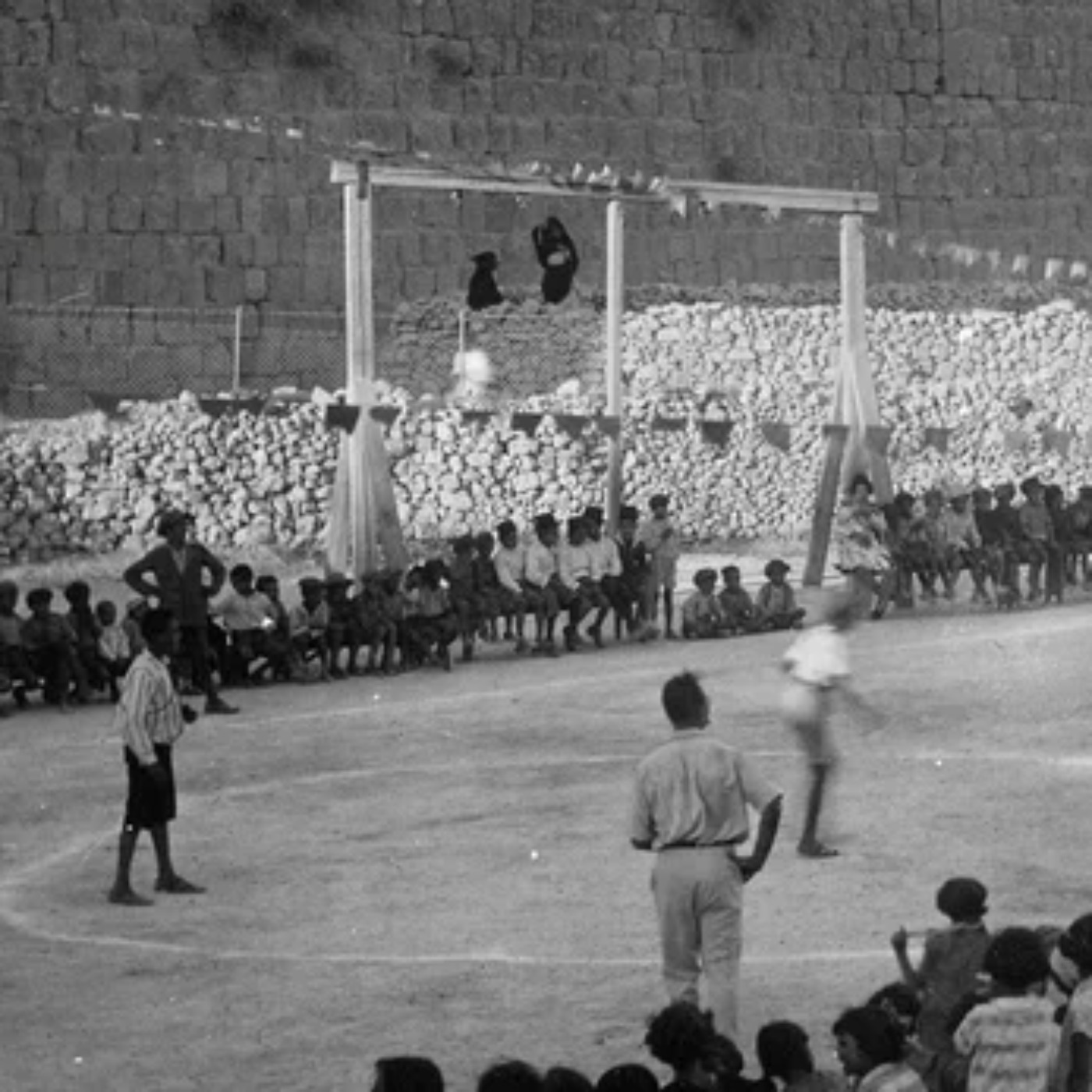
Both Sides of the Field: Football and the Relations between Jews and Arab in Mandatory Palestine with Omer Einav
Aug 01, 2025
In his new book ‘Both sides of the goal: a history of football in Palestine and Arab-Jewish relations during the British Mandate’ (original in Hebrew), tells the story of the emergence of football in Palestine and how the game was enjoyed, organized and exploited by both Arabs and Jews in Palestine during the British Mandate. Football was introduced at the end of the late Ottoman era through Christian institutions and in a few decades it became the most popular sport in Palestine. Omer, tells about the development of football and how it became an avenue reflecting Arab-Jewish relations in Mandatory Palestine. Omer tells us plenty of important stories that help us to understand the complex Arab-Jewish relations through the British era. Originally publishes on 06/22/2022.
The Palestine Museum US and From Palestine with Arts (Venice Biennale)
Aug 01, 2025
In this episode Faisal Saleh – founder and director of the Palestine Museum US – and Nancy Nesvet – curator of the ‘From Palestine with Art’ exhibition at the Venice Biennale – tell us about their amazing work. Palestine Museum US was founded by Palestinian American Faisal Saleh who, after over 40 years of entrepreneurial work, tuned his attention to managing the most ambitious Palestinian media project in the United States.
Learn More
Located in Woodbridge, Connecticut, USA, the museum opened its doors on April 22, 2018. Recently, through the idea of Preserving Palestinian history & culture telling the Palestinian story through the arts, they were able to exhibit Palestinian works at the Venice Biennale. https://www.palestinemuseum.us/
Originally published 06/15/2022.
Print Culture and Literary Journalism in Jerusalem in the 1960s with Adey Almohsen
Aug 01, 2025
The Jerusalem Quarterly Dakkak Award winner Adey Almohsen in this episode takes us back to the Jerusalem of the 1960s when a generation of Palestinians who experienced the Nakba began to consider how to elaborate this tragic event through literature and poetry. His award winning essay which will be published in the Jerusalem Quarterly looks at the al-Ufuq al-Jadid magazine published by Ammin Shunnar until 1967 when the Israeli captured East Jerusalem.
Learn More
In this episode we talked about the magazine and how East Jerusalem became a hub of cultural production and consumption during the so-called Jordanian era. As we are looking forward to read the full article, this episode, we hope, will add an important element to the history of Jerusalem. Originally published on 06/08/2022.
Let’s talk dirt: Jerusalem and archaeology – Part 2 – with Emek Shaveh
Aug 01, 2025
In this episode the new director of Emek Shaveh Alon Arad tells about their activities and tours around Jerusalem, Palestine and Israel. Emek Shaveh is a NGO working to defend cultural heritage rights and to protect ancient sites as public assets that belong to members of all communities, faiths and peoples. Emek Shaveh objects to the fact that the ruins of the past have become a political tool in the Israeli-Palestinian conflict and work to challenge those who use archaeological sites to dispossess disenfranchised communities.
Learn More
Members of the organization view heritage site as resources for building bridges and strengthening bonds between peoples and cultures and believe that archaeological sites cannot constitute proof of precedence or ownership by any one nation, ethnic group or religion over a given place. In this episode Alon describes with plenty of details how members of Emek Shaveh work and towards the of the episode he takes the listeners through a virtual tour of Silwan and the City of David providing critical elements in order to understand the relevance of archaeology for the daily lives of those who live in Jerusalem.
https://emekshaveh.org/
Originally published on 06/01/2022.
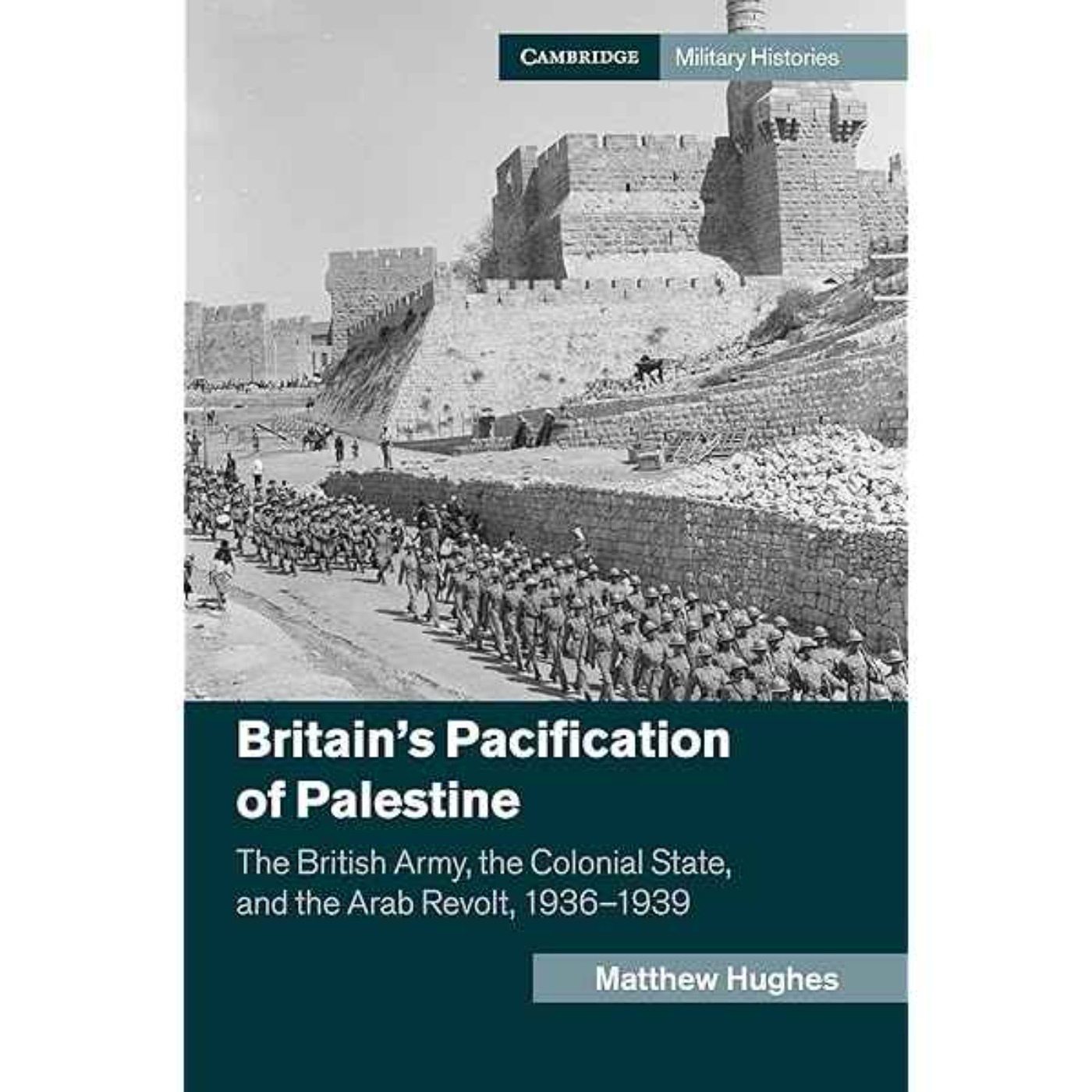
The British Army in Palestine and Jerusalem with Matthew Hughes
Aug 01, 2025
In 1917 the Egypt Expeditionary Force led by General Edmund Allenby conquered Southern Palestine, Jerusalem and later in 1918 Northern Palestine. In this episode, Professor Matthew Hughes tells us about the British army in Palestine, its strategies against the Ottomans and tells us more about Allenby himself.
Learn More
The conquest of Palestine and Jerusalem occurred as part of the First World War, however as many previous guests have pointed out the British had already plans set in motion for one day securing the region in one way or another. 1917 proved to be a crucial year in the long history of Jerusalem as Ottoman rule ended the British established their own rule which dramatically changed the fabric of the city. Originally published on 05/25/2022.
British Intelligence in Mandatory Palestine with Steven Wagner
Aug 01, 2025
Steven Wagner, historian of intelligence and security, tells us about the little known history of British intelligence in Palestine during the British Mandate. His work looks at how the British created a state based on intelligence and control where Jerusalem was at the center of the political drama that unfolded between 1918 and 1948. We also discussed several interesting figures who produced intelligence and influenced British policy making in Palestine. We also discussed the legacy of British intelligence gathering techniques which were then adopted by both the newly created State of Israel and Jordan. Originally published on 05/18/2022.
Queens of Jerusalem: the women who dared to rule with Katherine Pangonis
Jul 31, 2025
The lives of this trailblazing dynasty of royal women, and the crusading Queen Eleanor of Aquitaine, are the focus of Katherine Pangonis’s book. In QUEENS OF JERUSALEM we explored the role women played in the governing of the Middle East during periods of intense instability, and how they persevered to rule and seize greater power for themselves when the opportunity presented itself. Our conversation will take you through the history of Crusader Jerusalem and its queens, from Melisende to Sibylla, from their rise to power and the eventual fall of Jerusalem in 1187. Originally published on 05/22/2022.
Cultural diplomacy in Jerusalem and Palestine with Karene Sanchez
Jul 31, 2025
Karene Sanchez is an expert of so many fields in the history of Jerusalem and Palestine that it is hard to summarize our discussion. As usual we started with a chat on how Karene has come to work on Palestine and Jerusalem and from there we explored the question of languages spoken in the region, the local Christian communities, particularly the Catholics, both Latins and Melkites. Lastly we discussed the large and fascinating topic of European cultural diplomacy which targeted Palestinians and Jerusalemites, first through the work of missionaries and later of diplomatic missions. Originally published on 05/04/2022.
Under Jerusalem with Andrew Lawler
Jul 31, 2025
In this episode Andrew Lawler presents his new book: Under Jerusalem. In 1863, a French senator arrived in Jerusalem hoping to unearth relics dating to biblical times. Digging deep underground, he discovered an ancient grave that, he claimed, belonged to an Old Testament queen. News of his find ricocheted around the world, evoking awe and envy alike, and inspiring others to explore Jerusalem’s storied past.
Learn More
In the century and a half since the Frenchman broke ground, Jerusalem has drawn a global cast of fortune seekers and missionaries, archaeologists and zealots, all of them eager to extract the biblical past from beneath the city’s streets and shrines. Their efforts have had profound effects, not only on our understanding of Jerusalem’s history, but on its hotly disputed present. The quest to retrieve ancient Jewish heritage has sparked bloody riots and thwarted international peace agreements. It has served as a cudgel, a way to stake a claim to the most contested city on the planet. Today, the earth below Jerusalem remains a battleground in the struggle to control the city above.
Home
Originally published on 04/27/2022.

From translation to the earthquake of 1927 with Sarah Irving
Jul 31, 2025
In this episode Dr Sarah Irving tells us about her work on Palestinian history that started first with activism and then continued in the academic world. In the first part of this episode we discussed the question of translation as a profession embraced by a number of liminal figures but also the political strings attached to the act of translating volumes from and to English, Arabic, Hebrew and even German. In the second part we discussed the famous earthquake of 1927 which struck most of Palestine producing damages to various cities including Jerusalem.
Learn More
Quite fascinating is the story of two Indian women who unfortunately were killed in Jericho, nevertheless their presence there is revealing of the vast network into which Jerusalem and Palestine were placed into as part of the British Empire leaving historians with still plenty of uncharted historical territory to explore. Originally published 04/20/2022.

Children, the Invisible Inhabitants in British Mandate Jerusalem with Julia Shatz
Jul 31, 2025
Children are the often neglected population of every city, they are invisible, they leave very little records and unless of tragic events once children are adults their youth is forgotten. Julia Shatz tells us about her work trying to bring back to life the children of Jerusalem during the British Mandate. Most of the material is to be found in the American Colony archives, managed by the previous guest of the podcast Rachel Lev.
Learn More
he fascinating story of the American Colony was also told by Abigail Jacobson who has published extensively on their humanitarian work. Julia, as well told, us about a key humanitarian work provided by members of the colony and under the British by a multiplicity of individuals. Nurses are another invisible category, often neglected in historical narratives, they played a key role in Jerusalem helping Jerusalemites of all faiths and ethnicities. Originally published on 04/13/2022.
Islamic Jerusalem, its history and legacy with Suleiman Mourad
Jul 30, 2025
The opening of season 3 is dedicated to the history and legacy of Islamic Jerusalem with Professor Suleiman Mourad. What does it mean Islamic? How did Jerusalem become an Islamic city and how was the city transformed after the 9th century conquest by Muslim armies? With Suleiman we discussed these questions but more importantly we looked at how the various historical layer of Jewish Jerusalem, Christian Jerusalem and Islamic Jerusalem have been combined together throughout the centuries.
Learn More
As Suleiman has been involved in a number of documentaries, we discussed the potential and difficulties to tell the story of Jerusalem through this medium, one that can spread easily information around the world, but also simplify the complex history of the city. Originally published 04/06/2022.

A view of Jerusalem from the Hebrew University with Abigail Jacobson
Jul 30, 2025
In the last episode of season 2, Abigail Jacobson, Senior Lecturer at the Hebrew University, shares with us the view of the city from Mount Scopus. The Hebrew University has in the last decade or so diversified its student population, yet the various communities may not necessarily coming together and the only experience is of sharing the same space. Abigail, the author of two amazing works, one on Jerusalem during World War One and the other on the relationship between Oriental Jews and local Arabs, takes us then through the street of Jerusalem during the war discussing the question of a city changing hands. Lastly, while discussing her more recent work, she tells us about a new project that will look at Musrara and its post 1948 history. Originally published 03/02/2022.
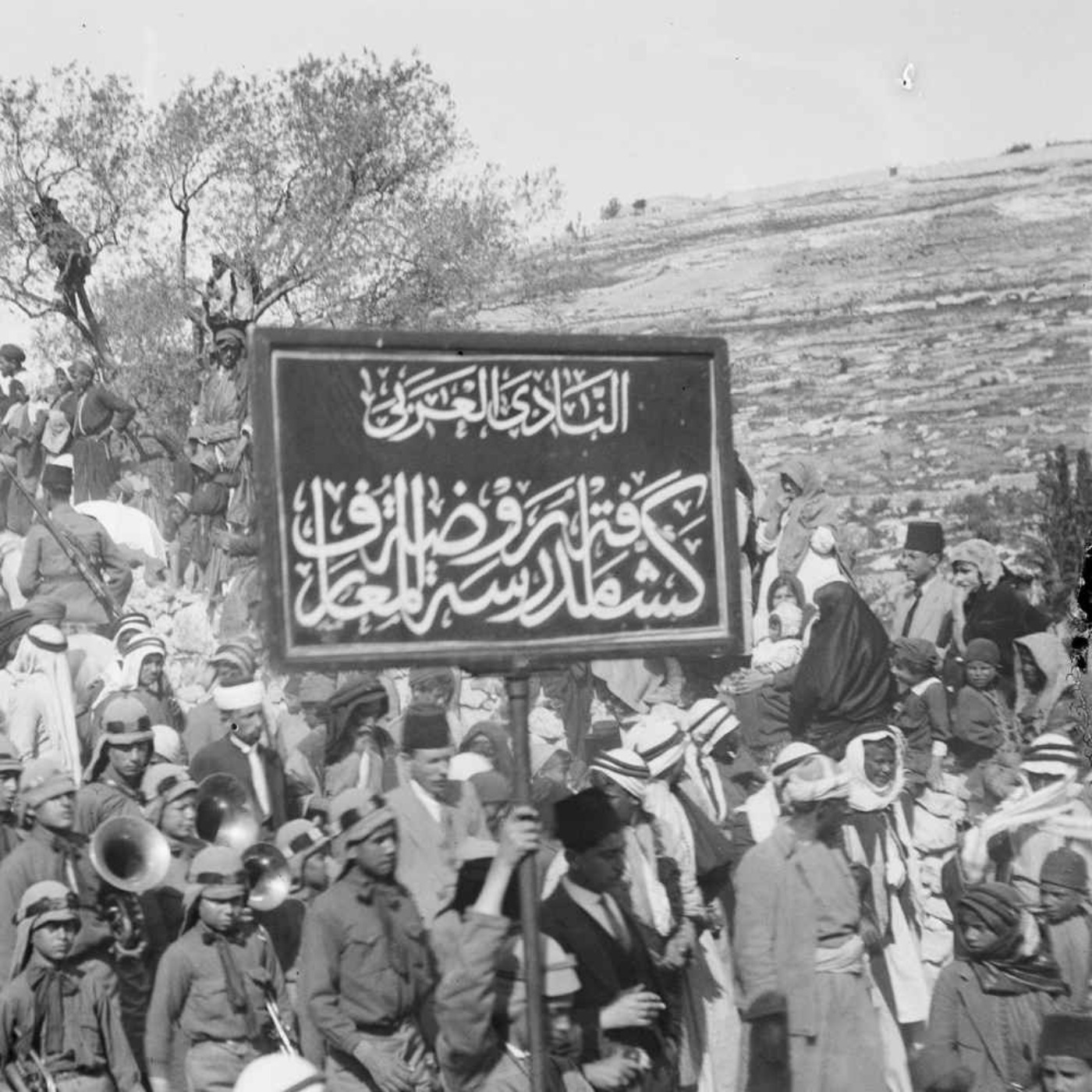
The Nabi Musa Festival with Awad Halabi
Jul 30, 2025
The Nabi Musa festival dates back centuries, an Islamic celebration of the Prophet Moses that started at the end of the Crusader period. While the festival was abolished by the British during the Mandate it had been revived later under the Jordanians and more recently under the umbrella of the Palestinian Authority. The festival is deeply connected with Nabi Musa, the alleged tomb of Moses and developed through the centuries as a display of local Islamic and then civic identity of Palestine.
Learn More
In this episode Awad Halabi tells us everything about Nabi Musa and the festival, its origin, development and sadly its end. With Awad, we also discussed his family history and how important will be in the future to develop a strong family history of Palestine, a way of preserving Palestinian heritage and celebrate life. In the end we also discussed the question of the podcast as a public history tool, one that can discuss the complex history of Jerusalem and its people without making it simplistic. Originally published on 02/23/2022.
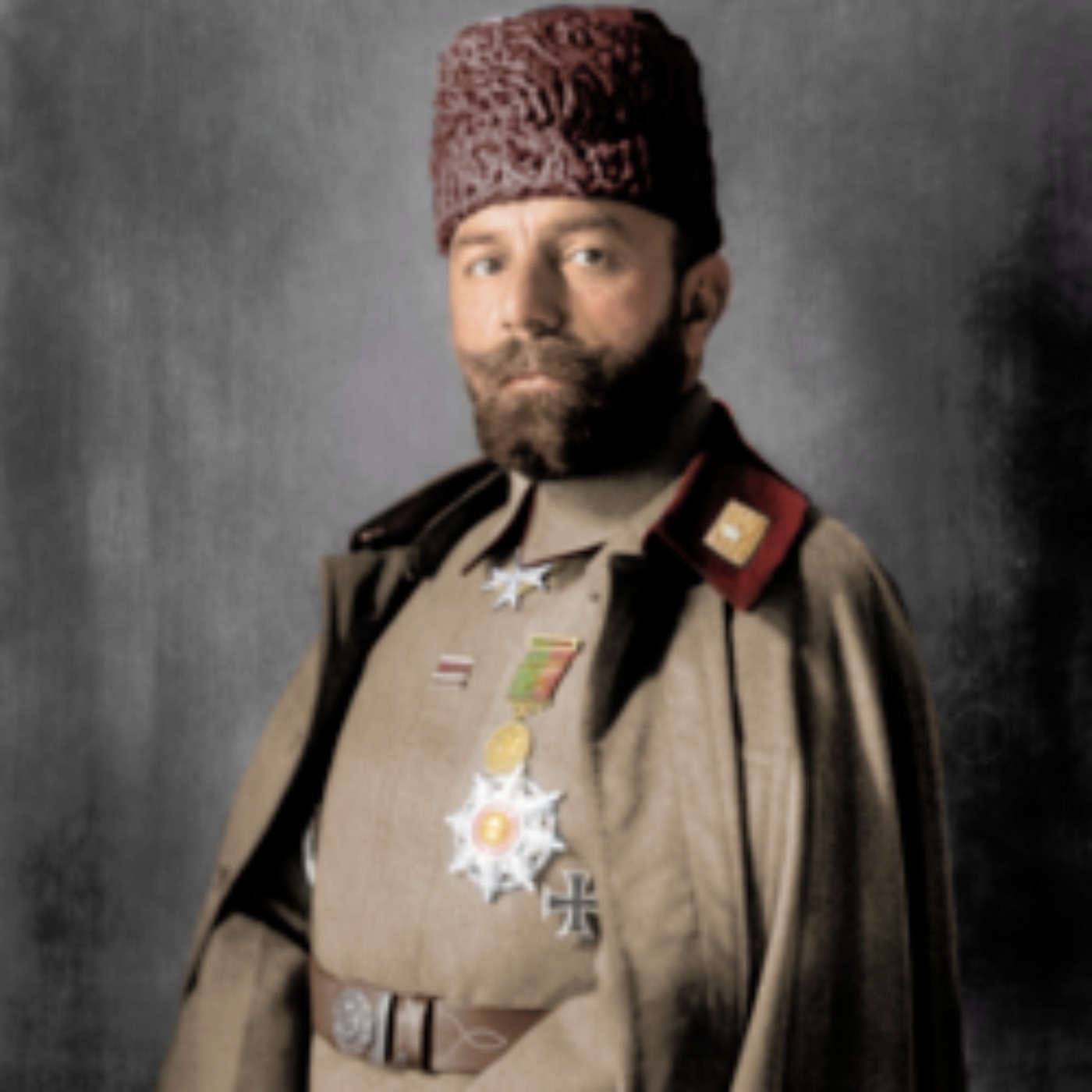
The deal of the century? Cemal Pasha’s attempt to sell the Western Wall in 1916
Jul 30, 2025
In this special episode of Jerusalem Unplugged with no guest, I will tell you the story of a neglected and forgotten event that took place during the First World War in Jerusalem and might have changed the course of the city’s history. In 1916 the Ottoman Military Governor and Commander of Syria and Palestine, Cemal Pasha, offered to Albert Antebi, a local Jewish representative (well respected and openly anti-Zionist) the possibility to purchase the area in front of the Western Wall and to demolish the houses owned by the local Moroccans.
Learn More
In this podcast I will recount the story of the offer and the subsequent debates amongst the member of the Zionist organization. While the money to complete the purchase was collected, many in the Zionist camp were not so eager to move forward and eventually the combination of this factor with a change of mind by Cemal Pasha, the affair did not materialize. Zionist leaders swore to keep the story secret and the story did indeed remain buried in the archives for a long time. While the documents were available, no historian of Zionism ever reported this. It is hard to speculate ‘what if’ the Western Wall had been sold during the war, what would have happened may not have an easy answer, but if anything else this event tells us that there is a lot more we don’t know. Originally published on 02/16/2022.
British urban planning of Jerusalem with Noah Hysler Rubin
Jul 30, 2025
McLean, Ashbee and Geddes may not be household names for many in Jerusalem and those who are in various way interested in, or attached to the city. Yet, these British urban planners had a major influence in the development of Jerusalem and its design since the British conquered the city in December 1917. Dr.Noah Hysler Rubin, an urban planner and geographer at Bezalel Academy of Arts and Design in Jerusalem, tells about the role these individuals played in re-imagining and planning the city once the British took over.
Learn More
Their legacy is particularly visible in the city outside the walls where they had been able to accommodate various ideas, their own, the desire of the British administrators and finally of the Zionists – local Arabs were essentially excluded from the process. With Dr Rubin, we then discussed the question of the Jerusalem Municipal Archives, a rather neglected, underfunded and hard to access institution that could provide invaluable material in order to write a more comprehensive history of modern Jerusalem. In the end Dr Rubin hopes that her work will help many to understand the various layers of Jerusalem and began to be more inclusive and remember those who have been excluded in the past. Originally published on 02/09/2022.
The Palestine Exploration Fund with Felicity Cobbing
Jul 30, 2025
The Palestine Exploration Fund is a familiar name to many who work or visited Jerusalem. While the general sense is that it was a branch of British colonialism in the region, its origin and institutional life are not necessarily located within the machinations of the British government. The PEF was born in the late 19th century with the idea to promote the scientific discovery of biblical locations and archaeological sites through the mapping and surveying of Palestine and Jerusalem.
Learn More
Felicity Cobbing, Chief Executive and Curator of the PEF, takes us through the history and archives of the PEF discussing its origins, functioning and legacy. With the Felicity we have unpacked several issues, including the role of women and of the colonial connections between the PEF and the British government. The first Ordnance Survey of 1865 which fostered the establishment of the PEF and later the production of a general survey of Palestine, it can be safely said that it change the way the city of Jerusalem was understood and portrayed.
https://www.pef.org.uk/
Originally published on 02/02/2022.
Nine Quarters of Jerusalem with Matthew Teller
Jul 30, 2025
Matthew Teller, writer, documentary maker and BBC Radio contributor, tells us about his personal journey and experience in Jerusalem and of Jerusalem. Matthew has recently finished a new book on the city and he talks about it with us: Nine Quarters or Jerusalem. ‘Jerusalem is under intense pressure. Stories from its Indian and West African communities, its Dom Gypsies, its Islamic Sufi mystics, its Syriac and Armenian churches – all these and others are being overlooked.
Learn More
The women who shaped Jerusalem’s architectural legacy. The artists at work today. Tailors. Coffee-roasters. Social activists. Sellers of silk, books or onions. Jerusalem is not my city, but it’s a privilege for me to be able to amplify Jerusalemite voices, help them to be heard above the clamour.’Matthew is writing a book of stories to help illuminate a walk – on foot, or in the mind – through the Old City of Jerusalem. The *Nine Quarters of Jerusalem: A New Biography of the Old City*, it uses individual voices from the communities who live – and have lived – inside Jerusalem’s walls to explore the city’s sense of itself, challenge prevailing narratives and paint a new, intimately personal picture of social and cultural diversity. Originally published on 01/26/2022.
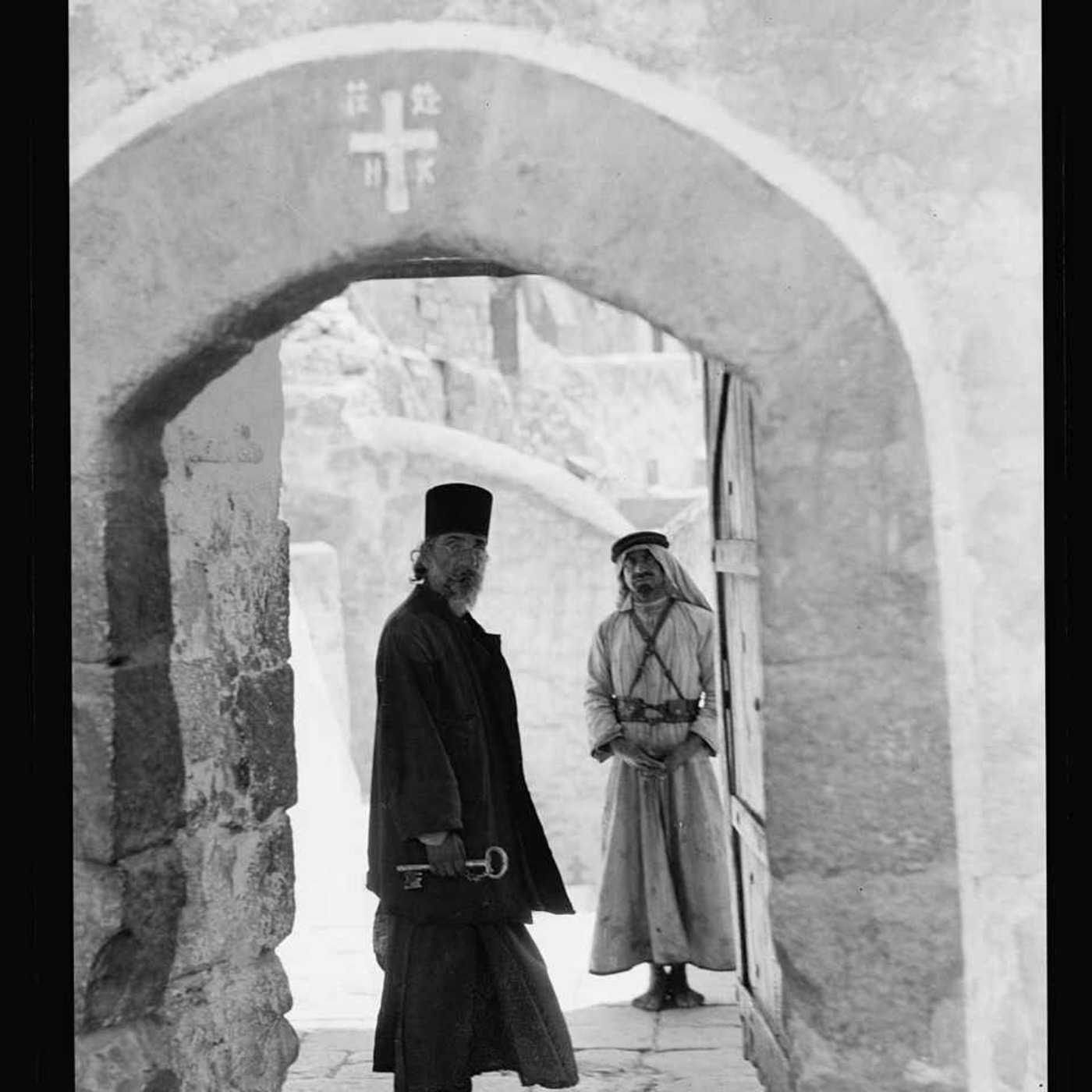
Greek Jerusalem, its history and politics with Kostantinos Papasthatis
Jul 30, 2025
How many people would know that there was a Greek Jerusalem? In fact there is still a Greek Jerusalem buried in the multilayered society of the city. Kostantinos Papasthatis brings back the history and politics of this neglected but crucial community in the city. Starting the discussion with an overview of the Greek Orthodox Church in Jerusalem and its structure – a Greek hierarchy and the Arab congregation – we then moved to talk about the little known fact that the Greek Orthodox Church is one of the largest landowners in Israel and Palestine.
Learn More
Back to history, Kostas recalled the beginning of the clash between the Greek hierarchy and the Arab laity which dates back 1872 and in some form continues today. In the second part of the interview we brought back to life the Greek Colony of Jerusalem which eventually disappeared as a result of the 1948 war. Lastly we talked about the famous Holy Fire tradition that takes place on Easter day in Jerusalem inside the Holy Sepulchre. Originally published on 01/19/2022.
Architecture and urban plans in Jerusalem with Nadi Abusaada
Jul 30, 2025
Nadi Abusaada, architect, urbanist and historian, discussed the role of British urban planning for Jerusalem in the early 1920s, particularly the work of Charles Ashbee. Architecture and urban planning are more than just an exercise in beautification or urbanization of space in Jerusalem, it is a question of ethno-politics. We then discussed the Arab Fair that took place in Jerusalem in the early 1930s.
Learn More
This work by Nadi has been published by the Jerusalem Quarterly and it is a fascinating research into an event that has received very little attention. We moved to discuss a recent article published in the Architectural Review looking at the battle that is taking place underground as Israeli archaeologists are trying to use historical claims in order to make territorial gains in East Jerusalem. Lastly, we talked about the agency of architects and their role in the future of the city. Originally published 01/12/2022.
Lives in common, everyday life in Jerusalem with Menachem Klein
Jul 30, 2025
In the first episode of 2022, Professor Menachem Klein, author of the acclaimed book ‘Lives in Common’, takes us through the changing politics of Jerusalem since the 1990s. Prof. Klein has been involved in several rounds of peace talks offering his expertise and knowledge about Jerusalem. While currently, peace seems to be far away, Klein has been writing extensively on the everyday life of Jerusalem suggesting that in order to make steps forward it is important to change the traditional perspectives that shape our understanding of the history of Jerusalem.
Learn More
Criticizing the conventional chronology based on violent events, Klein told us that is way more important to focus on the gaps, the years that separated those events in order to understand how people lived their daily lives. Concluding the interview, Prof. Klein looked back at his ideas about the future Jerusalem that he wrote in the 1990s and tried to look a what the future may bring given the current context. Originally published on 01/05/2022.
Building Jerusalem and Palestine: a short history of cement with Nimrod Ben Zeev
Jul 30, 2025
Jerusalem, Palestine and Israel have been built with cement, a material that carries an important and heavy socio-political history. In this episode Nimrod Ben Zeev tells about this material and its use in Palestine and how cement has become a central component in the ongoing conflict. We also discussed the question of racialization of construction work particularly in Israel after 1948.
Learn More
While jobs in construction are generally well paid, these jobs are often associated with Palestinians with a racist undertone, and are often dangerous and do not provide stability. As mentioned by Ben Zeev, modern Israel and Jerusalem have been build by Palestinians, yet this is not acknowledged at any level. Jerusalem has seen a rapid cementification process with the expansion of neighborhoods in the West and the vertical development in the East in order to accommodate Palestinian Jerusalemites who do not want to lose their residency. Originally published on 12/22/2021.

Jerusalem’s Old Past (Part 3): Medieval Jerusalem with Valentina Covaci
Jul 29, 2025
In this third installment of the Jerusalem’s Old Past series, Dr Valentina Covaci takes us back to medieval Jerusalem, mostly in the period when the city was under Mamluk rule. We first discussed what medieval Jerusalem means in terms of chronology and of local inhabitants and how the demographic picture changed throughout the medieval centuries. We then moved to discuss Franciscan presence in Jerusalem which started as early as the 13th century, a presence that influenced both the Order and the city.
Learn More
Valentina reminded us that Franciscans created the Via Crucis which so much has influenced the topography and understanding of Jerusalem in Christian thought; not to mention that Franciscans elaborated their perceptions of Jerusalem and exported them around Europe. We then moved to talk about processions, while forbidden by the Mamluk rulers, these became part of Jerusalem and its daily life. Some processions occurred within churches – like the daily Latin procession within the Holy Sepulchre- but others took place and brought European pilgrims to Jerusalem. Valentina told us about these pilgrims, who they were and how they travelled, how they related to the city and what brought back. Lastly we discussed liturgy and how this aspect of religion influenced Jerusalem, but also the famous question of the graffiti at the Holy Sepulchre. Originally published 12/15/2021.
Refugees, business cards and the Latin Patriarchate of Jerusalem with Maria Chiara Rioli
Jul 29, 2025
In this episode Maria Chiara Rioli, author of the wonderful work A Liminal Church, Refugees, Conversions and the Latin Diocese of Jerusalem 1946-1956 (Brill), tells us about her personal path that brought her to work in Jerusalem and later to work on Jerusalem. We discussed her work with the Open Jerusalem project and the question of archives and what archives mean for Jerusalem and Jerusalemites.
Learn More
One the most fascinating discoveries by Maria Chiara was business cards printed in the late 19th and early 20th century by the Franciscan Printing Press, a unique way to look at Jerusalemites, their businesses and the services available to the local population. We then moved to discuss the Latin Patriarchate of Jerusalem first at large, then focusing on the very important and controversial period between 1946 and 1956. The work of Maria Chiara adds plenty of new material related to 1948 and the Palestinian refugees. Lastly, we discussed the very little known Saint James association, a group that emerged within the Patriarchate and produced a new Catholic liturgy in Hebrew. Originally published on 12/08/2021.
Beitar Jerusalem and the politics of Football with Nicholas Blincoe
Jul 29, 2025
Author, critic, screenwriter and former Bethlehem resident, Nicholas Blincoe takes us through an amazing journey in history and sport. In the first part of the episode Nicholas laid out for us a short history of football in Palestine and how both Palestinians and Zionists understood sport as part of the emerging national conflict, particularly under British rule. Jumping decades ahead, in the second part of the episode we discussed the infamous ultras group known as ‘La Familia’, while supporting Beitar Jerusalem, this group promoted racism and criminal activities, making it one of the most controversial football teams in the world of football. Originally published 12/01/2021.

A day trip from Jerusalem: Bethlehem and its Merchants with Jacob Norris
Jul 29, 2025
In this third episode dedicated to a day trip from Jerusalem, Jacob Norris takes us to Bethlehem. The city at the very center of the story of Christmas has been a center attracting pilgrims from all around the world, but more importantly began to export religious items made in Bethlehem in every corner of the planet. In his recent work Jacob has traced the global network of Bethlehemites who exported items and created small communities all around the world making Bethlehem a bigger place than it actually is.
Learn More
Jacob also reminded us that in recent times Bethlehem has been essentially cut off from many parts of Palestine and global tourism. Lastly, Jacob told us about the diaspora communities, particularly in Latin America, that keep supporting Bethlehem and its ‘brand’. Originally published on 11/24/2021.

A day trip from Jerusalem: Nazareth in the 20th century with Leena Dallasheh
Jul 29, 2025
In this second episode dedicated to a day trip from Jerusalem, Prof. Leena Dallasheh takes us to Nazareth. This very important Palestinian center, mostly known for its connection with the story of Jesus, has been for some time considered as the Arab capital of Israel, at least until the early 2000s. Nazareth found itself in Israeli territory in 1948 and Leena gave us some hints about people and the ways they negotiated the trauma and their new position.
Learn More
While Nazareth played a major role in the relationship between Palestinians in Israel and in the West Bank, since Oslo, Nazareth lost its political role. Lastly we discussed historiography and the reasons why Nazareth is prominent in literature related to antiquity but both Israeli, Palestinian and international scholars seem to have forgotten the city in the 20th century. Originally published on 11/17/2021.
A day trip from Jerusalem: Gaza in Ottoman times with Dotan Halevy
Jul 29, 2025
In this first episode dedicated to a day-trip outside Jerusalem, Dotan Halevy takes to late-Ottoman Gaza. While today Gaza can be certainly considered the largest open air jail, or at least most securitized location in the world, Dotan tells of a forgotten past when Gaza was integrated into a maritime system and at the same served as a regional hub of the trade of agricultural products.
Learn More
We then talked about the evacuation of Gaza during the First World War, a little known event in history, but very important for the city of Gaza as it took a number of years for Gaza and its inhabitants to recover. We also talked about the intriguing figure of Alexander Knesevich (Dotan published an article on Jerusalem Quarterly 81) a consular agent working for different people, lastly for the British. Drawing some conclusions on Gaza during the British Mandate, the damage done by the war relegated Gaza at the margins of the emerging Palestinian nationalist movement and of other trends unfolding in Palestine. Originally published on 11/10/201.
Jerusalem’s Old Past (Part 2): the city and its libraries with Merav Mack
Jul 29, 2025
In the second episode dedicated to the pre-Ottoman history of Jerusalem, Merav Mack, Jerusalemite and scholar, takes us through the street of medieval Jerusalem, discussing the libraries and the books preserved in the Old City. With Merav we talked how she moved from working on Genoa in the Middle Ages to Jerusalem showing how cities throughout the Mediterranean were connected by merchants, pilgrims, scholars and in a sense by war.
Learn More
Merav had been involved in a very famous exhibition hosted at the Metropolitan Museum in New York, “Jerusalem 1000–1400: Every People Under Heaven.” From here we moved to discuss libraries and their books in Jerusalem. Libraries are one of the most secret and well protected locations in Jerusalem, they preserved the heritage and history of the communities and families that built them. A city without a library is a city with no history and Merav tells us the history of Jerusalem through its libraries. We talked about access to libraries and their contents, particularly for women; this eventually brought us to discuss the amazing Mar Saba Monastery located just in the outskirts of Jerusalem. Originally published 11/03/2021.
Jerusalem’s Old Past (Part 1): the Crusades with Adrian Boas
Jul 29, 2025
In this first episode dedicated to the early history of Jerusalem, Prof. Adrian Boas takes us back the Crusader era when Jerusalem fell in the hands of the Crusaders in 1099. Adrian tells about the legacy of the Crusaders in Jerusalem, he will take you through a sort of guided tour discovering the signs of that long gone era. Adrian also told us about the people living in Jerusalem and their daily life.
Learn More
We also talked about the Templers and the stories that emerged after the abolition on the order in 1312.The conversation then moved to discuss the lasting legacy of the Crusader presence in Palestine after the end of the Crusader Kingdoms. Lastly Adrian presented his latest professional work related to the excavations around the Montfort Castle. Last but not least, Adrian has recently written a historical novel taking place in Crusader Palestine: The Sulphur Priest. Originally published 10/27/2021.
Arab Jewish relations in Jerusalem from 1929 to post 1967 with Hillel Cohen
Jul 29, 2025
Acclaimed scholar and Jerusalemite Hillel Cohen shared with us the stories of his childhood in Jerusalem, how he became interested in the history of the city and particular in establishing a personal relation with the Palestinians of Jerusalem after 1967. This is the moment Hillel became also interested in Jewish-Arab relations, how they developed and have been shaped by history. As we discussed his very famous work Year Zero of the Arab-Israeli Conflict 1929, Cohen clarified that 1929 was not really the beginning of the conflict and that we should understand that the violence that took place in the city while shaped views of each other, it did not certainly halted Arab-Jewish relations.
Learn More
We then discussed the question of redemption as a founding ideology of Zionism. Lastly we discussed the Rise and Fall of Arab Jerusalem, a fascinating work, a short but powerful narrative about the last 60 years of history of Jerusalem. After 1967, despite the occupation of East Jerusalem, the city became the hub of Palestinian politics and culture. The aftermath of the Oslo process pushed the Palestinians away emptying East Jerusalem of Palestinian political and cultural leadership. Once again we discussed the question of the Blue ID for Palestinians, & something the largest majority of Israeli and audiences abroad are not aware of. While we did not talk about the future, we discussed his views about Jerusalem in 2021. Originally published 10/20/2021.
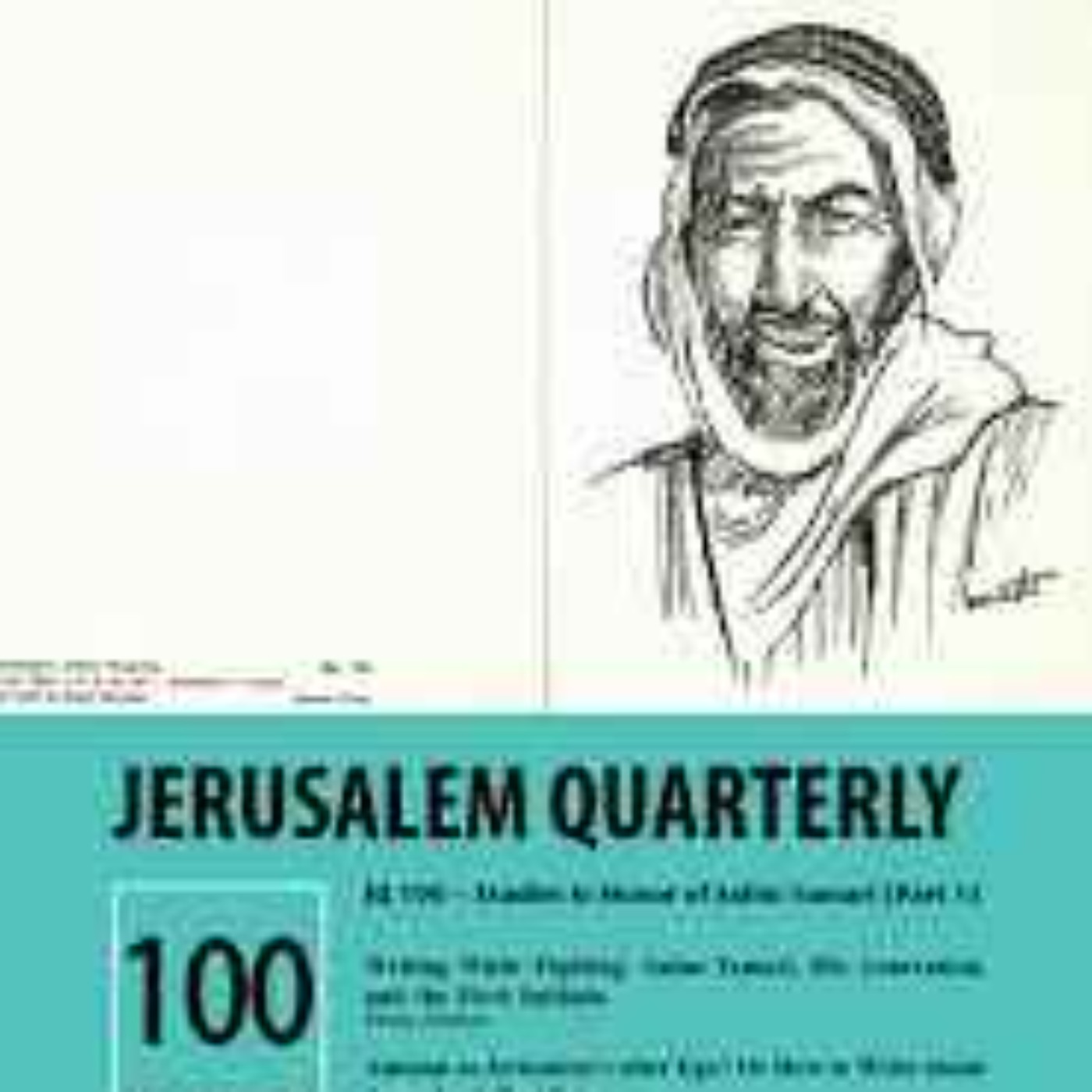
The Jerusalem Quarterly and policing Jerusalem during the British Mandate with the co-editor Alex Winder
Jul 29, 2025
In this episode the co-editor of the Jerusalem Quarterly Alex Winder tells us about the history of this very important publication, a mix of essays and scholarly written articles about Jerusalem that cover various disciplines and historical periods. The conversation moved then to discuss police and policing in British Mandatory Jerusalem. With Alex we traced the work of the British police, the interactions between Palestinian and Zionist officers and the legacy of the British police. Lastly, we touched upon the events of 1929 that will be the focus of episodes to come. Originally published on 10/13/2021.
Reporting, storytelling and running in Jerusalem with Jalal Abukhater
Jul 29, 2025
Jalal Abukhater is a young Palestinian journalist, storyteller and runner, reporting from Jerusalem on life as witnessed and lived. With Jalal we talked about what it means to be a reporter from Jerusalem and how people from abroad see the city. Jalal remembers his time in Scotland and what it means to be a Jerusalemite abroad; from here we talked about current politics including the question of the Blue Jerusalem ID.
Learn More
Storytelling took us then into family history showing how one who knows Jerusalem may not really belong to it, but as a previous guest said, no one owns Jerusalem, people are owned by the city. Given Jalal profession, inevitably, we talked about Sheik Jarrah and shared views about this. Last but not least, as Jalal is a marathon runner, we talked about running around Jerusalem.
https://www.jalalabukhater.com/
Originally published on 09/29/2021.
Jerusalem through the eyes of a Jerusalemite 1955 to 2021 with Nazmi al Jubeh
Jul 28, 2025
In this honest and hard episode of Jerusalem Unplugged, Prof. Nazmi al-Jubeh takes us through his personal journey as a Jerusalemite born in the Old City in 1955. His experience is the same of many Palestinian Jerusalemites who struggle every day. The stories of Lifta, Sheik Jarrah and Silwan instead of being the background of his story, they become the main stage of this very emotional podcast. Originally published on 09/29/2021.
The municipality of Jerusalem through time and space with Falestin Naili
Jul 28, 2025
Falestin Naili, historian associated with the *Institut français du Proche-Orient* (Ifpo) in Amman, specializes in the social history of the late Ottoman and Mandate Palestine and Jordan and has focused much of her recent research on local governance and politics, particularly in Jerusalem. Through her interest in collective memory and oral history she often reaches present-time issues, including the politics of heritage and folklore.
Learn More
We focused on the history of the municipality of Jerusalem which was established in the late 19th century by the Ottomans and survived the First World War and the British Mandate but changed in nature and functions. Falestin told us how under the British a process of de-municipalization occurred as the British privileged other institutions de-facto taking away a political space where Palestinians and Zionists could have interacted. We also talked about the relationship between Jerusalem and its surrounding, in particular with the village of Artas which will be the focus of the upcoming by Falestin Naili *La Palestine entre Patrimoine et Providence : régimes d’historicité et mémoire au village d’Artâs* *au XIX et XX siècles.* Originally published on 0922/2021.
The politics of Jerusalem and holy cities with Mick Dumper
Jul 28, 2025
In the opening episode of season 2 of Jerusalem Unplugged, Prof. Mick Dumper tell us about the complexities and nuances of the politics of Jerusalem since 1967. As Prof. Dumper contributed to the emerging peace process in the 1990s he brings us firsthand accounts of the position of Jerusalem in the process. Prof. Dumper reminds us that religion is extremely important when discussing Jerusalem as faith and control of the city goes hand in hand.
Learn More
We discussed the very controversial and sensitive is sue related to groups who want to rebuild the Jewish Temple on the Haram al-Sharif. With Prof. Dumper we talked about the question of the Trump administration that moved the US Embassy from Tel Aviv to Jerusalem and the consequences of this move. It is not easy to see what the trends are and what the future may bring, says Prof. Dumper and we agree that the current situation it is just too unpredictable. We then talked about holy cities and the conflicts that are generated in order to control them, but first what does make a city holy? Originally published 09/14/2021.
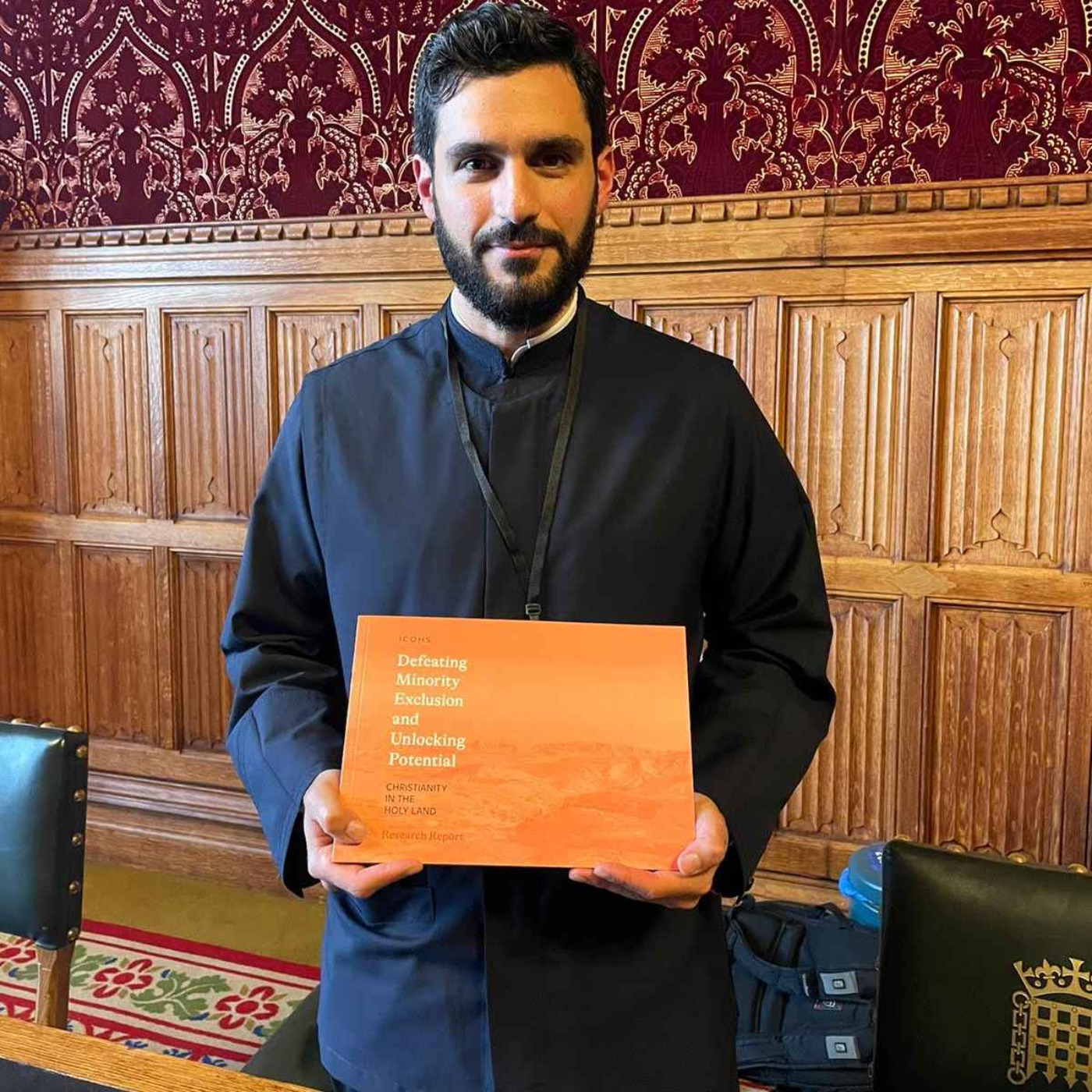
The International Community of the Holy Sepulchre with George Tsourous
Jul 28, 2025
In this bonus episode I spoke to George Tsourous, anthropologist, currently conducting research for the International Community of the Holy Sepulchre (ICoHS) on the importance of Christianity in the Holy Land, tells us about the Church of the Holy Sepulchre and the complex and vast net of intercommunal and international relations that unfold every day within the church. We talked about modern day pilgrims visiting the Holy Sepulchre, their expectations, their behavior and interactions with other pilgrims and visitors. We also discussed the Holy Fire and this wonderful Orthodox tradition.
Late Ottoman Jerusalem with Michelle Campos
Jul 28, 2025
In this season finale Michelle Campos tells about late Ottoman Jerusalem, its composition and how a new GIS study of the Old City reveals its unmixed complexities. Our guest tells us how she came to study Jerusalem and also who she discovered important material written in Ladino. Campos tells us about how the history of the late Ottoman Jerusalem has changed in the last few decades and how some groups have appropriated some aspects of it. She talks about Albert Antebi and how modern technology can reveal more about the social relations in the city. Originally published on 07/14/2021.
British Evangelical Christians in Jerusalem with Gabriel Polley, winner of the Dakkak Award of Jerusalem Quarterly
Jul 28, 2025
In this episode Gabriel Polley, the Dakkak Award of the Jerusalem Quarterly, talks about the British Evangelicals and their relationship with and understanding of Jerusalem in the 19th and 20th century. Polley tells us of the deep relationship between religion and colonialism and how the British relied on religious ideas in order to establish their rule in the holy land. Polley also talks about how Evangelicals saw Jerusalem and local Christian Palestinians.
The Armenians of Jerusalem, their micro-identities and the history of the Armenian Quarter with Bedross Der Matossian
Jul 28, 2025
Who are the Armenians of Jerusalem? What’s the history of the Armenian Quarter? What are the challenges of this community? Bedross Der Matossian, an Armenian historian from Jerusalem, answers these and more questions about one of the most fascinating and complex histories of the city. Originally published on 06/30/2021.
Jerusalem Unplugged meets Stories from Palestine with Kristel: tourist guiding, living and podcasting in Jerusalem
Jul 28, 2025
Stories from Palestine (one of the top 20 about Palestine) Kristel. We talked about living in Beit Safafa, podcasting from Jerusalem, getting ready to become a tourist guide and indeed we discussed Stories from Palestine. Originally published on 06/23/2021.
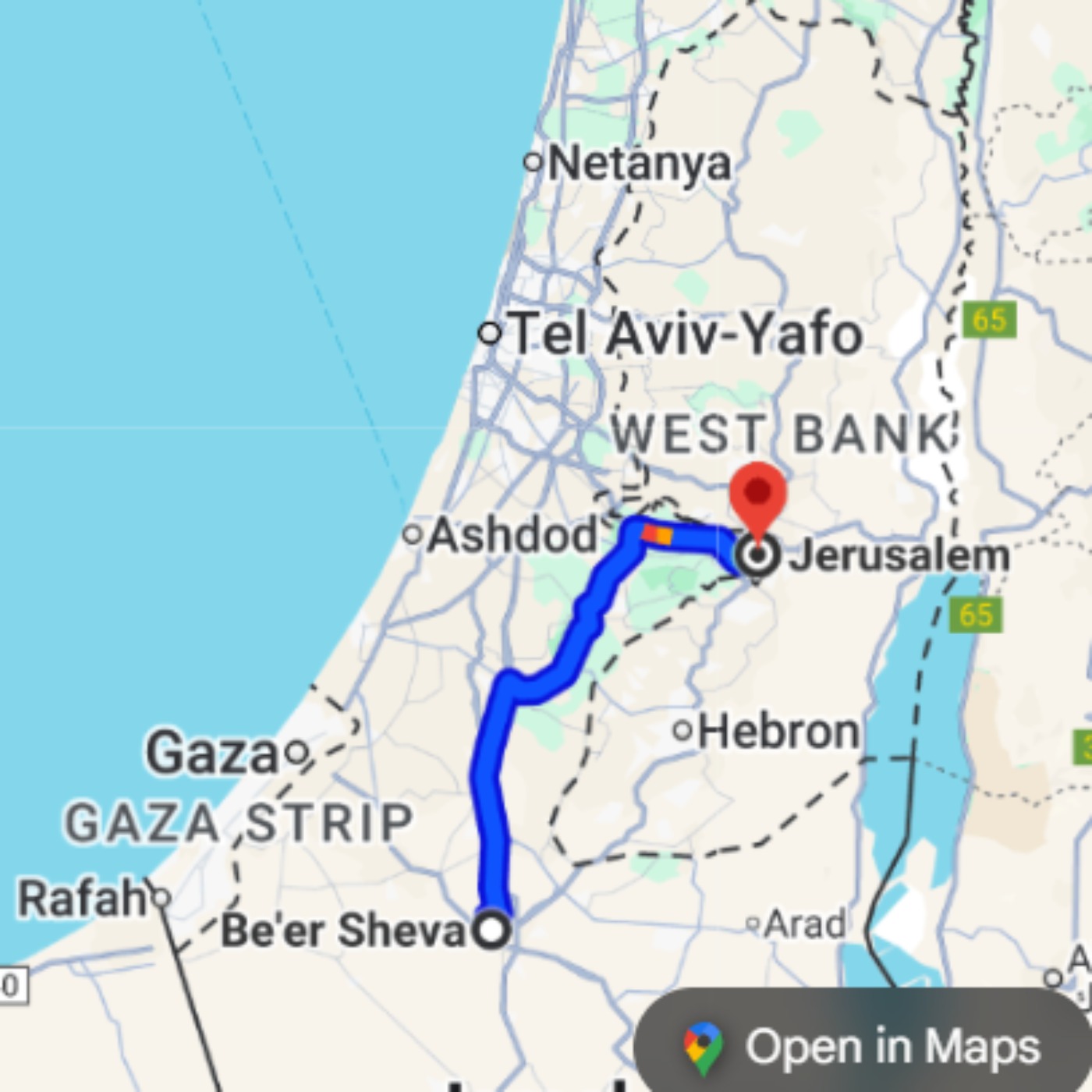
Road trip: from Beersheva to Jerusalem through traffic and history
Jul 28, 2025
This is a special episode with no guest. You will be sitting next to while driving from Beersheva to Jerusalem and I will tell you the history of the places we will be passing by. Buckle up and enjoy the trip.

Opening Jerusalem, an unending tale of love with Vincent Lemire
Jul 25, 2025
Vincent Lemire, formerly Director of the Centre de Recherche Français à Jérusalem, talks about his work ranging from the hydrohistory of the city to opening the archives of Jerusalem. Lemire tells us about his love affair with the city and its history. Lemire also talks about his works and in particular about his acclaimed book ‘1900 Jerusalem and the age of possibilities’. Originally published on 06/16/2021.
Let’s talk dirt: Jerusalem and archaeology – Part 1 – with Silvia Truini
Jul 25, 2025
In today’s episode, Silvia Truini opens a series dedicated to archaeology in Jerusalem discussing the question of Silwan and how politics and archaeology impact the local population. Silvia also talks about the question of the Haram al-Sharif and Ir David. Originally published 06/02/2021.
Jerusalem We Are Here and My Palestinian Story with Dorit Naaman and Marina Parisinou
Jul 25, 2025
In this episode Dorit Naaman and Marina Parisinou talk about their works, Jerusalem We Are Here and My Palestinian Story. Both projects are trying to save the memory of a Jerusalem that no longer exists cherishing its life. Jerusalem We Are Here is an interactive documentary that digitally brings Palestinians back into the Jerusalem neighborhoods from which they were expelled in 1948. My Palestinian Story is a blog exploring Marina’s family history in Jerusalem. Originally published on 05/26/2021.
Is Philip VI the King of Jerusalem? Spanish claims and other stories with Chad Leahy
Jul 25, 2025
Claims about Jerusalem are not just modern but are rooted in the past like the one laid by the Spanish monarchy. Chad Leahy takes us through Jerusalem of the 17th century and how the city was imagined in Spain but more importantly how Jerusalem shaped the emerging Spanish national consciousness. Chad also talks about the Custody of Holy Land and the Obra Pia, two key intuitions in Jerusalem and Spain. Originally published 05/19/2021.
Ottoman and Turkish Jerusalem, the 1911 Haram al-Sharif incident and the understanding of Zionism in Palestine: conversing with Louis Fishman
Jul 25, 2025
In this episode Louis Fishman, author of Jews and Palestinians in the Late Ottoman Era, 1908-1914. Claiming the Homeland (University of Edinburgh Press) tells about Jerusalem in the late Ottoman era and he also tells us about the modern connection between Turkey and Jerusalem. Louis then takes us through the story of the 1911 Haram al-Sharif incident and its consequences then to proceed to discuss the understanding of Zionism in late Ottoman Palestine. Originally published 05/12/2021.
No one owns Jerusalem, we are owned by Jerusalem’ in conversation with David Neuhaus
Jul 25, 2025
David Neuhaus, served as the superior of the Jesuits in the Holy Land, tells us about his history of conversion from Judaism to Christianity, of his best friend – a Muslim Jerusalemite – and of his discovery of the city. We also have talked about ‘melting pot’, migrants and ‘apartheid’. With his stories about Jerusalem, you will laugh, think, cry and hope. Originally published on 05/05/2021.
Jerusalem and its food (Part 2), the quest for a Jerusalemite cuisine with Chef Ezra Kedem
Jul 25, 2025
Acclaimed Chef Ezra Kedem talks about his family history in Jerusalem and how he transformed what he learned from his mother into his passion and work in the kitchen. Mixing his Iraqi roots with Ashkenazi traditions, his cuisine has been defined as one that looks at the past, while shaping the future. Originally published on 04/28/2021.
Jaffa Gate, street naming in Jerusalem, Gad Frumkin and the graffiti at the Western Wall with Yair Wallach
Jul 25, 2025
Dr Yair Wallach, author of ‘A City in Fragment’ takes us around the city of Jerusalem through urban text like street names and signs, graffiti at the Western Wall and the he also tells us the story of Gad Frumkin who lived in Jerusalem through three different eras. Originally published on 04/21/2021.
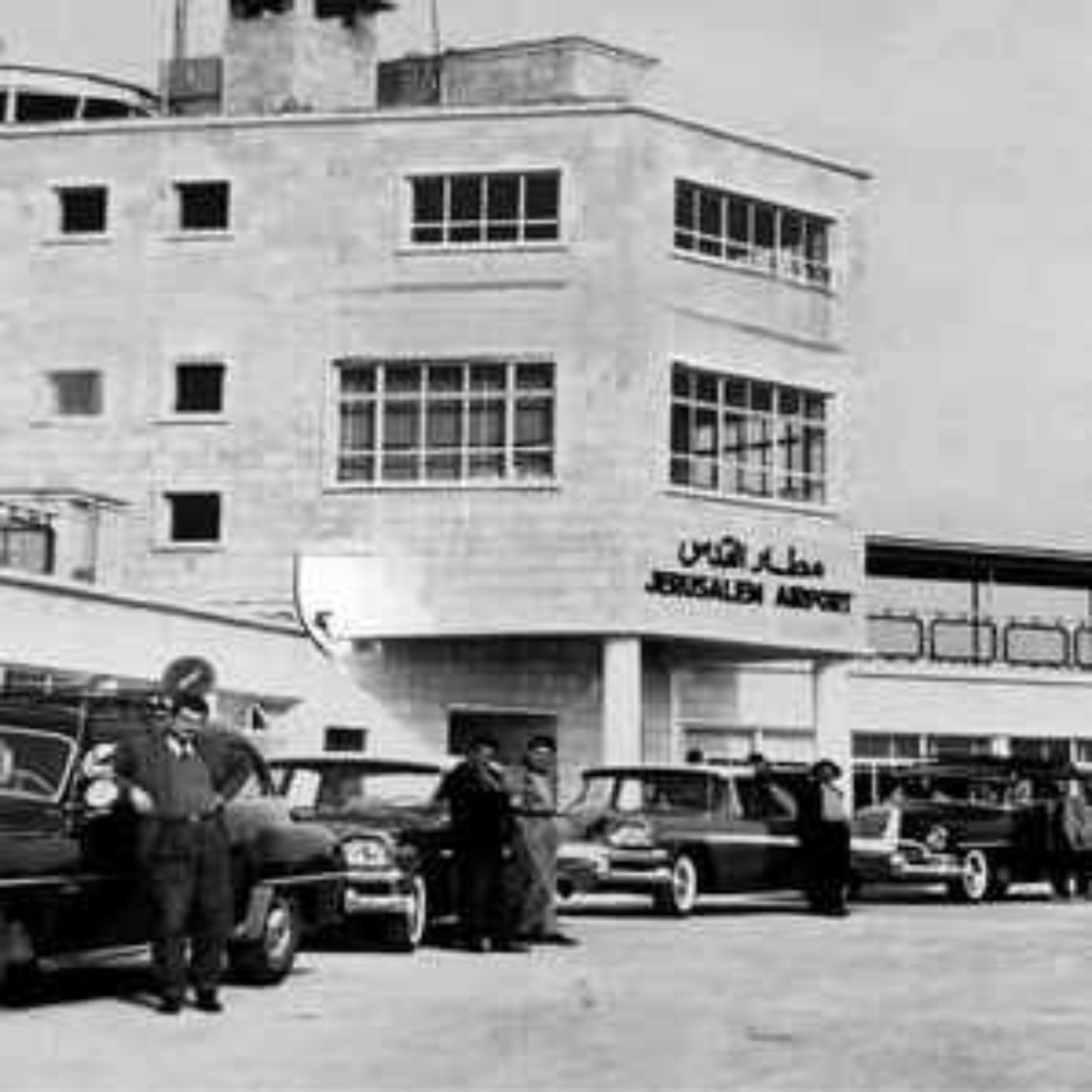
The Jerusalem Airport with Eldad Brin
Jul 25, 2025
In this episode Dr Eldad Brin talks about the history of the Jerusalem Airport and then, as a professional tourist guide, Eldad talks about his work in the city. Originally published on 04/14/2021.
Jerusalem and its food (part 1), chocolate, pastries and knafeh with cheese with Chef Ibrahim Abu Seir
Jul 24, 2025
This is the first episode dedicated to Jerusalem and its food. Pastry Chef Ibrahim Abu Seir, born and raised in the old city, talks about his career and making European pastries in the Old City of Jerusalem. Chef Abu Seir also told us the story of his family that brought Knafeh made with cheese from Nablus. Here is the link to the business of Chef Abu Seir. Originally published on 04/07/2021.
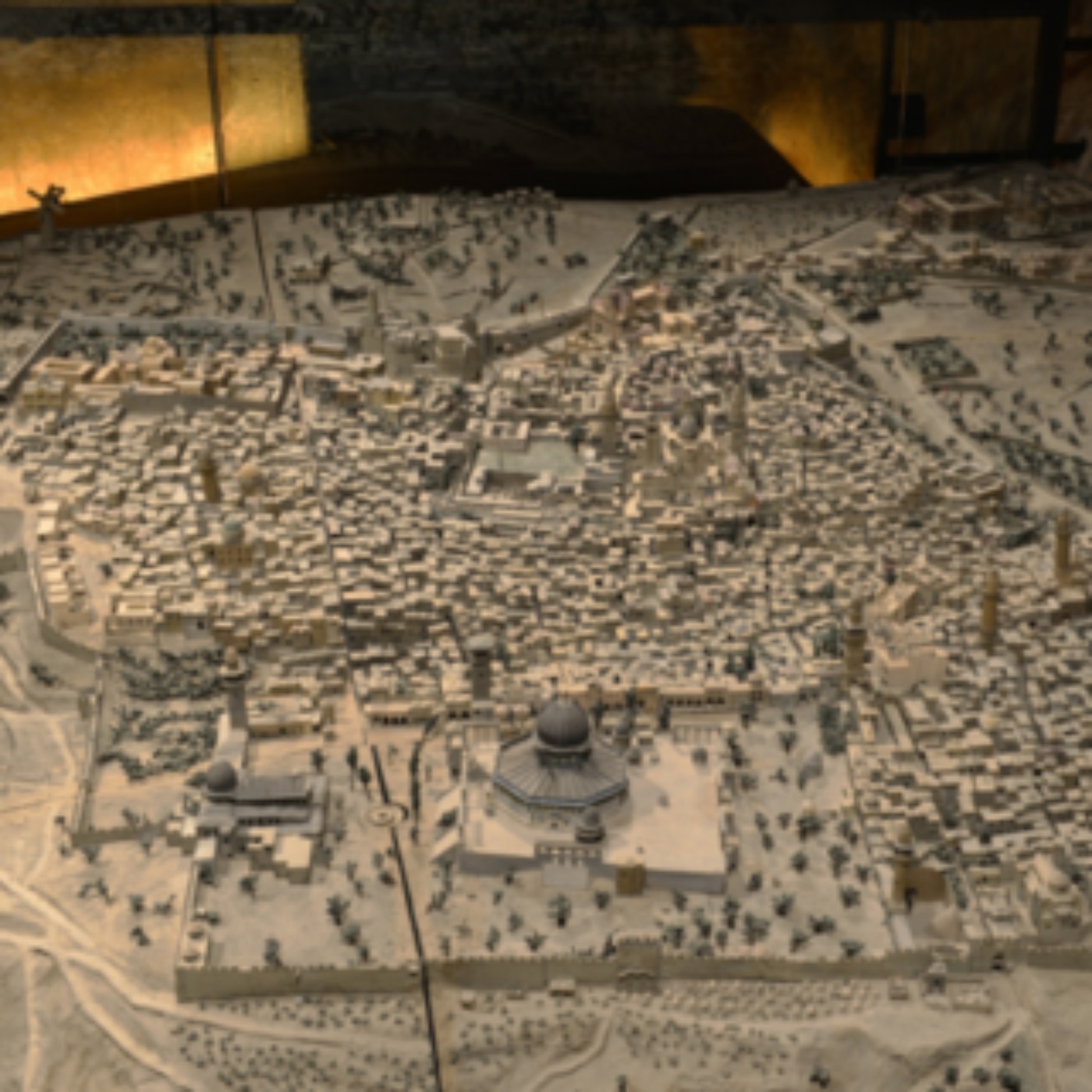
3D Reconstruction of the Mughrabi Quarter in Jerusalem and digital mapping of the city with Maryvelma Smith O’Neil
Jul 24, 2025
In this episode, Founder and Director of ARCH Jerusalem, Maryvelma Smith O’Neil talks about the Mughrabi Quarter and her attempt to digitally reconstruct this neighborhood which was destroyed in 1967. More information here. Originally published on 03/24/2021.
Young women in Jerusalem, millennials, discrimination and the Future of Palestine with Tamar Haddad
Jul 24, 2025
Tamar Haddad, author of the Future of Palestine, talks about being a young woman in Jerusalem in the 21st century, the challenges and the change that is possible. She also talks about discrimination and the ways in which this can be faced and tackled. In the end, Tamar talks about her Jerusalem while being far away. Originally published on 03/17/2021.
Sounds and smells of Jerusalem, photography and Wasif Jawhariyyeh, hashish and music with Issam Nassar
Jul 24, 2025
Issam Nassar in this episodes remembers his childhood in Jerusalem through smells and sounds. Issam then shares his passion for photography and he then talks about Wasif Jawhariyyeh, a Christian Palestinian who left us with an amazing diary and memoirs of the Mandate era, showing a Jerusalem full of life, often neglected and forgotten. Issam Nassar is a Palestinian historian of photography and the Middle East. He is professor of History at Illinois State University and a research fellow at the Institute of Jerusalem Studies. Nassar was associate editor of the Jerusalem Quarterly and has authored many books, among them *European Portrayals of Jerusalem. *Nassar is currently Professor at the Doha Institute for Graduate Studies. Originally published on 03/10/2021.

Covid19 in East Jerusalem, walking around the city, conspiracy theories, bilingualism and social media with Maya de Vries
Jul 24, 2025
Maya de Vries Kedem is an ethnographic researcher who loves to be at the field-site and believe that a good research can lead to action. She is interested in social media, digital activism, Israeli-Palestinian conflict, Jerusalem/al-Quds. She is teaching at the Swiss Center for Conflict resolution and the Department of Communication at the Hebrew University of Jerusalem.She also loves documentary making and believes in the power of this genre to create waves of change and was involved in Israeli-Palestinian cinematic projects. She is currently working on a long-term ethnographic research in East Jerusalem focusing on elderly and digital platforms. This is an international project led by Prof. Daniel Miller from UCL. Originally published on 03/03/2021.
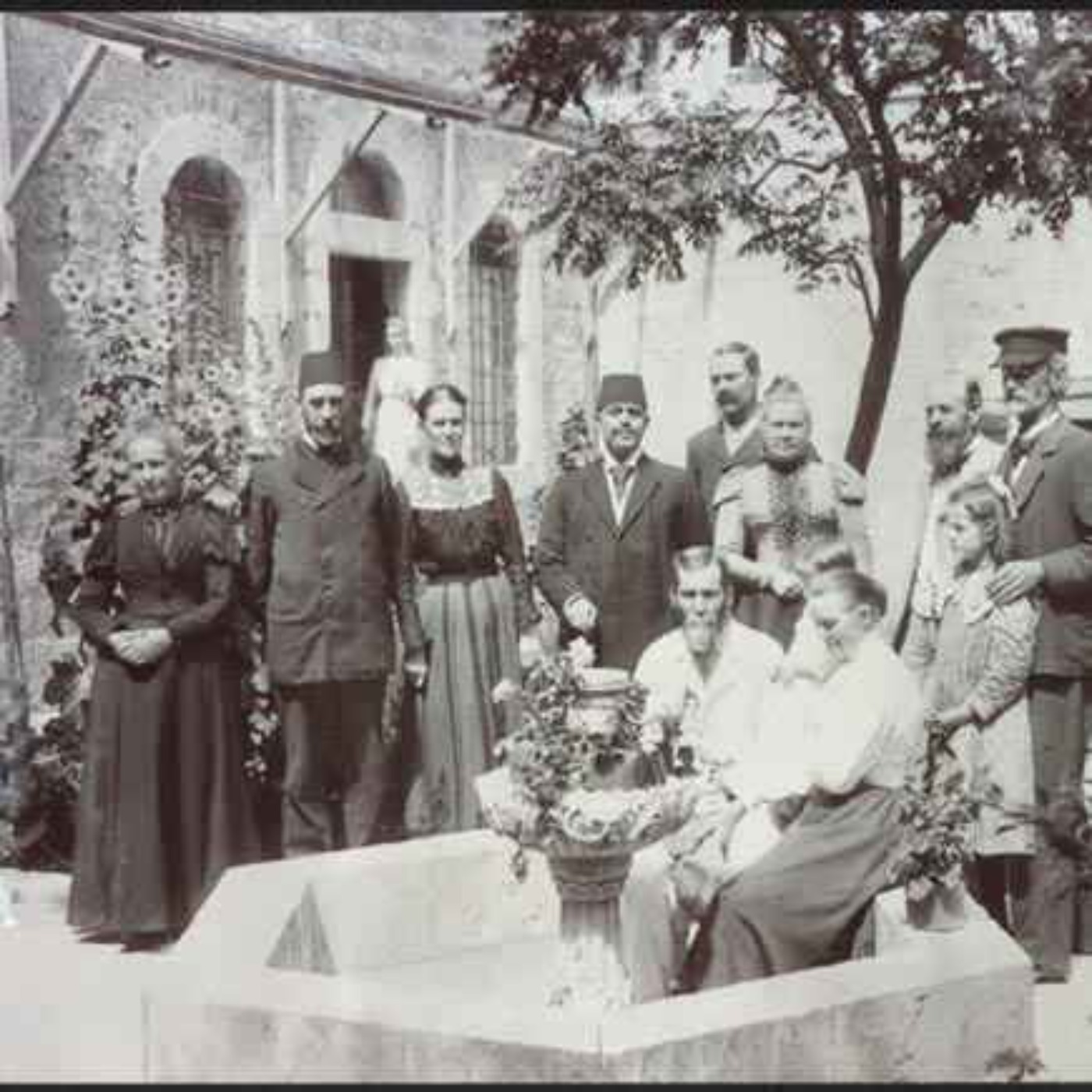
The American Colony in Jerusalem, Sheikh Jarrah, women and food with Rachel Lev
Jul 24, 2025
Rachel Lev, curator and exhibition designer of the American Colony, tells us the history of this unique institution in Jerusalem. The Colony, nowadays a hotel, used to be the hub for early American millennialists. Members of the colony then established various businesses in the city mingling and interacting with the local population. Originally published on 02/24/2021.
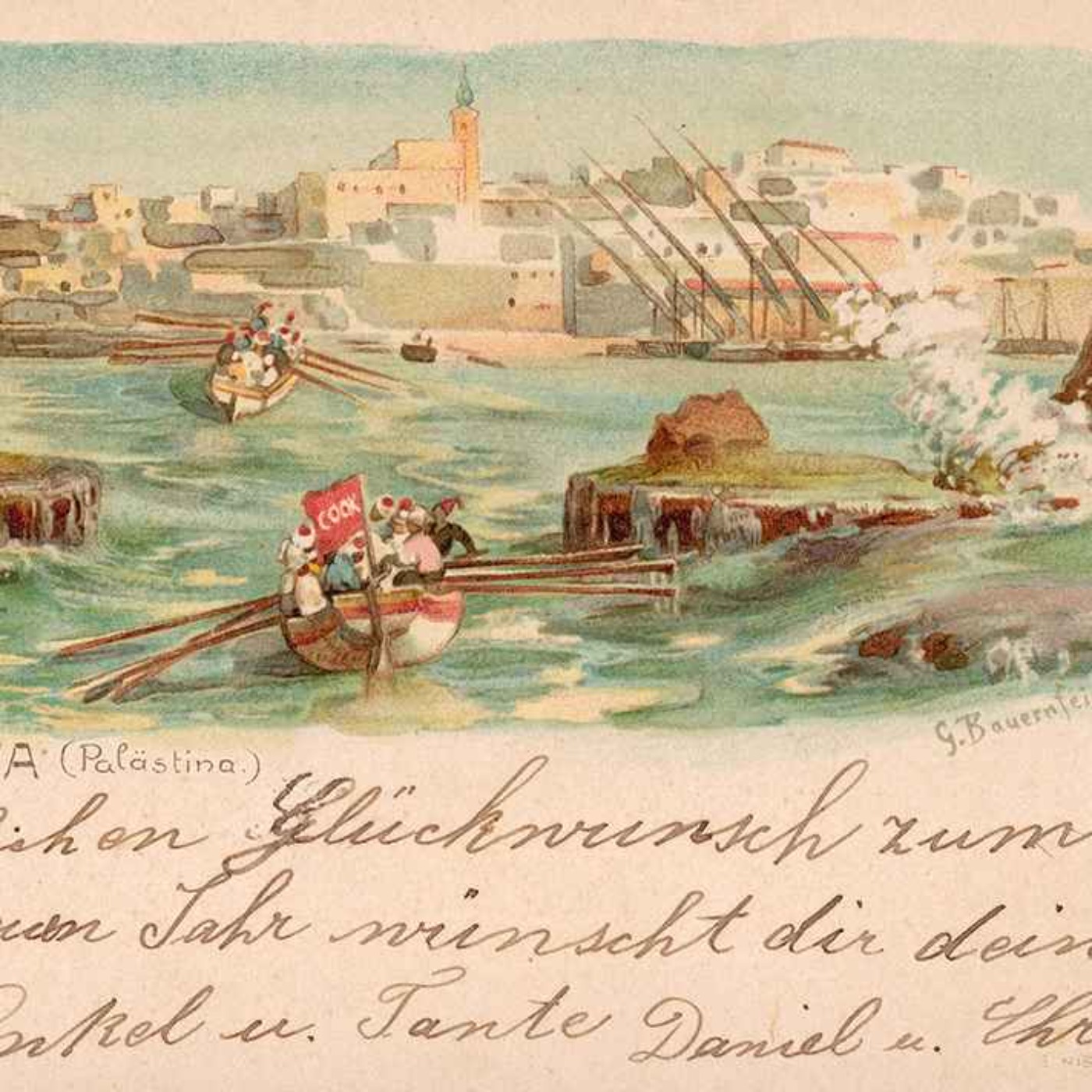
Christian Pilgrims in Jerusalem with Fr. Thomas Hummel
Jul 23, 2025
In this episode Fr. Thomas Hummel tells us about the history of Christian pilgrimage to Jerusalem and its various interpretations. Fr Hummel also tells us stories of Protestant and Orthodox pilgrims in the 19th century, how their trip unfolded, what they visited, collected and took home with them. Thom believes that when you discuss globalization, “it is not just a matter of knowing and visiting other places, but understanding the philosophic and religious perspectives that undergird those civilizations.”
Learn More
Thom has ample opportunity to encourage such interaction as a teacher of theology and one of the chaplains.A member of the American Academy of Religion and the Conference of Anglican Theologians, Thom also teaches graduate classes at Virginia Theological Seminary. He has written one monograph on pilgrimage, contributed to seven books on the history of Jerusalem, and is a senior fellow of the Christian Heritage Research Institute in Jerusalem.His most recent published work, “La Méditerranée des Arméniens” edited by Professor Claude Mutafian, came out last summer and he is currently writing “”A Theology of Christian Pilgrimage to Jerusalem.”” He spends his summers in Jerusalem, Oxford, England, and Paris when he and his wife Ruth are not enjoying their garden in Old Town Alexandria. Originally published on 02/17/2021.
Jordanian Jerusalem, Stamps and the Diary of Sami ‘Amr with Kimberly Katz
Jul 23, 2025
In this episode, Kimberly Katz discusses the little known period of Jordanian rule of Jerusalem and shared her research experience in the city in the 1990s, she also explores stamps issued by the Jordanian government in order to gain legitimacy. Lastly, Kimberly is presenting the diary of the young Palestinian, Sami ‘Amr, who spent the WW2 era between Jerusalem and Hebron. Here is a list of Prof. Katz publications. Originally published 02/10/2021.
Photography of Jerusalem from the Bible to contemporary Mamilla with Sary Zananiri
Jul 23, 2025
In this episode scholar and artist Sary Zananiri tells us how Jerusalem was captured in Western photography and then discusses his exhibitions focussing on the very controversial Mamilla mall. Originally published 02/03/2021.
Daily life in Mandate Jerusalem through family pictures and memories with Mona Hajjar Halaby
Jul 23, 2025
Mona Hajjar Halaby, founder of the photographic collection available at the Facebook Page British Mandate Jerusalemites Pictures and author of ‘In My Mother’s Footsteps: a Palestinian Refugee Returns Home’ tells us of Jerusalem during the British Mandate through the memory of her mother and the thousand of pictures collected through her career. Originally published on 01/27/2021.
Remembering Jerusalem with Salim Tamari
Jul 22, 2025
In this first episode of Jerusalem Unplugged I interviewed Salim Tamari, a scholar, a friend and mentor. Salim Tamari is a sociologist with a long list of publications about Jerusalem, particularly the late Ottoman era. In this conversation we talked about history but we also talked about his life and his memories of Jerusalem in the 1960s. Originally published on 01/20/2021.